Get Premium
Dark mode theme is available exclusively for premium users. Learn more about the benefits of subscribing.
No fees, cancel anytime.

 Dark Mode Ad-Free Browsing Unlimited Content
 Ad-Free Browsing Unlimited Content Dark Mode
Join 1.2 million Panda readers who get the best art, memes, and fun stories every week!
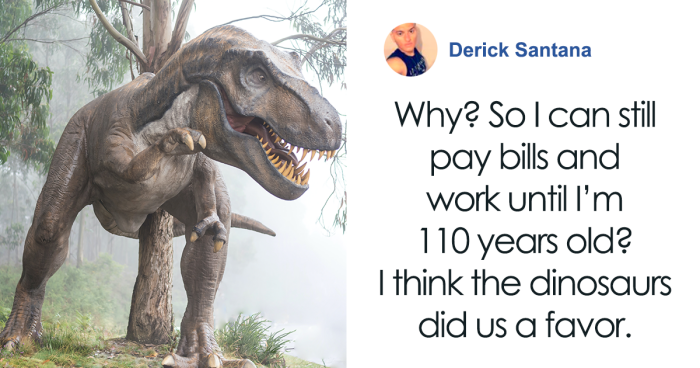
Blood temperature, appearances, and just about everything about mammals’ anatomy completely differ from reptiles and amphibians, but it is the aging process of both animal classes that have been the focus of recent research.
The very difference between how we, mammals, age in comparison to reptiles could be due to the dominance of dinosaurs millions of years ago, a scientist has recently proposed, according to Science Alert.
In a paper published on Tuesday (November 28), microbiologist João Pedro de Magalhães from the University of Birmingham stated that “while mammals, including long-lived species such as humans, show a marked aging process, some species of reptiles and amphibians exhibit very slow and even the absence of aging phenotypes.”
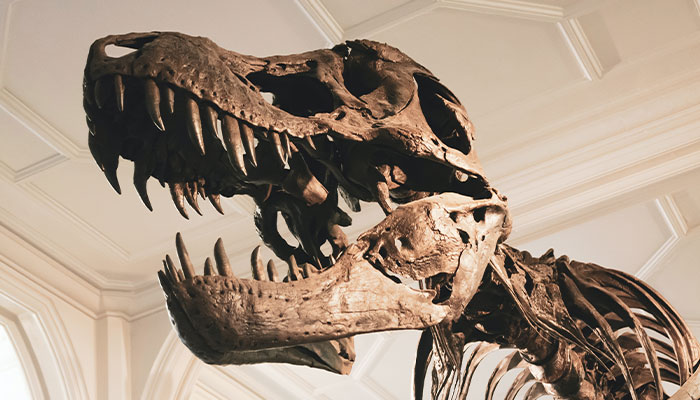
Image credits: Jon Butterworth
He further proposed: “Evolving during the rule of the dinosaurs left a lasting legacy in mammals.
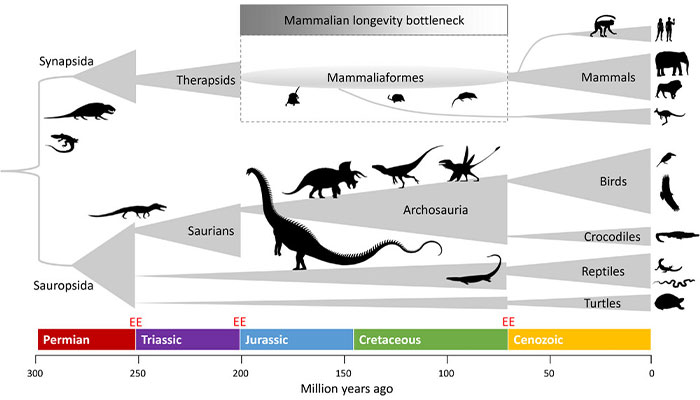
“For over 100 million years when dinosaurs were the dominant predators, mammals were generally small, nocturnal, and short-lived.”
João went on to hypothesize “that such a long evolutionary pressure on early mammals for rapid reproduction led to the loss or inactivation of genes and pathways associated with long life.”
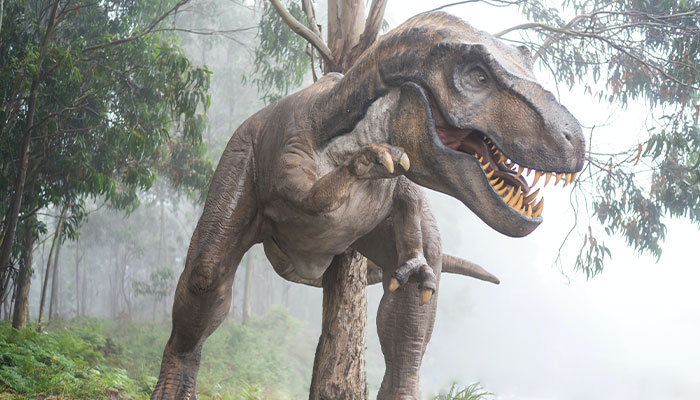
Image credits: Fausto García-Menéndez
The microbiologist stated: “I call this the ‘longevity bottleneck hypothesis’, which is further supported by the absence in mammals of regenerative traits.
“Although mammals, such as humans, can evolve long lifespans, they do so under constraints dating to the dinosaur era.”
Image credits: Kampus Production/Pexels
According to the scientist, some of the earliest mammals were forced to live towards the bottom of the food chain, and likely spent 100 million years during the age of the dinosaurs evolving to survive through rapid reproduction.
That long period of evolutionary pressure had, João proposed, an impact on the way that we humans age.
The researcher went on to exemplify his theory with the ability of some animals for repair and regeneration.
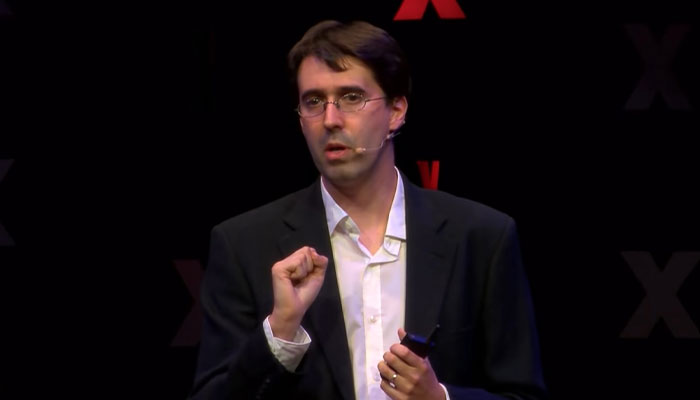
Image credits: TEDx Talks
“That genetic information would have been unnecessary for early mammals that were lucky to not end up as T-Rex food,” João said.
He continued: “While we now have a plethora of mammals, including humans, whales, and elephants, that grow big and live long, we and these mammals live with the genetic hangups from the Mesozoic era and we age surprisingly faster than many reptiles.”
Image credits: de Magalhães, J. P. (2023), BioEssays
A famous instance of a reptilian species living for a longer time than most mammals are turtles, which can live for up to 150 years.
It is worth noting, however, that certain mammals do live for a very long time, such as bowhead whales, which are the longest-living mammals, weighing between 75 and 100 tons.
The Arctic and subarctic whales “comfortably live over 100 years,” according to Live Science, and can live more than 200 years.
The species can break through sea ice at least seven inches thick with their large skulls and powerful bodies, according to World Wild Life.
Image credits: Joey Huang
As for humans, our life expectancy differs tremendously from country to country, but World Data has reported a world average age of death as being a few years lower at 68.9 years for men and 73.9 years for women.
Nevertheless, certain parts of the world enjoy a much longer life expectancy.
Known as the Blue Zones, five places on Earth are home to some of the oldest and healthiest people in the world.
According to Time, these places are: Sardinia, Italy; Okinawa, Japan; Nicoya, Costa Rica; Loma Linda, Calif., U.S.A; and finally, Ikaria, Greece.


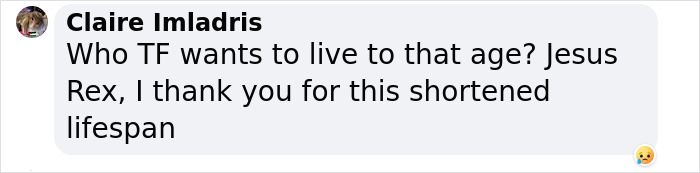
Imagine living for 200 years. The continued advance of technology that you find harder and harder to learn. The continued destruction of our planet, and worsening effects of climate change. More and more wealth being hoarded by the few billionaires at the top, while everyone else gets poorer. This world is a distopia, I don't want to stick around to see how it ends.

Harder to learn or you're unwilling to learn? Many older people learn new tech just fine. The key is actually remaining openminded to new things. And honestly, if we had longer lifespans there would be far more incentive to take care of the planet. It makes it far more difficult to be flippant and say "Meh I'll be dead before it's a problem" if you lived 200+ years. Would it be more distopian with even more accumulation of wealth? Maybe. Or maybe people would live long enough they'd get the shits with it and revolt. In my opinion living to 200 would be great, as long as you had proportionally longer fit and healthy lifespan. Being old at 70 but not dying til 200 would be horrible. Being young till 100 and not getting "old" till 175 would be ok in my view.
Load More Replies...
That's an interesting hypothesis, but birds (that's to say modern dinosaurs), fish and reptiles don't enjoy a particularly longer life expectancy than mammals. In fact, among the animals that live the longest, a lot of them are mammals.

While the lifespan of reptiles was discussed in the article, the point was less about how long individual dinosaur species (and their descendant species) average lifespans were and more about how their dominance of the food chain and danger as predators of mammalian ancestor species had a lasting negative impact on mammal genetics impacting longevity. It's not whether we live longer than birds, it's that we should be able to live far longer than we do, but genetic factors thought to be introduced during the time of the dinosaurs limit our bodies' ability to repair damage caused by aging.
Load More Replies... Imagine living for 200 years. The continued advance of technology that you find harder and harder to learn. The continued destruction of our planet, and worsening effects of climate change. More and more wealth being hoarded by the few billionaires at the top, while everyone else gets poorer. This world is a distopia, I don't want to stick around to see how it ends.
Harder to learn or you're unwilling to learn? Many older people learn new tech just fine. The key is actually remaining openminded to new things. And honestly, if we had longer lifespans there would be far more incentive to take care of the planet. It makes it far more difficult to be flippant and say "Meh I'll be dead before it's a problem" if you lived 200+ years. Would it be more distopian with even more accumulation of wealth? Maybe. Or maybe people would live long enough they'd get the shits with it and revolt. In my opinion living to 200 would be great, as long as you had proportionally longer fit and healthy lifespan. Being old at 70 but not dying til 200 would be horrible. Being young till 100 and not getting "old" till 175 would be ok in my view.
Load More Replies... That's an interesting hypothesis, but birds (that's to say modern dinosaurs), fish and reptiles don't enjoy a particularly longer life expectancy than mammals. In fact, among the animals that live the longest, a lot of them are mammals.
While the lifespan of reptiles was discussed in the article, the point was less about how long individual dinosaur species (and their descendant species) average lifespans were and more about how their dominance of the food chain and danger as predators of mammalian ancestor species had a lasting negative impact on mammal genetics impacting longevity. It's not whether we live longer than birds, it's that we should be able to live far longer than we do, but genetic factors thought to be introduced during the time of the dinosaurs limit our bodies' ability to repair damage caused by aging.
Load More Replies...




















 No fees, cancel anytime














33
37