Get Premium
Dark mode theme is available exclusively for premium users. Learn more about the benefits of subscribing.
No fees, cancel anytime.

 Dark Mode Ad-Free Browsing Unlimited Content
 Ad-Free Browsing Unlimited Content Dark Mode
Join 1.2 million Panda readers who get the best art, memes, and fun stories every week!

Women can vote, drive, and lead — the world has made genuine strides, at least on paper. But behind closed doors, old habits run deep. There are still plenty of men out there who act like a woman’s place is in the kitchen, no matter who she is or what she wants.
We found a perfect example when an exhausted wife recently exposed her husband online.
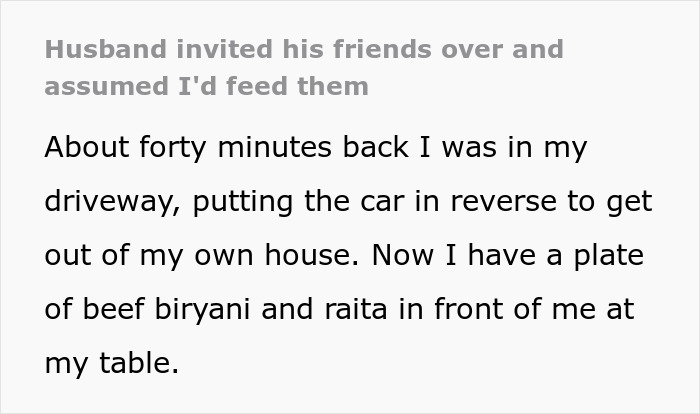
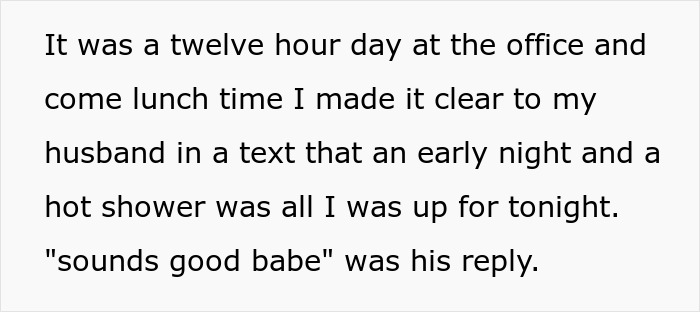
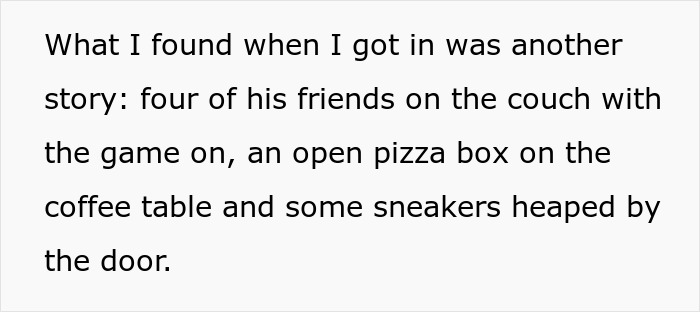
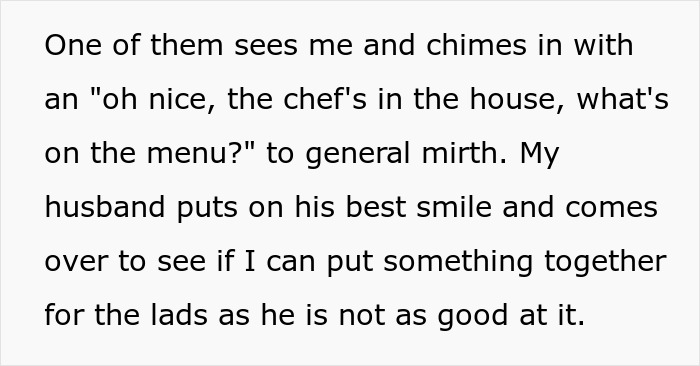
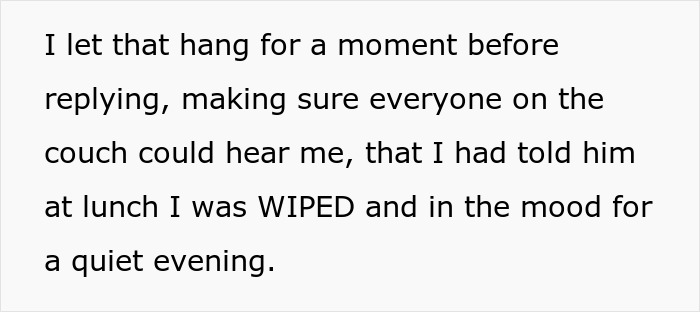
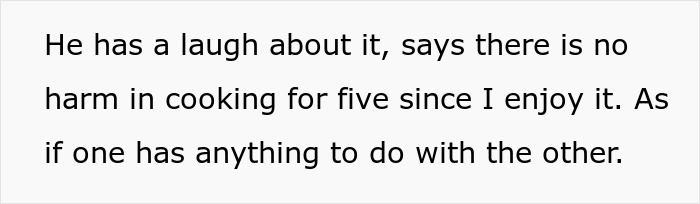
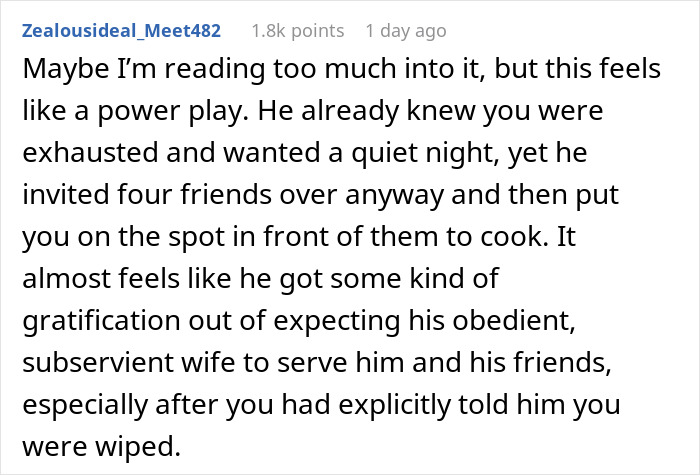
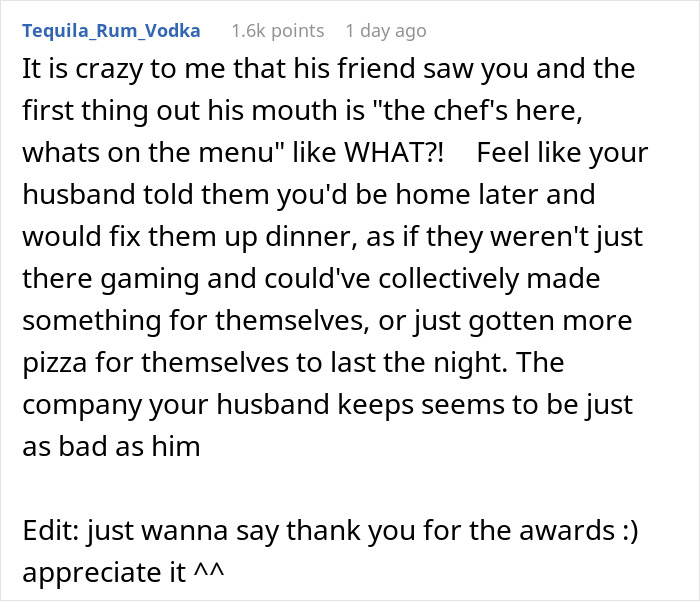
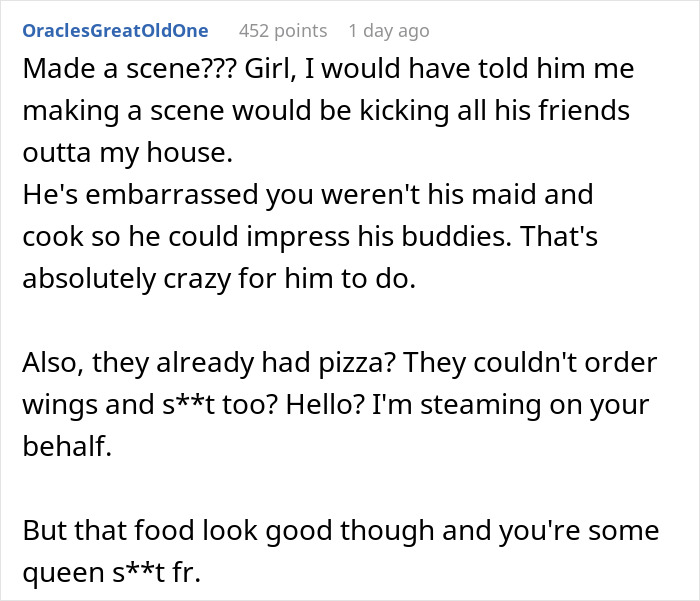
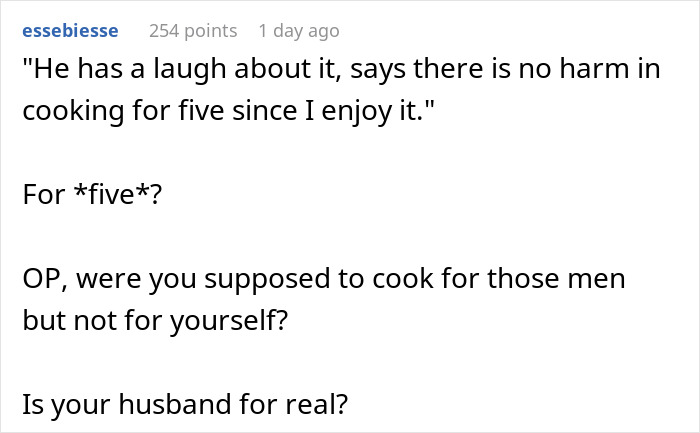
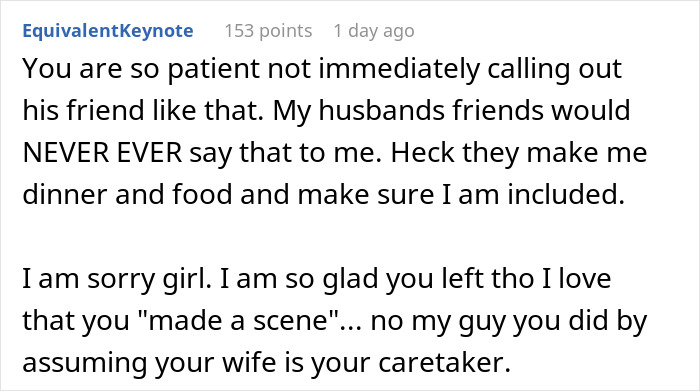
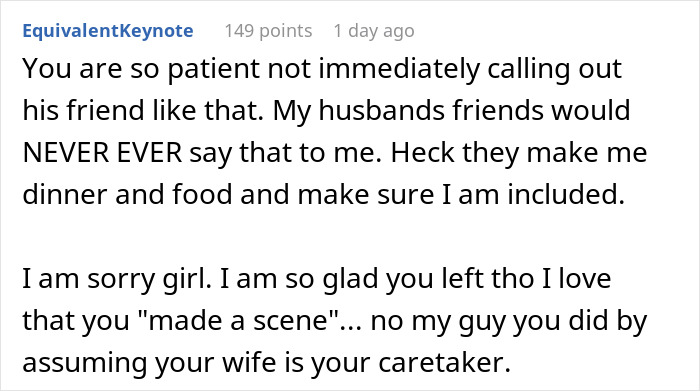
After a twelve-hour workday, she texted him that she just wanted a quiet night and a hot shower. He agreed. But when she walked in, four of his friends were on the couch, shoes were piled at the door, and her husband expected her to whip up dinner for the whole crew because she “enjoys cooking.”
What she did next left her husband fuming, her phone blowing up, and the internet cheering her on.



Food is the one thing that brings us all together, but it is also one of the oldest battlegrounds for gender inequality. Of course, everyone needs to eat, and plenty of people genuinely enjoy stepping into the kitchen. The act of cooking itself isn’t sexist. But to see why mealtime still causes so much friction in relationships, we have to examine both where we started and where we stand today.
Given our daily obsession with food, you would think society would treat cooks like royalty — and that every adult would naturally learn how to feed themselves. Yet, research shows that remarkably little has changed over the generations.
Throughout history, women have almost exclusively carried the burden of feeding the family, and played the role of homemaker and caregiver.
“All of the traits and skills and roles associated with emotional labor have always been put onto girls and women, starting from a really young age. Girls are not just taught to be painfully other-oriented; they are policed if they are not,” says Rose Hackman, a British journalist and author.
When factories and office jobs emerged in the 18th and 19th centuries, men left the house to earn cash wages and became the official “breadwinners.” Women were left behind to manage the domestic life.
Because a man’s job paid actual money, society began defining paid labor as “real work.” Cooking, cleaning, and child-rearing became invisible tasks. Women weren’t just expected to do these chores — they were expected to provide them for free as a natural extension of their marital role.
By the Victorian era and into the mid-20th century, society glorified women as the “moral guardians” and “nurturers” of the home.
This ideology only deepened by the mid-20th century, when postwar advertisements constantly pitched the image of the smiling 1950s housewife greeting her tired husband at the door with a hot meal.
When women flooded the workforce in the 1970s and 1980s, cultural attitudes around gender roles began to shift — at least on paper. The rise of second-wave feminism encouraged women to break out of the domestic mold and pursue careers. Yet, their share in domestic work didn’t lessen.
Sociologist Arlie Hochschild captured this dilemma in her 1989 study, The Second Shift. She found that even as women clocked full-time hours at work, they still came home to a “second shift” of an additional 15 hours of unpaid domestic labor every week compared to their partners.
Advertisers even romanticized this crushing workload, pitching modern appliances to the “superwoman.”
The legacy lingers today. Some men still tend to “help” their wives rather than share household responsibilities equally.
According to a recent Cookpad and Gallup study, women worldwide still cook more meals each week than men. It found that women cooked under nine meals per week, on average, in 2022. Men cooked about four per week.
The culinary gender gap varies by location, though. In the US, women prepare roughly two more meals each week than men. However, in countries with the highest disparity — such as Ethiopia, Tajikistan, Egypt, Nepal, and Yemen — women cook about eight more meals per week than their male counterparts.
Women and girls also remain the default providers worldwide, engaging in more than 2.5 times as many hours a day in unpaid care work as men.
Even as more women enter the workforce, delay marriage, and claim their independence — and as more men slowly step up — a troubling trend is pulling us backward: the rise of the “tradwife” (traditional wife).
On social media, millions watch styled influencers preach 1950s hyper-domesticity, framing submission to husbands and endless housework as peak wellness. But experts warn that dressing up old-fashioned gender roles in pastel filters hides a dangerous reality.
“Many younger women engaging with tradwife content may have little historical awareness of the realities faced by women in eras when financial dependence left them vulnerable — without legal or economic power and often trapped in relationships marked by inequality or even domestic abuse. Forgetting this history risks romanticizing a past that, for many women, was neither safe nor empowering,” says Shiyu Yuan, research assistant at King’s Global Institute for Women’s Leadership.
The ultimate proof that this idea is a social construct lies in the professional culinary world. When cooking is unpaid, domestic, and routine, it is branded as women’s work. When cooking becomes paid, prestigious, and high-status, the field becomes overwhelmingly male-dominated.
High-end kitchens remain dominated by the “alpha-male” head chef archetype — a culture of high-pressure masculinity popularized by figures like Gordon Ramsay and dramatized in shows like The Bear.
While women make up over 52% of the overall restaurant workforce, their presence plummets at the top. Women hold just 30% of executive roles, and of 2,286 Michelin-starred restaurants globally, only 6% are female-led.
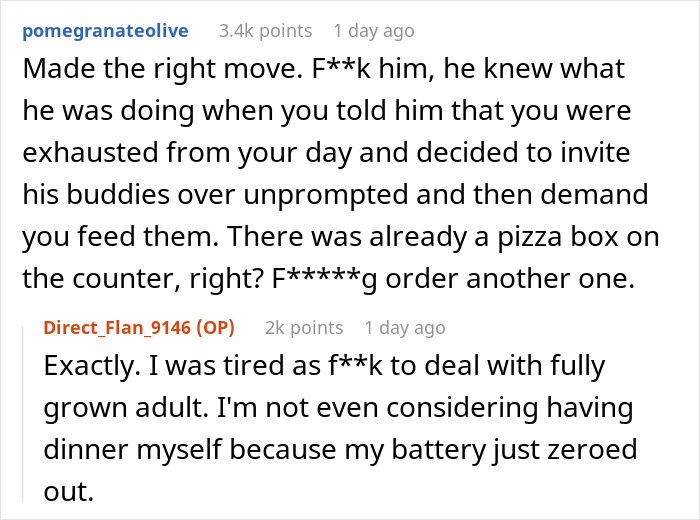
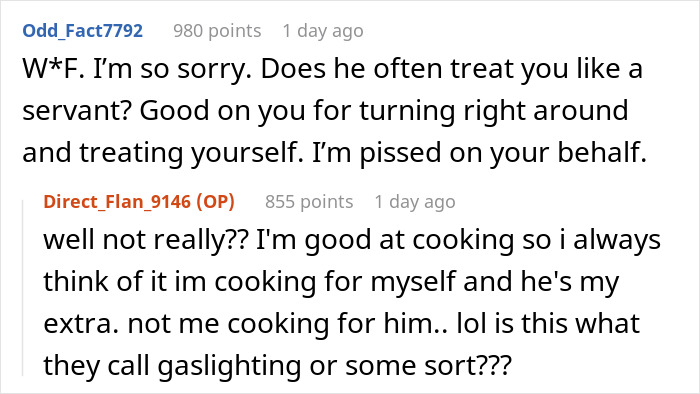
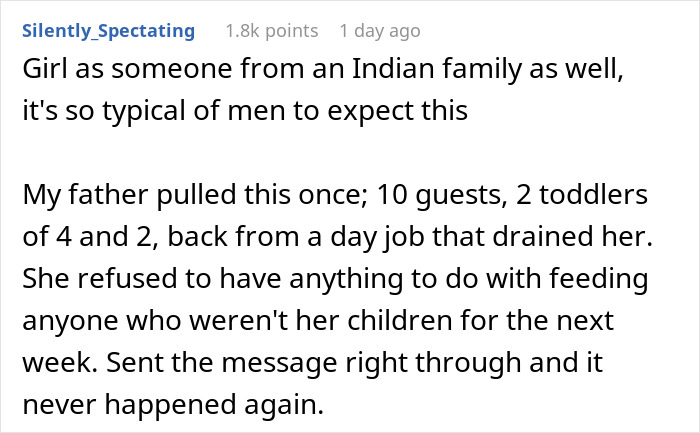
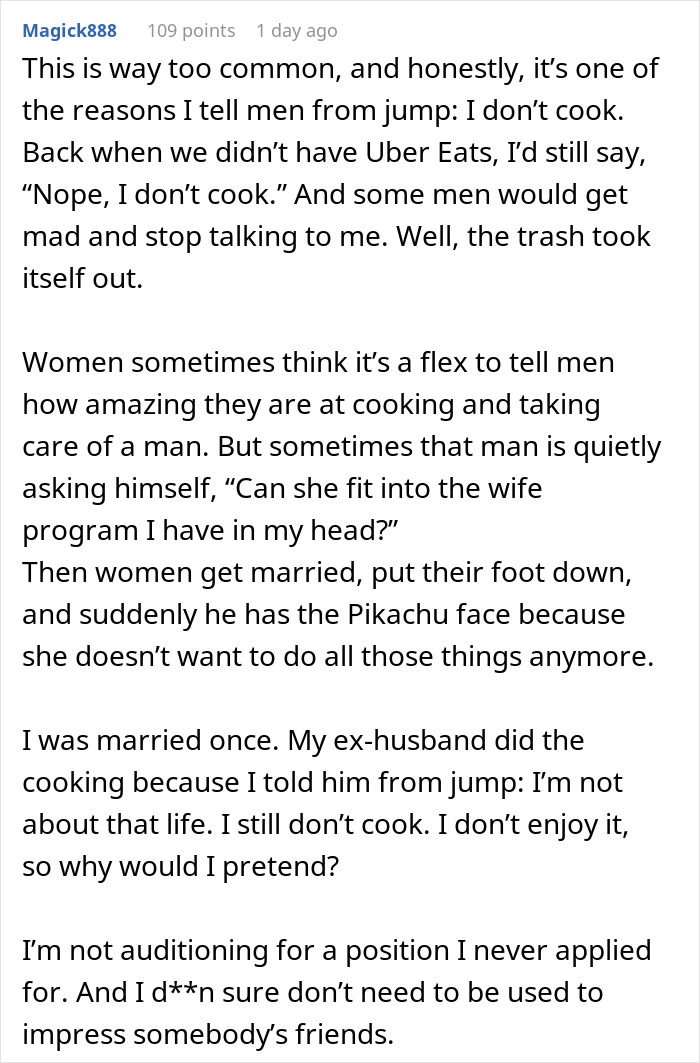
So, when the author refused to cook for her husband and her friends, she wasn’t just craving a plate of Biryani — she was pushing back against centuries of unspoken rules. Her story blew up because millions of women worldwide share the same pain.
Until we stop viewing caregiving and cooking as a woman’s default setting, these conflicts will keep happening.


















By entering your email and clicking Subscribe, you're agreeing to let us send you customized marketing messages about us and our advertising partners. You are also agreeing to our Privacy Policy.
Thank you! You've successfully subscribed to newsletters!


Should have pulled out 5 bowls, a box of cereal, and a gallon of milk and said Here you go.

Excellent plan. Then handed out a list of things you'd like them to do around the house before they left! LOL!
Load More Replies... Should have pulled out 5 bowls, a box of cereal, and a gallon of milk and said Here you go.
Excellent plan. Then handed out a list of things you'd like them to do around the house before they left! LOL!
Load More Replies...

































 No fees, cancel anytime










34
12