Get Premium
Dark mode theme is available exclusively for premium users. Learn more about the benefits of subscribing.
No fees, cancel anytime.

 Dark Mode Ad-Free Browsing Unlimited Content
 Ad-Free Browsing Unlimited Content Dark Mode
Join 1.2 million Panda readers who get the best art, memes, and fun stories every week!


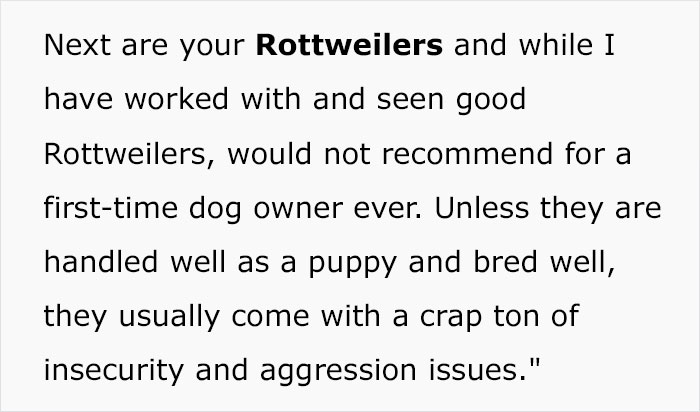
One of the biggest benefits of responsibly bred dogs is that they are more predictable. But if you’re in the market for such a puppy, so still need to carefully figure out which breed is the best fit for you.
It’s important to refrain from focusing solely on looks. There are many more factors that determine your compatibility. And arguably the biggest one is your experience as an owner.
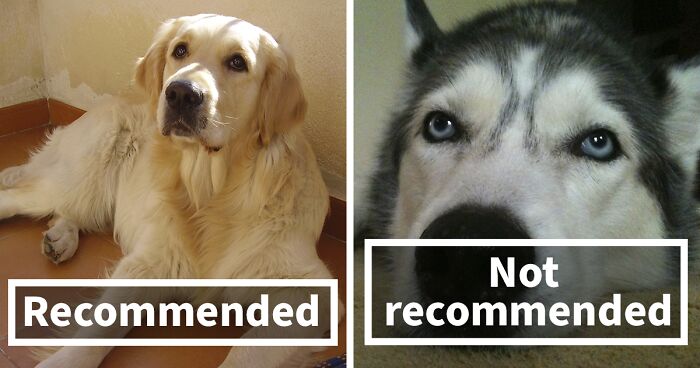
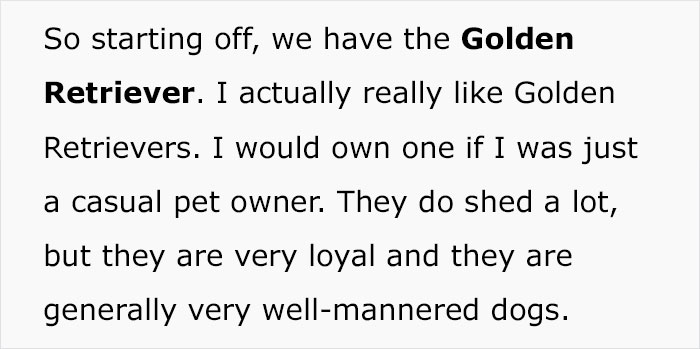
Luckily, there are many choices and people who can guide you through them. Like dog trainer and content creator Karlee Stark who just released a TikTok mini-series dedicated to helping you make this decision.
More info: KarleeStark.com | Instagram | TikTok
Image credits: ksdogtraining
Image credits: Jena Fuller
Image credits: VirtualWolf
Image credits: D. Williams
Image credits: Amanda Wild
Image credits: Aline Scaravelli
We got in touch with Karlee Stark, and she was kind enough to have a little chat with us and provide us with more context on her content. “I was introduced to dog training at eight when my parents decided to start a commercial breeding and training business,” Stark told Bored Panda.
“We worked hard to ensure that every dog sold or came in for training had the best care and attention possible. Because I was involved with most of the dogs that came in for training, I gained lots of experience working with many breeds and learning their differences.”
“Over the years, I have been able to distinguish which breeds I am fond of and which I am not. As well as breeds I see fit for different types of owners. I have also seen how environment, nutrition, and ethical breeding affect how a dog thrives in its life.”
@ksdogtraining Pt 1 This is my personal opinion as a trainer if 10 years #greenscreen#dogmom#dogmomthings#dogsoftiktok#dogtrainersoftiktok#spoilyourdog#trainingtips♬ original sound – ksdogtraining
Now, Karlee’s typical day starts with personal care.
“My morning routine gets my head right to tackle any situation. A massive part of it is going to the gym to strengthen my body. Weakness does not go over well when you have a dog that nearly outweighs you trying to eat you for lunch,” she said, highlighting that her strength and ability to handle bad situations affect her ability as a trainer.
Karlee then moves on to working with the dogs she’s training.
“Depending on the dog and how far along they are in their training, I will decipher how often I work with them daily. Some dogs need lots of exercise before they are ready to train, so I ensure they get it before our sessions so they are prepared to learn.”
The training sessions themselves may involve basic obedience, socialization, house training, and anything else the dog may need extra help learning.
Every dog I have the opportunity to train holds a special place in my heart,” Karlee said. “All of them come from different backgrounds and live in different environments. I spend hours on end every day developing personal relationships with these dogs and working on improving their lives.
Image credits: ksdogtraining
Image credits: Manuel J. Prieto
Image credits: rukasthedog
Image credits: Airwolfhound
Image credits: Denise Santos-Cucalon
Image credits: Barbara Dieu
Picking the wrong breed and then having to give up the pup because it is too much to handle is one of the reasons why approximately 3.1 million dogs enter US shelters every year (although it’s important to highlight that about 710,000 of them end up there due to other reasons and are returned to their owners).
Here are a few questions the American Kennel Club (AKC) recommends asking yourself when determining which dog is the best fit for your lifestyle. (Also, keep in mind that a prospective breeder may ask you these and/or other questions when deciding if your home is right for one of their puppies, so it may be helpful to jot your answers down).
@ksdogtraining Replying to @breroses239 #greenscreen Some dogs are the exception! #dogs#dogbreeds#dogtips#pets#dogsoftiktok#dogadvice♬ original sound – ksdogtraining
Now it’s time to think about what you’re looking for in a dog.
Contrary to popular belief, your living situation doesn’t necessarily have to dictate the last answer. Even apartment dwellers can easily share their homes with some larger dog breeds. As long as the dog’s exercise needs are met (through long walks, trips to the dog park, and activity sessions), the dog’s living area doesn’t necessarily have to be a certain size.
Image credits: David McKelvey
Image credits: kowal854
Image credits: sⓘndy°
Image credits: madaise
Of course, there are individuals that fall out of the norm. In fact, the more dogs Karlee works with, the more she comes across dogs that do not fit into the stereotype commonly associated with their breed.
Like a German Shepherd who does not have the drive for bite work or sniffing narcotics even though the breed is often seen in police and military K-9 units doing exactly that.
So why don’t all dogs strive to do what they were initially bred for?
“It all boils down to the breeding lines they come from, their environment, and the quality of their daily nutrition,” Stark explained. “If your dog does not come from working lines, chances are they don’t have the instinct to work. If they are not placed in a working environment, they are less likely to show signs of that instinct as well. And if someone fed you nothing but ramen noodles and mac & cheese every day, you would not be able to function at your best. Neither do dogs. If they are not given the proper nutrients throughout their life, their minds and bodies will not thrive at their highest potential.”
@ksdogtraining I love to hear your opinions on things. But don’t bash on others!! #greenscreen#dogawareness#dogtraining#dogbreeds#dogtips#dogsoftiktok#dogadvice♬ original sound – ksdogtraining
“I am passionate about helping people, and their dogs learn how to thrive,” Karlee added. “I enjoy it so much that I started a blog that gives dog training and lifestyle tips for those wanting to learn more about having a long and prosperous life with their pets. “
“I also work with a customized pet nutrition company to ensure my clients can find the correct nutrition for their dogs. Go to KarleeStark.com to learn more about me and receive updates every time I post!”

I can't say that I agree with this trainer's logic. She seems to have a bias towards purebreds which can be more prone to health issues due to poor, and accepted, breeding practices. For instance she says to only get a purebred poodle and not a goldendoodle or labradoodle. A hybrid "doodle" (poodle parent + lab or golden parent) benefits from something called "hybrid vigor" meaning that they are coming from diverse gene pools. And while this is purely anecdotal, my sweet rescue has had two different corgis snarl and go after her for absolutely no reason. Anyhow, this list is mostly bunk. Some dogs and breeds are hard wired a certain way but proper training and behavioral training can make a world of difference. The emphasis should always be on training, socialization and exercise. Finally, rescue, rescue, rescue... and spay and neuter your dogs. We don't need more purebred dogs. We need healthy dogs and to stop euthanizing them. End of rant :D
I agree with you! And although I understand what she is doing here, I still miss advocating for mixed breed/mutts from the shelter.
Load More Replies...
I’d add Malamutes to the “Not for First Time Owners” list. They are exceptionally smart dogs. Although difficult, they can be trained. And once trained, if they don’t follow a command… it’s not for lack of understanding… it’s because they’re being willful. Plus, they’re a LOT of dog to handle. I owned two great malamonsters… Polaris weighed 143 lbs. and Regulus weighed 141 lbs. I’m a certified dog trainer. My mals were very well trained. Although, not always well behaved. :) Currently, I own a golden and an American Shepard (aka mini Aussie). My golden is a sweet, playful, goofball, while my Aussie is our house’s disciplinarian. She literally herds our cats. If I start scolding the other animals… she’s right there “scolding” them with me. I unintentionally taught her to discipline when our kitten would do something he wasn’t supposed to (start climbing the curtain or scratch the couch). I’d tell her, “Andromeda, go tell Corvus ‘NO!’” And she would! Now she does it ALL the time!


My last guide dog was a Golden Retriever and she was just the most amazing, patient, smart, loyal, and loving dog. I trusted her with my life and she never let me down. Euthanizing her was the hardest thing I have ever done.
It's the last, best, and hardest thing we do for them. Sorry for your loss Gabby
Load More Replies...
I agree with the list but i want to add one group of dogs you should definitely not own as your first dog, And should actually be on top of that list, And that is the dogs that have part wolf in them, Tamaskan, Saarloos wolfdog, Czechoslovakian Wolfdog, To name a few of them, They are incredibly smart and need a very capable owner, Also chow chows and other Chinese breeds are not good dogs for first time owners, Because most Chinese dogs where bred for meat consumption, And they did not care about temperament, That's different now, But it takes a long time of breeding to get a change in behaviour.

Agreed chow chows are not great pets. They're lazy as hell and don't listen. They also can have so many allergies and health problems
Load More Replies...
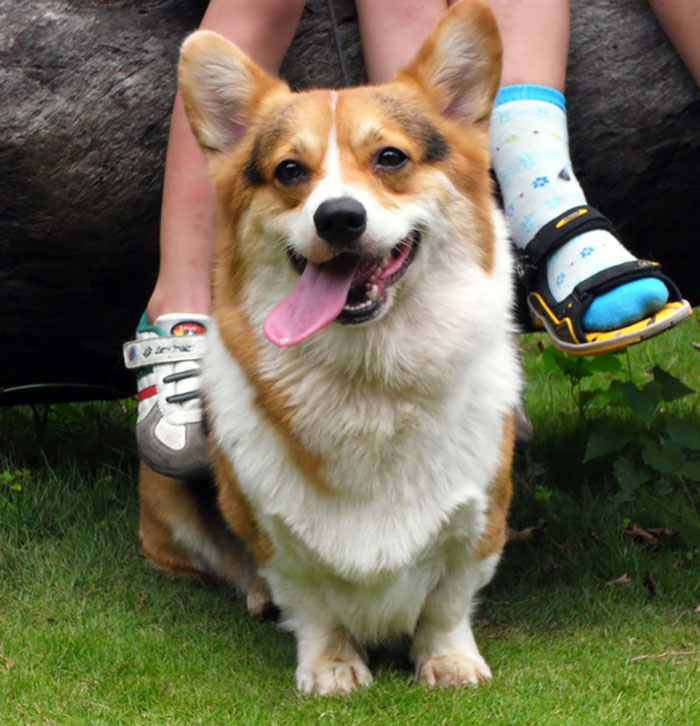
Disagree on corgis. They are difficult dogs. Go to any corgi rescue group to read about their behavioral issues. Territorial, with biting/nipping issues. They are fantastic dogs, but not for beginners.
The nipping behaviour has been bred into them. Corgis were developed as a cattle-herding breed. Being small, sturdy, agile and pretty-much fearless, they would run around between the cattle, nipping at their back legs to get them moving in the required direction. Although they are no longer used for herding, the instinct to nip at your ankles remains. I had a corgi/border collie cross for 16 years (see profile pic). He retained the herding instincts of both breeds, and although I managed to stop his nipping, his rounding up skills ensured that my grandsons never strayed too far when we went for walks in the woods.
Load More Replies...

I'm surprised greyhounds (i.e. retired racers) aren't on this list. They are super easy dogs, and very nice temperament.

Iam sorry 10 years is not long enough to give that kind advice 😉 my first dog was a hybrid I was 12 we had a blast growing up he was a great dog but I had help from my brother and he is a experienced animal behavioralest.


My first dog was a chihuahua/rat terrier. Very high energy but I spent tons of time training with her and she was smart as a whip, catching on really quickly to everything. I don't think I would have as much time to do the same with another puppy at this point. That's probably what too many people don't understand: it takes work, consistency, dedication, etc. And the benefit for her was she could come everywhere with me because I knew she would listen and behave. She loved it also.
I can't say that I agree with this trainer's logic. She seems to have a bias towards purebreds which can be more prone to health issues due to poor, and accepted, breeding practices. For instance she says to only get a purebred poodle and not a goldendoodle or labradoodle. A hybrid "doodle" (poodle parent + lab or golden parent) benefits from something called "hybrid vigor" meaning that they are coming from diverse gene pools. And while this is purely anecdotal, my sweet rescue has had two different corgis snarl and go after her for absolutely no reason. Anyhow, this list is mostly bunk. Some dogs and breeds are hard wired a certain way but proper training and behavioral training can make a world of difference. The emphasis should always be on training, socialization and exercise. Finally, rescue, rescue, rescue... and spay and neuter your dogs. We don't need more purebred dogs. We need healthy dogs and to stop euthanizing them. End of rant :D
I agree with you! And although I understand what she is doing here, I still miss advocating for mixed breed/mutts from the shelter.
Load More Replies... I’d add Malamutes to the “Not for First Time Owners” list. They are exceptionally smart dogs. Although difficult, they can be trained. And once trained, if they don’t follow a command… it’s not for lack of understanding… it’s because they’re being willful. Plus, they’re a LOT of dog to handle. I owned two great malamonsters… Polaris weighed 143 lbs. and Regulus weighed 141 lbs. I’m a certified dog trainer. My mals were very well trained. Although, not always well behaved. :) Currently, I own a golden and an American Shepard (aka mini Aussie). My golden is a sweet, playful, goofball, while my Aussie is our house’s disciplinarian. She literally herds our cats. If I start scolding the other animals… she’s right there “scolding” them with me. I unintentionally taught her to discipline when our kitten would do something he wasn’t supposed to (start climbing the curtain or scratch the couch). I’d tell her, “Andromeda, go tell Corvus ‘NO!’” And she would! Now she does it ALL the time!
My last guide dog was a Golden Retriever and she was just the most amazing, patient, smart, loyal, and loving dog. I trusted her with my life and she never let me down. Euthanizing her was the hardest thing I have ever done.
It's the last, best, and hardest thing we do for them. Sorry for your loss Gabby
Load More Replies... I agree with the list but i want to add one group of dogs you should definitely not own as your first dog, And should actually be on top of that list, And that is the dogs that have part wolf in them, Tamaskan, Saarloos wolfdog, Czechoslovakian Wolfdog, To name a few of them, They are incredibly smart and need a very capable owner, Also chow chows and other Chinese breeds are not good dogs for first time owners, Because most Chinese dogs where bred for meat consumption, And they did not care about temperament, That's different now, But it takes a long time of breeding to get a change in behaviour.
Agreed chow chows are not great pets. They're lazy as hell and don't listen. They also can have so many allergies and health problems
Load More Replies... Disagree on corgis. They are difficult dogs. Go to any corgi rescue group to read about their behavioral issues. Territorial, with biting/nipping issues. They are fantastic dogs, but not for beginners.
The nipping behaviour has been bred into them. Corgis were developed as a cattle-herding breed. Being small, sturdy, agile and pretty-much fearless, they would run around between the cattle, nipping at their back legs to get them moving in the required direction. Although they are no longer used for herding, the instinct to nip at your ankles remains. I had a corgi/border collie cross for 16 years (see profile pic). He retained the herding instincts of both breeds, and although I managed to stop his nipping, his rounding up skills ensured that my grandsons never strayed too far when we went for walks in the woods.
Load More Replies... I'm surprised greyhounds (i.e. retired racers) aren't on this list. They are super easy dogs, and very nice temperament.
Iam sorry 10 years is not long enough to give that kind advice 😉 my first dog was a hybrid I was 12 we had a blast growing up he was a great dog but I had help from my brother and he is a experienced animal behavioralest.
My first dog was a chihuahua/rat terrier. Very high energy but I spent tons of time training with her and she was smart as a whip, catching on really quickly to everything. I don't think I would have as much time to do the same with another puppy at this point. That's probably what too many people don't understand: it takes work, consistency, dedication, etc. And the benefit for her was she could come everywhere with me because I knew she would listen and behave. She loved it also.




























 No fees, cancel anytime
 then open in external browser


 and click "Open in External Browser"




























88
102