Get Premium
Dark mode theme is available exclusively for premium users. Learn more about the benefits of subscribing.
No fees, cancel anytime.

 Dark Mode Ad-Free Browsing Unlimited Content
 Ad-Free Browsing Unlimited Content Dark Mode
Join 1.2 million Panda readers who get the best art, memes, and fun stories every week!

Most of us do our best to stay on the right side of the law. Nobody’s got time for prison, of course, but rules are also there for a reason, right? We have them to keep us safe, resolve disputes, and stop society from descending into chaos.
But the law isn’t always as straightforward as it seems, and some provisions are so bizarre or oddly specific that they read more like punchlines than policy. Throw unexpected legal loopholes into the mix, and things get even more interesting. Fortunately, we don’t need to wade through mountains of case law for examples: lawyers over on Reddit have done the legwork for us, sharing legal loopholes and other surprising technicalities from around the world. Some might have you scratching your head, while others, well, you never know—they might just come in handy someday.
This post may include affiliate links.

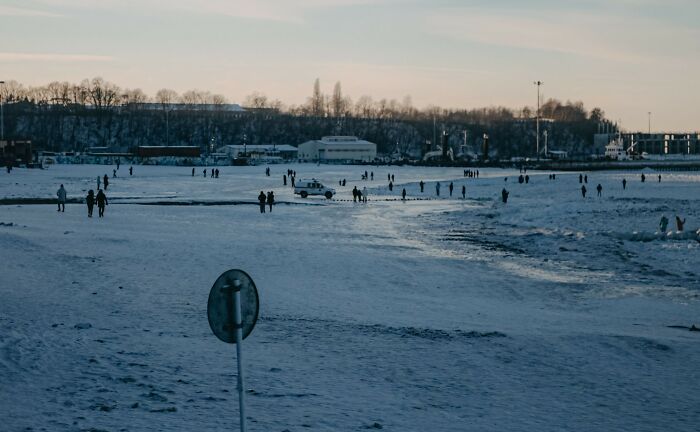 In Denmark, if the sea between Sweden and Denmark freezes and a Swede crosses the ice on foot, you're allowed to beat him/her with a stick until they leave. Best part? It's in ~~our constitution so it's nearly impossible to change it~~
EDIT: Shimfs pointed out in a reply that it's not our constitution but just the Danish Law. I did some quick searching around, and couldn't find a proper source, but I've found the explanation for the law: In the winter of 1658, the sea between Denmark and Sweden (Øresund) froze solid enough for the Swedish army to cross (we've always been fighting, check our history, it's not pretty) and it ended up with Denmark loosing a lot of territory. According to everything I can find on the internet, this was what led the Danish king to make this law.
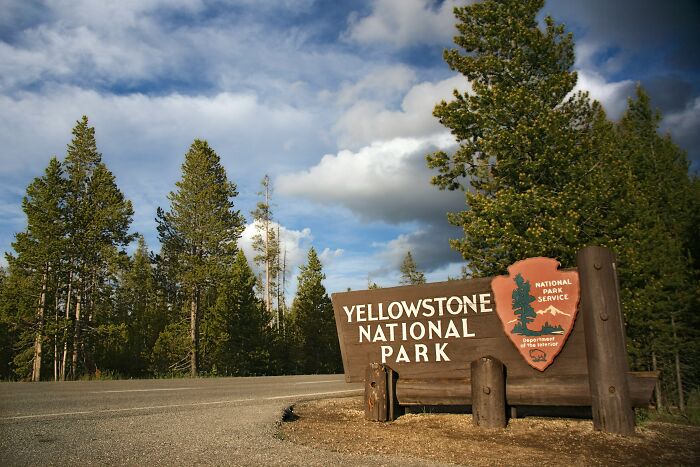 It's been suggested that it's possible to commit a felony with impunity in the portion of Yellowstone National Park that sits in Idaho. The national park is a federal enclave and does not fall within the jurisdiction of any of the three states it inhabits (Wyoming, Montana, and Idaho). When those states were admitted to the union, they ceded that land to the United States and cannot enforce their laws there. When Congress created the District Court for the District of Wyoming, it decided to place the entirety of Yellowstone Park within that jurisdiction.
Here's where things get a little weird. The Vicinage Clause of the Sixth Amendment entitles a defendant to a trial by a jury drawn from the state and district in which the alleged crime occurred. According to the latest U.S. Census, that portion of the park has a population of zero. That is, no one lives in both Idaho and the District of Wyoming. So, if, for example, an individual were to end someone in the Idaho portion of Yellowstone, he would be hauled off to Cheyenne for presentment. Once the defendant has been indicted, however, the U.S. Attorney would be powerless to try him unless the defendant waived his right to a jury trial or voluntarily submitted to the jurisdiction of the District of Wyoming.
To the best of my knowledge, this has never been tested.
 If you ever want to mail something...less than legal, pop it into a USPS First Class Envelope.
According to the Mailing Standards of the United States Postal Service, federal law dictates that the only person who can open first class mail is the addressee. This means that the postal service, and any federal agency cannot inspect/search first class mail.
TLDR: no one can inspect first class mail. NO ONE!
We all know that laws are there for a reason. Some might even call them the backbone of civil society, with a lawless society looking very different from the world we’re accustomed to living in today. But like the humans who draft them, laws aren’t without their own imperfections. As legal scholar Roger Brownsword puts it, “As a human enterprise, law reflects the imperfections that are all too common in humans.”
 In terms of loopholes, my criminal law professor was also a practicing criminal defense barrister, and he told this story about a case he had won:
The event happened in the city of Jervis Bay in Australia, which is notable because it's an annexed part of federal land so that our capital territory can have an active port.
My professor's client had gotten into a fight on the beach and, in knee deep water, proceeded to beat the guy he was fighting.
Charges were laid and it went to court.
My professor managed to find that, at the time, the delineation of the federal land around Jervis bay ended at the high water mark.
Also, at that time, the delineation of the coastal region belonging to the state ended at the low water mark.
He managed to show that, because the crime had happened in between these two points, neither the state or federal court had jurisdiction to try the client, and he got off.
Obviously the definitions were amended after that so that there would not be such a gap, but that one guy got through.
 (The town referred to here is a border town on the English/Welsh border)
You can shoot a Welsh person with a bow and arrow in Chester, inside the city walls and after midnight.
You may only shoot a Welsh person with a bow and arrow inside the city walls and after midnight.
It is against the law to call any Welsh person “English”.
All males over the age 14 must carry out 2 or so hours of longbow practice a week supervised by the local clergy.
Criminals can apply for sanctuary in Notre Dame Cathedral and must be “fed and watered” for up to six weeks.

That offer of sactuary doesn't only apply to Notre Dame (as referenced in the Disney movie, and the novel). Any number of churches have sheltered people who were prosecuted. People applying for asylum and whose requests got denied in particular, even in recent years and not only in France. A couple of cases here in Germany were successful, too, ending up with people (mostly ones who'd been here for years, well integrated and with jobs) being allowed to stay.
 In the UK, a pregnant woman is allowed to relieve herself in a policemans hat if there are no toilets nearby. The policeman has to cover the woman with his coat for her dignity.
One reason for these imperfections is that laws rely on rules, and no set of rules can account for every possible situation. Lawmakers also can’t always predict how a law might be used—or misused—once it comes into effect. In an article published in the International Journal of Law, Social Sciences and Humanities, Pranav Bhondve describes this as a problem of limited foresight and hindsight: even when lawmakers try to account for different scenarios, they can’t foresee every possible outcome.
 Not a lawyer, but if you want to write someone out of your will (especially a child or spouse) it can be tricky because they can challenge the will ~~and often win~~ *and cause a big expensive headache for everybody involved*. Here's a loophole: put a clause in the will that gives the person some paltry sum on the condition that they don't challenge the will.
So, little Jimmy who has constantly disappointed you has to make the choice between $5000 right now, or the possibility of spending a lot on a lawyer and not getting anything.
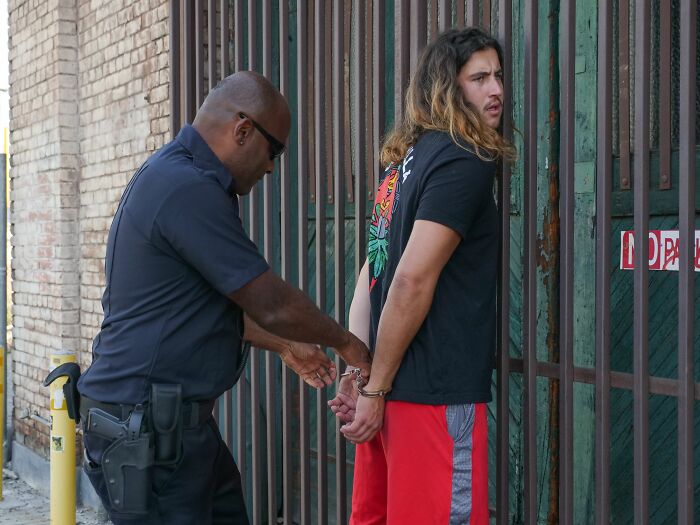 In Pennsylvania you are allowed to resist arrest with an amount of force equal to that being used by the police if you are being unlawfully arrested. Good luck getting that to work, ever.
 In the UK the legal age of drinking is 5 as long as there is a guardian present and as long as it is not in a licensed area (pub, club, bar etc) However a beer garden of a pub doesn't count so you can legally have a shot of tequila with with a toddler while watching the teletubies.
Brownsword makes a related point in The Cambridge Handbook of the Governance of Technology, explaining that legal rules “speak only to what ought or ought not to be done, not to what can or cannot be done.” In other words, laws can prohibit certain things without necessarily preventing every way someone might get around those prohibitions.
 The guy who paid $16 dollars for a $330 000 house using a loop hole that said something along the lines of if a house was abandoned and no one contested it and you moved in and lived in the house for 3 years you had ownership.
 In Australia, the postal rule regarding contracts is one that Australian Courts seem to be unable to rid themselves of. A contract is made up of a number of things, but what makes it binding is when an offer is accepted.
If a contract stipulates that acceptance can be communicated by letter, then acceptance occurs when the letter is placed *in the mail box*, instead of when it is recieved. Hijinks ensue whenever the mail system loses letters somehow (disasters, accidents, general mail system losing stuff).
 If you put a dollar in a machine and it plays a game and pays you money if you win, that is gambling, often illegal.
If you put a dollar in a machine and it dispenses a product (Coca-Cola) _then_ lets you play a game and pays you money if you win, that's called a _promotional game_ and it is legal in all 50 states.
When legislation leaves gaps or its wording allows for different interpretations, people may find ways to take advantage of them. As Brownsword explains, the effectiveness of law’s governance is hindered by “the interpretive affordances that professional lawyers find so readily in rules” and the opportunities these can leave for people to avoid complying with them.
 At common law, alienation of affections is a tort action (read: someone can sue you) brought by a deserted spouse against a third party alleged to be responsible for the failure of the marriage. The defendant in an alienation of affections suit is typically an adulterous spouse's lover, although family members, counselors and therapists or clergy members who have advised a spouse to seek divorce have also been sued for alienation of affections.
Alienation is, however, still recognized in Hawaii, Illinois, North Carolina, Mississippi, New Mexico, South Dakota, and Utah
 A lot of states have a law that says if you refuse a breathalizer, your license is automatically suspended for a period of time (90 days, 6 months, etc).
But, if you are drunk driving, the penalty is way worse, usually you lose your license (plus possible jail time, etc)
It is very difficult to get convicted of drunk driving without a 'chemical test' (Breathalyzer)
So, if you get pulled over while you are drunk driving in one of those states, cut your losses and refuse the breathalyzer.
TL;DR: stupid law tries to force people to submit to breathalyzer, but actually gives people an 'out' to not get a DUI conviction.
This became moot last year, but I enjoyed discovering this one. San Antonio had a knife ordinance designed to make carrying a folding knife illegal. State law criminalized possession of a knife longer than 5.5 inches. The ordinance criminalized possession of a folding knife under 5.5 inches.
Nobody said anything about knives exactly 5.5 inches.
This is where legal loopholes come in. Grammarist defines a loophole as a gap or ambiguity in a law or set of rules that allows someone to circumvent a requirement or restriction. Interestingly, the term originally referred to a narrow opening in a fortified wall. In castles, these slits allowed archers to watch for and shoot at attackers while remaining protected.
 Someone you're married to can't testify against you about something you told them, even if they wanted to, so feel free to tell your spouse about that time you did something illegal.
However, someone you're married to can choose whether or not they want to testify against you about something they actually saw you doing, so only let your spouse watch you do something illegal if you really trust them.
 The Fruit of the Poisonous Tree doctrine. Essentially if the state conducts an illegal search, any subsequent fruit of the illegal search is inadmissible.
Best Example is Wong Sun v. United States. Government did illegal search of A. A incriminated B. Police went to B and found illegal substances, B then incriminated C, the supplier. Police went to see C. C invited police in to discuss. C then went to the station and made a voluntary confession. Supreme Court found that A and B were protected by 4th Amendment exclusionary rule. C would have been had he not gone to police station to voluntarily confess. If this seems confusing, read the case for more confusion.
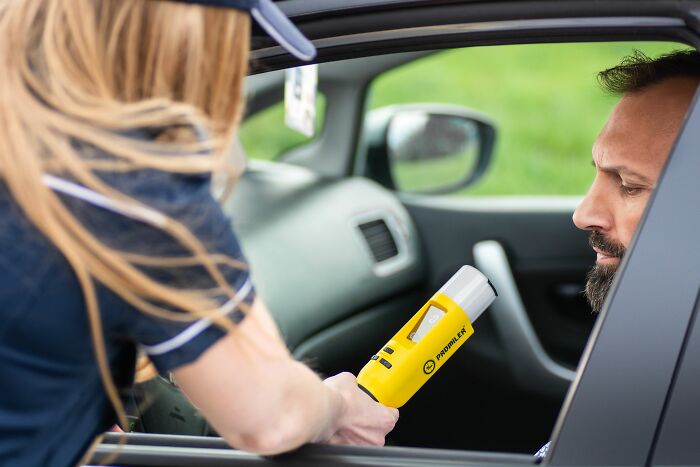 In Australia if you immediately contest the results of a breathalyzer test with police, you can go to a nearby hospital for a blood test within one hour of being tested (can't drive yourself though). A friend was driven there but on the way ate two 12-inch subs and drank a litre of Gatorade. The result showed a significant enough difference between the reading and the blood test for it to be thrown out in court.
By the 17th century, the term was being used figuratively to refer to a small opening or outlet for escape. And as The Vocabularist writes for the BBC, “The meaning of loophole as a clever scheme, often caused by a defect in a law or rule, was in use as early as October 1648.”
 In Scotland, the Social Work department can apply for a Child Protection Order to take your kids off you whenever they want. In practice, the reasons they give for taking said kids aren't required to be backed up with evidence. Tis nonsense.

The reasons can include underage prostitütion, neglect and abüse. In my country (not Scotland) the parent has the right of legal appeal, and often wins the child back.
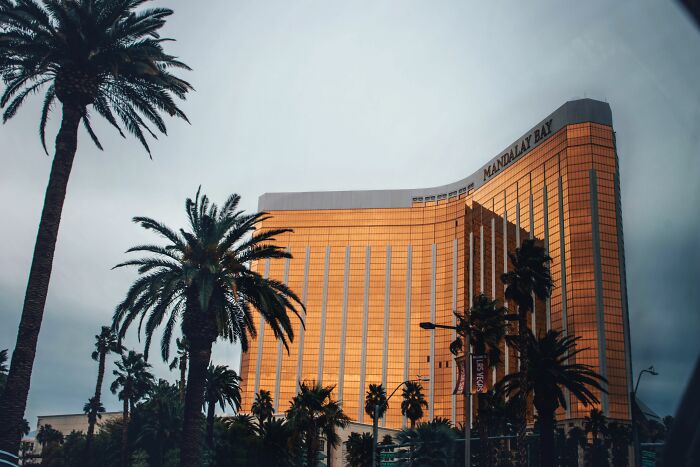 There is a legal defence in Australian common law called the change of position defence. It basically says that if you accidentally receive a payment and use it to change your position, you won't be required to pay it back. It only works though if you spend the money on something that can't be traced. It also has to be something that amounts to a 'change of position' (i.e. can't spend it on bills). So if you're in Australia, and cash every magically appears in your back account and you don't know why, book a trip to Vegas immediately.
 In the UK. Heard a story where a guy went through 3 successive speed cameras hence got 3 tickets. He went into the police station and said I didn't slow down so technically it was only one offence. He got away with it and only got one ticket.
Today, a legal loophole can allow someone to get around what a law was intended to prevent without necessarily violating its literal wording. Whether a particular workaround is lawful depends on the circumstances. But that’s part of what makes legal loopholes so intriguing: they reveal how the difference between what a law says and what it sets out to achieve can sometimes produce unexpected results.
Which of these examples did you find most interesting? Let us know in the comments.
 In Scotland there is no crime for house breaking unless another crime is committed in addition to entering the house, for example you damage the property, ie break a window, or theft. Theoretically u could break walk into an unlocked house and just chill, however your actions could lead to harassment but that would probably involve a sustained period of time
In California, when issued a moving violation, you have a right to a change of venue under certain circumstances.
The venue (court to hear your case) must, on request, be changed to the seat of the county in which the citation is issued IF the county seat is closer to your home.
So let's say I'm ticketed in little ole Twentynine Palms, County of San Bernardino, CA. The default courthouse to hear my case will be just down the road at Joshua Tree. But before the officer completes the citation, I can demand that my case be heard in San Bernardino city, 100 miles away because San Bernardino is closer to my home in San Diego.
Why is this important? Because chances are good that officer lives much closer to where he/she issued your ticket than 100 miles away in San Bernardino. Chances are even better that they won't drive the 100 miles to attend the hearing.
Adverse Possession!
This is a really complicated doctrine, but to put it really simply: Let's say you and your neighbor have big unfenced yards. Somewhere between your two properties there's a nice Cherry tree. One day you get a little Golden Retriever puppy and you want to build a fence. So you build that fence and include the Cherry Tree on your side.
In reality, that Cherry tree is on the neighbor's side of the property line. BUT after 10 years of that fence being there (depends on state), it's yours. You have now adversely possessed that land.
If you are being sued by the state in Canada, you can request that you trial be Bilingual (Eng & French) and they must comply.
Thus many times they Crown will drop the charges or settle with you if the cost of running the case in both languages if not worth the time (or repeating everything) or money
It has gotten my Canadian friend out of many instances of minor traffic/transport stuff.
Here's another thing I think people should know. It would be a stretch to call it a loophole, but it's something many people don't know.:
If you're ever driving down the road and see a car that looks reckless and or drunk, and you consider calling the police but figure "there's no way they'll get here in time to witness this dangerous driving and/or there's nothing they can do about it until it actually causes an accident": CALL THE POLICE. It's quite important if the person does cause an accident down the line* [edit: my typo said "down the liar" - maybe a Freudian slip].
911 calls are used by shrewd lawyers and insurance companies to establish that someone was driving in a reckless manner. Since it's sometimes hard to prove who was responsible for the accident, your 911 call could help the state in prosecuting offense; or could really be the difference in whether someone wins a civil case. When in doubt, just call and report your location, a description of the car, and a license plate if you can give one.
If you're not comfortable calling 911 there is probably a non-emergency number for your local police department so keep that in your phone.
One caveat: 911 only keeps the records of the calls for a limited period of time. So if you see someone on the news and say to yourself "hey, I saw that car driving erratically before that!" don't assume the police already are aware of your call. Contact them and let them know what you did and whether you're willing to serve as a witness.
 Apparently there's a bunch involving taxes but im not rich enough to know about them.
A story is that one tax attorney keeps a fish tank with three seemingly identical goldfish. One is called Avoidance, tax avoidance is legal because everyone has the right to redistribute their income and expenses to minimise the amount of tax they pay. One is called Evasion, tax evasion is illegal, obviously. The third fish is called Avoision, which is the legal grey area in tax law that lawyers can fight in court. Most people can't tell the three fish apart. This tax attorney specialises in avoision.
 Massachusetts has two ages of consent, 18 if you're a virgin, 16 if you're not. Also Self-defense is not a valid legal defense.
 In the UK the Monarch can't technically break the Law...Or at least she can't be prosecuted for it.
 If you save earth from an asteroid, you never have to pay taxes ever again. Lawyered.
 This isn't really a loophole, but its something that TV most people consistently get wrong.
Pressing Criminal Charges. You don't have a right to do that. You can't "press charges" against someone for a crime they've committed. In fact, its not up to you at all even if you are the victim of said crime. It is *entirely* up to the prosecutor's office to determine if there is enough evidence to proceed with the case against the person. They will take the victims/witnesses/police testimony into account but in the end the decision rests with them and only them.
TL;DR: The decision to bring or not bring criminal charges is not up to you.
 Private student loan debt is not dischargeable in bankruptcy; however, it is treated like any other contract. If you don't pay private student loans, private student loan lenders (like Sallie Mae) only have the same rights as other creditors like credit card companies, and their debts come off your credit reports in 7.5 years just like any other bad debt.
NOTE: This only applies to PRIVATE student loans, not Direct loans, not FFELP loans, Stafford or other kinds of government-backed loans. Also, this is of course not legal advice and Redditors should seek the advise of retained counsel before deciding not to pay private student debt.
That in New York, signing a waiver of liability before engaging in some game, sporting event or amusement park isn't worth the papers it's written on.
In the UK if you pay for parking and there's a sign saying that they aren't responsible for damage to the car then you can still sue them as long as you've paid because by law you expect security with the money you paid.
California has some interesting towing laws.
You can park on someone's private property for 24 hours after the police have been notified if your vehicle is not considered safe to operate on a highway. The vehicle must also not be a camper or dwelling. Unless the property has a sign which must have 4 specific things. It must say it is private property. That vehicles will be towed. The number for the traffic enforcement agency. And the number for the towing company to be used. If it is missing one of those it isn't considered valid.
So if someone's property doesn't have that specific type of sign, park and remove a tire and throw in the trunk. You got yourself 24 hours at least.
Also if you show up and your car is in the process of being towed (they are putting it up onto a trailer) the tow truck operator must release your car on the spot and you can only be charged up to half of the cost of the tow.
 If you fail to praise Kim Il-sung, you can avoid being forced to work in a salt mine for the rest of your life by not living in North Korea.
 You can move someone's property if it has no fixed address.
A contract signed with a minor is voidable by the minor, but not the other party. Would have been fun to take advantage of that as a kid.

Where? Because here a contract signed with a minor is automatically void.
If you exceed the income limit for a Roth IRA account, you can make a non-deductible contribution to a traditional IRA and then roll that money over to the Roth IRA, thereby circumventing the income limit. Granted, the rollover is a taxable event, but assuming you don't already have money sitting in the traditional IRA from before, the taxable amount should be low or zero as you're rolling the funds over soon after the contribution and therefore likely have very little gain.
 If you take someone's life and get rid of the evidence, you won't go to jail. Neat little loophole.
In India, pay a cop and you're free. Pretty neat loophole.
Not a loophole. If you're innocent you still have to pay or they confiscate your passport or driver's licence.
Books fragile uppity bag versed beneficial threatening wrench dinosaurs roll.

You need to stop posting half truth garbage BP. Most of these are half right or were once laws. Others are blatantly false or are covered by other statutory laws. Advice for young players, don't believe anything you read on the internet.
You need to stop posting half truth garbage BP. Most of these are half right or were once laws. Others are blatantly false or are covered by other statutory laws. Advice for young players, don't believe anything you read on the internet.





































 No fees, cancel anytime