Get Premium
Dark mode theme is available exclusively for premium users. Learn more about the benefits of subscribing.
No fees, cancel anytime.

 Dark Mode Ad-Free Browsing Unlimited Content
 Ad-Free Browsing Unlimited Content Dark Mode
Join 1.2 million Panda readers who get the best art, memes, and fun stories every week!
The world is full of interesting things which most people have never seen. Fortunately, between ready access to cameras and the internet, we can now view and read about all sorts of parts of our planet’s history, from intriguing natural formations to some of the things ancient humans were putting together.
The “Ancient Nexus” Facebook page is dedicated to interesting posts about history, nature and archeology. So get comfortable as you scroll through, upvote your favorites and be sure to share your own thoughts in the comments section below.
More info: Facebook
This post may include affiliate links.
"These are the one's who discovered America
And should be taught in our history books
Not the false storyline they give about Columbus discovery America.…"

They didn't "discover" anything, they are natives and it is their home land!
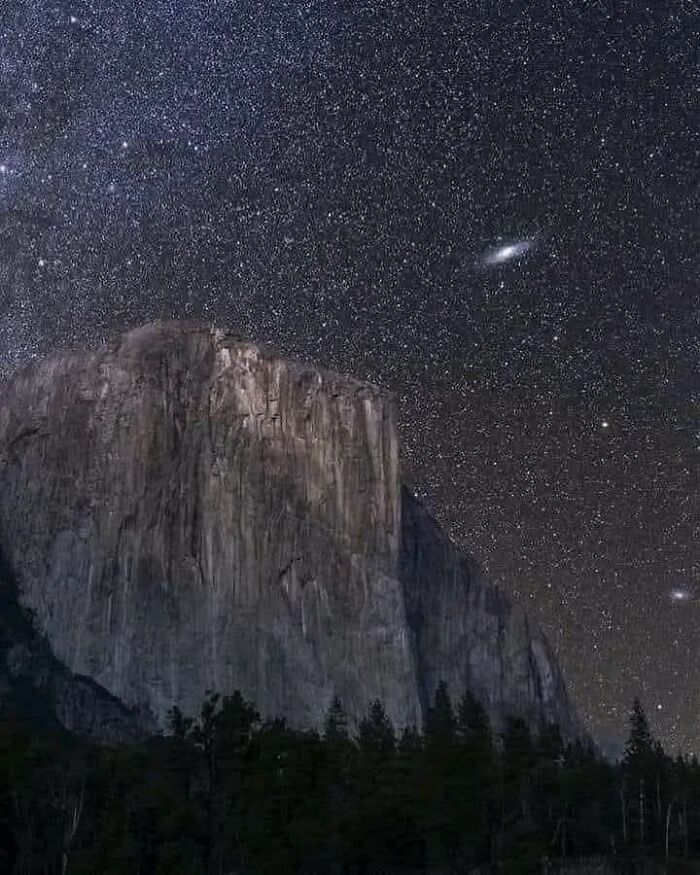
While attempting to photograph the iconic El Capitan in Yosemite National Park, a photographer captured something truly extraordinary—the Andromeda Galaxy!
Known as the M31 Galaxy, Andromeda is the closest spiral galaxy to our own Milky Way, located about 2.5 million light-years away. It contains over a trillion stars, and is one of the few galaxies visible to the naked eye from Earth. Its light, traveling across millions of years, reaches us as a faint, smudgy shape in the night sky, which the photographer accidentally framed perfectly while focusing on El Capitan.
El Capitan, the majestic granite monolith that rises over 3,000 feet above Yosemite Valley, is a favorite subject for many photographers. But in this case, the photographer inadvertently captured the Andromeda Galaxy, creating a stunning blend of earthly and cosmic beauty in one shot.

Not just the Andromeda Galaxy, but also the Triangulum Galaxy on the bottom right.
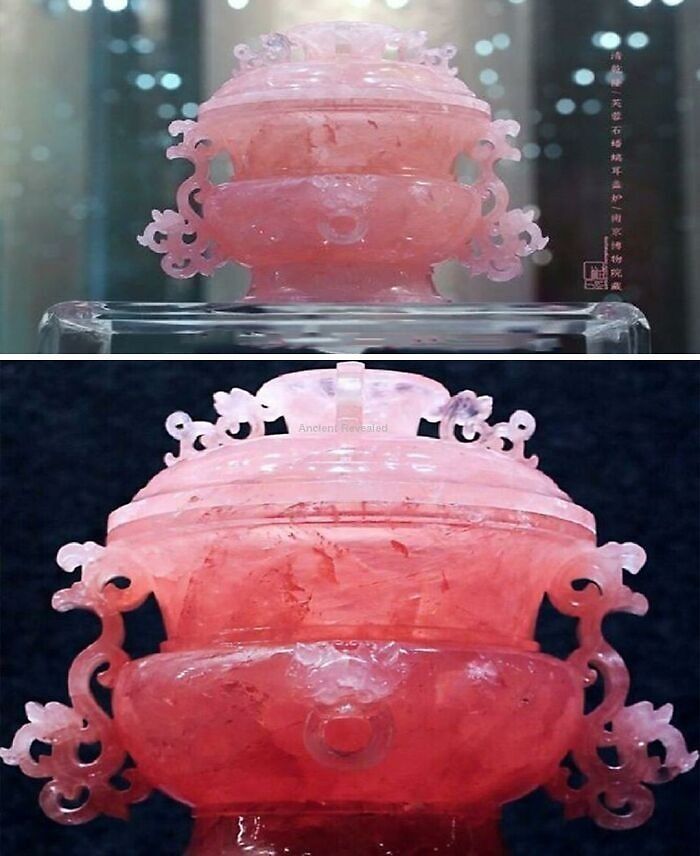
A stunning rose quartz incense burner from the Qing Dynasty. It hails from the Qianlong Reign, which was between 1736 and 1796 CE. Right now, you can see it at the Nanjing Museum in China. It really highlights the amazing craftsmanship and cultural flair of that time period.

"I found this is my Grandmama's attic, and we've been using it as the dog's water dish" Antique Road Show-Birmingham, Alabama.
There is an unfortunate issue that we often get a very skewed perspective of world history because our records are only of things that survived. Remember, for every stone pyramid, there are thousands of dwellings and buildings that rotted away or fell apart. After all, as anyone who has a home knows, most materials do sustain some wear and tear over time.
This is particularly true if it’s not a stone or marble construction made of massive bricks. Unfortunately, this means a lot of things are just lost to time, or at least very hard to trace. Fortunately, technology has made improvements and bit by bit, archeologists can peel back the layers and get a better idea of what is out there.
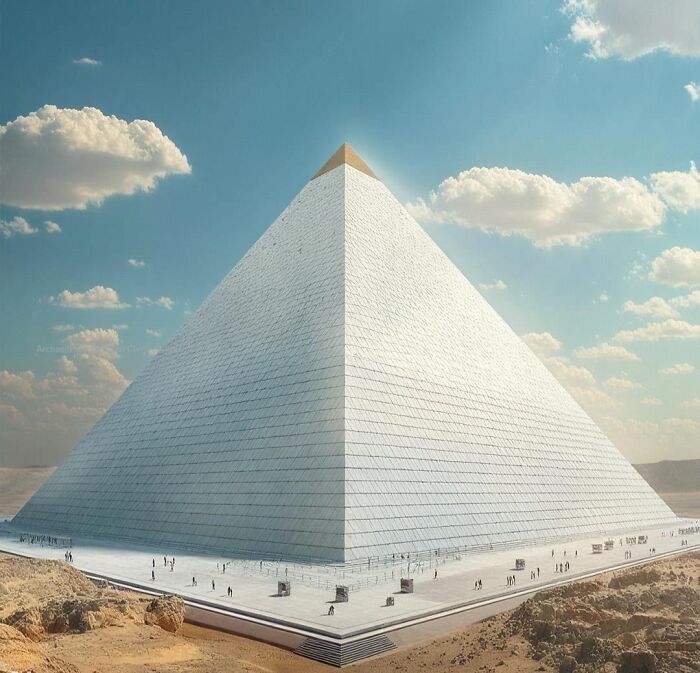
The pyramids of ancient Egypt weren’t always the crumbling silhouettes we see today. Nope, they were once cloaked in gleaming white limestone, radiating a brilliance that set them apart from everything else in the harsh desert. Picture yourself there, surrounded by relentless sand, and suddenly—bam! These colossal structures explode into your vision, shimmering like priceless gems beneath the relentless sun. How jaw-dropping would that sight have been? A striking testament to the sheer audacity and engineering genius of the ancient Egyptians, who didn’t just build; they dazzled.

Snopes declared it as mostly true. For more insigt: https://www.snopes.com/fact-check/pyramids-white-limestone-gold/
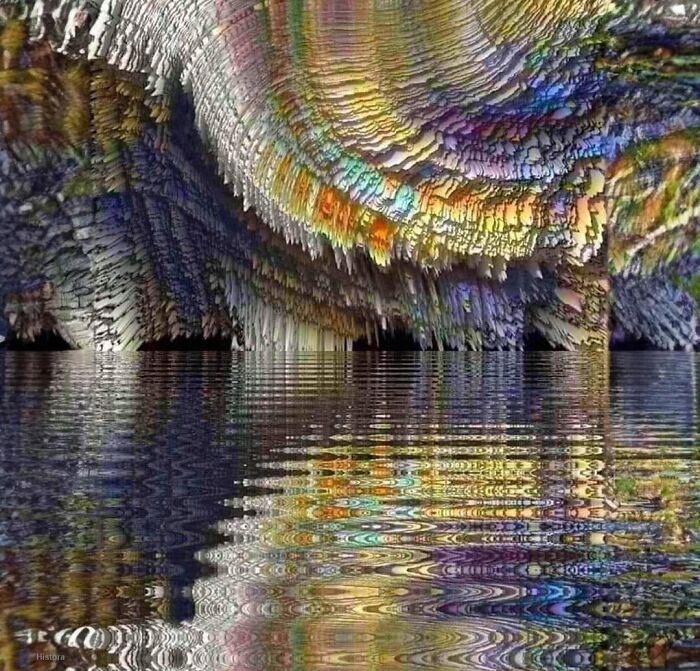
Nestled in the stunning landscapes of Sardinia, Italy, Neptune Cave is a true testament to the breathtaking wonders of our planet. With its spectacular stalactite formations and crystal-clear waters, this geological marvel has been sculpted by nature's hand over millions of years, creating an enchanting world beneath the surface.
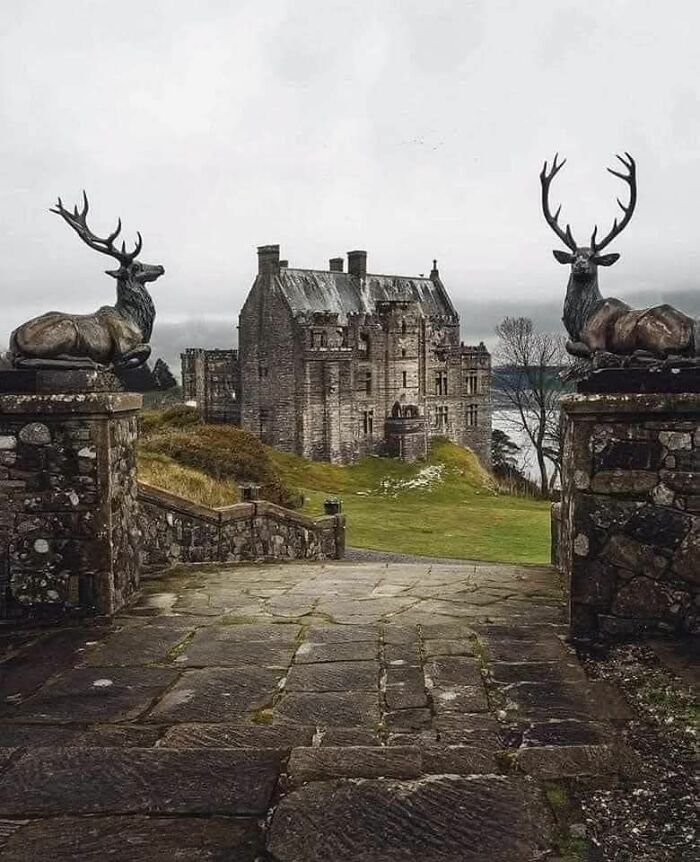
Duntrune Castle, located on the north side of Loch Crinan in Argyll, Scotland, is believed to be one of the oldest continuously inhabited castles in Scotland, with origins dating back to the 12th century.
The castle has historically been associated with Clan MacDougall and later came under the control of the powerful Clan Campbell, who retained ownership for centuries.
It gained a reputation for its role in Scotland’s turbulent clan conflicts, including a famous legend involving a MacDonald piper, who, while held captive, warned his clan of an ambush by playing a haunting tune.

For example, many researchers now use satellite data to “access” parts of the planet it might be hard to travel to. This is particularly true for the various nations that used to exist in Latin America, who often built their cities in remote areas, which are now covered in jungles. Instead of wasting months trekking through the wilderness, archeologists can now pinpoint the exact locations from a computer.
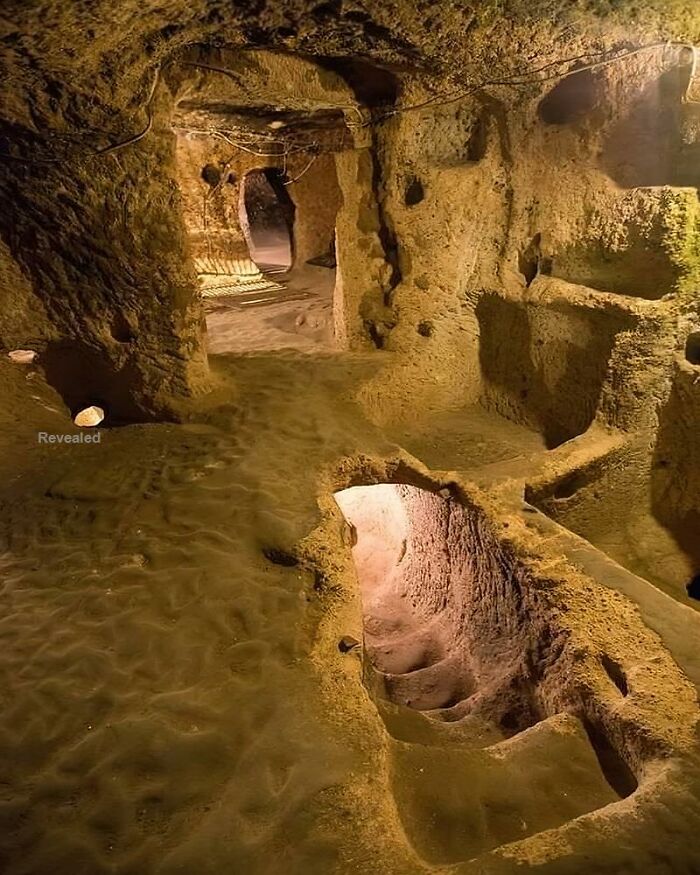
Derinkuyu, located in Turkey, is an impressive underground city that stands as the largest among more than 200 ancient subterranean cities. Spanning nearly 172 square miles, it is designed to house approximately 60,000 residents across its 18 levels. This remarkable achievement in engineering has its origins dating back 3,000 years.

One of the best visit i ever made. That's so cool if you are not affraid of being underground
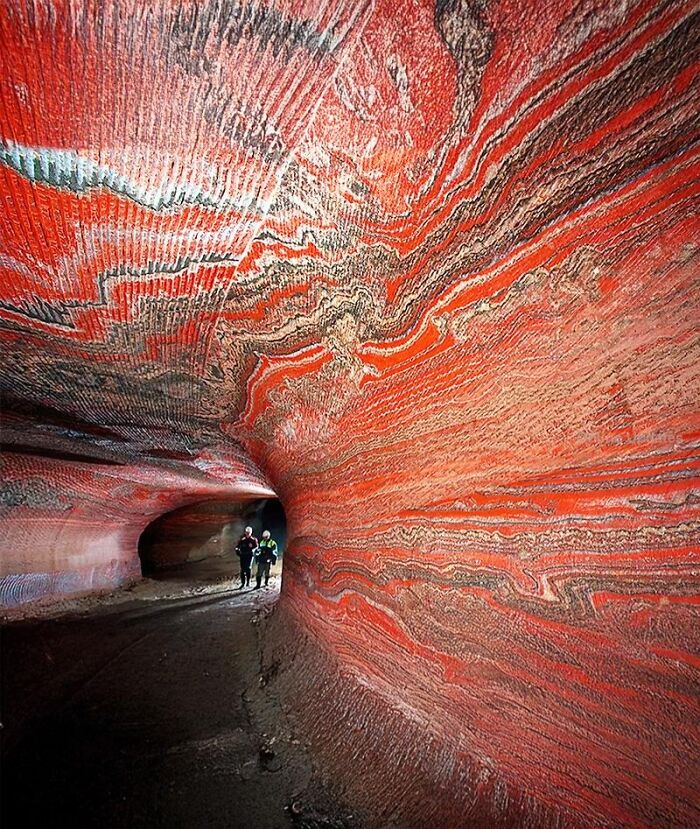
Nestled in Russia’s Perm region, the Berezniki Cave stands as a stunning testament to nature's extraordinary artistry, sculpted over millions of years. Within its depths, the enchanting rainbow walls burst forth in vibrant hues, composed of sylvinite—a potassium-rich mineral that emerged when ancient oceans dried, leaving behind a masterpiece of color. These striking layers of red, orange, and blue have been meticulously crafted under immense geological pressure, resulting in a mesmerizing underground landscape that feels almost otherworldly. Explore this psychedelic grotto and witness the breathtaking interplay of nature's palette at work.
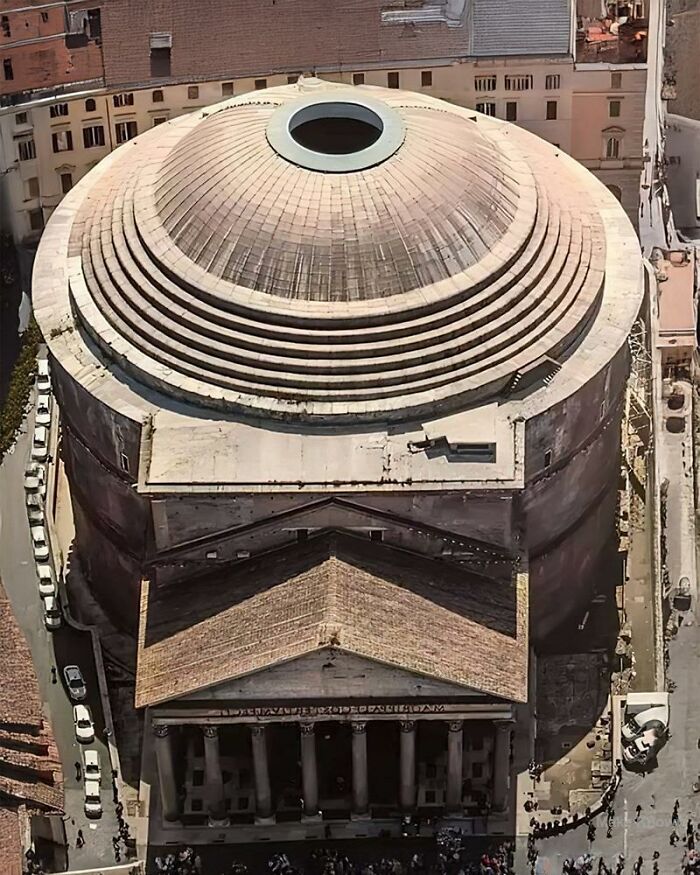
The Pantheon’s dome in Rome, a breathtaking testament to ancient ingenuity. Erected nearly two millennia ago, it reigns as the largest unreinforced concrete dome ever crafted, standing tall at an astonishing 43 meters (141 feet) in both diameter and height. This architectural masterpiece is not just an edifice; it is an enduring source of inspiration. The Romans may not have been the originators of concrete, but they transformed it into an art form using a remarkable blend as described by Vitruvius—lime, pozzolana, and select aggregates forged into a material of unparalleled strength. The dome's ability to withstand the test of time, sans any modern supports, is a testament to the brilliance of Roman engineering, showcasing the extraordinary skill and vision of its builders.
I've been here and it is a spine tingling place to visit knowing how old it is but I never realised this about the roof!!!
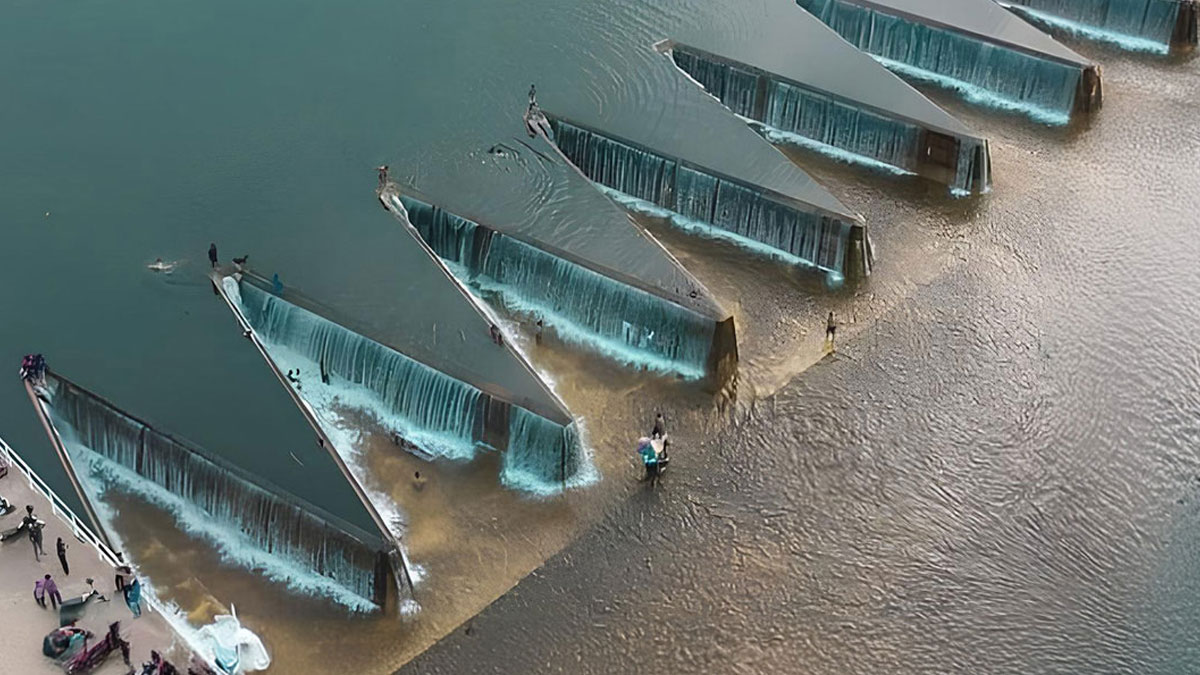
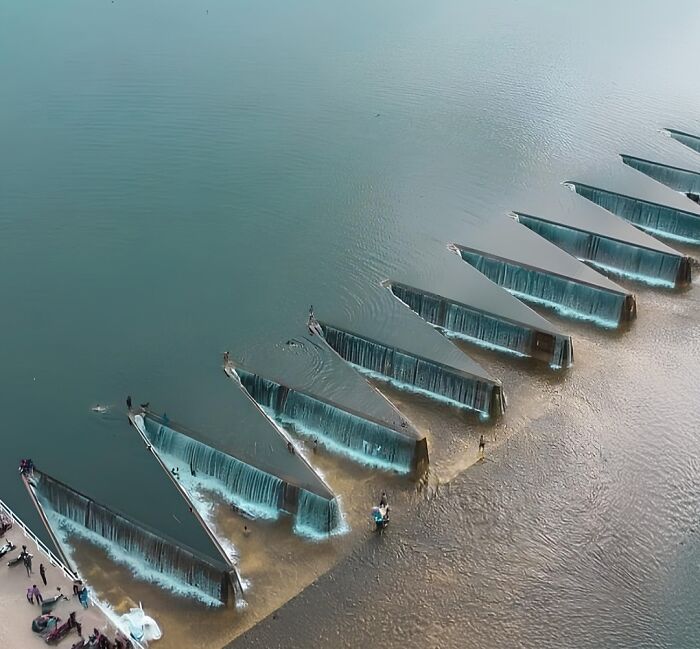
Pimburattewa Tank in Sri Lanka, a marvel of ancient engineering, was constructed by King Parakramabahu I in the 12th century. This impressive structure was designed for water storage and irrigation, highlighting the sophisticated hydraulic systems developed by ancient Sri Lankan civilizations.
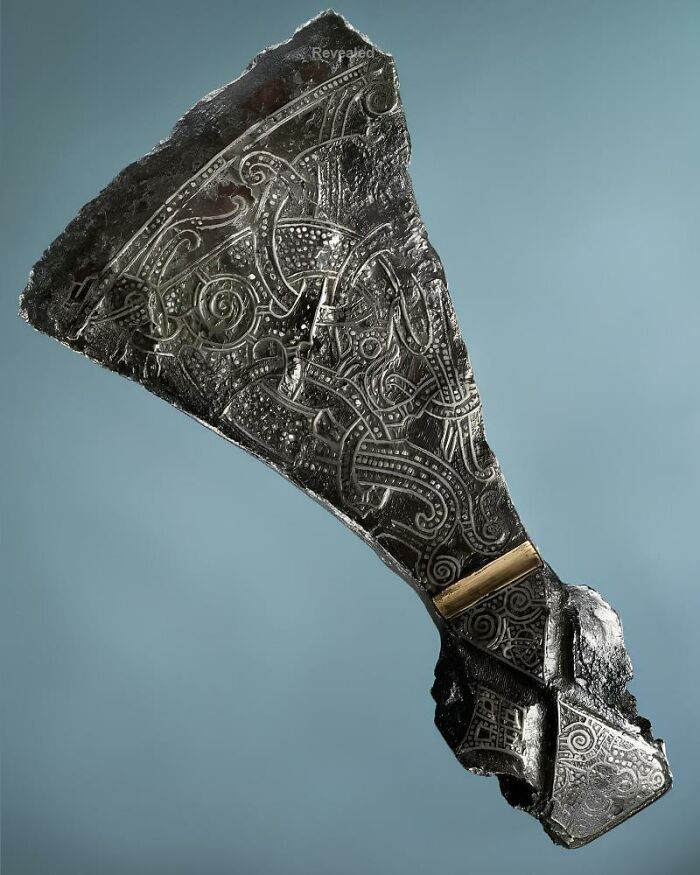
This intricately carved Viking axe head, which dates back to 994 CE, was discovered in Denmark. Unearthed in 1956 near the village of Mammen, this remarkable 1,030-year-old artifact is currently housed in the National Museum of Denmark. The elaborate designs of the axe head exemplify the exceptional craftsmanship and artistry characteristic of the Viking Age, making it a significant piece of historical heritage.
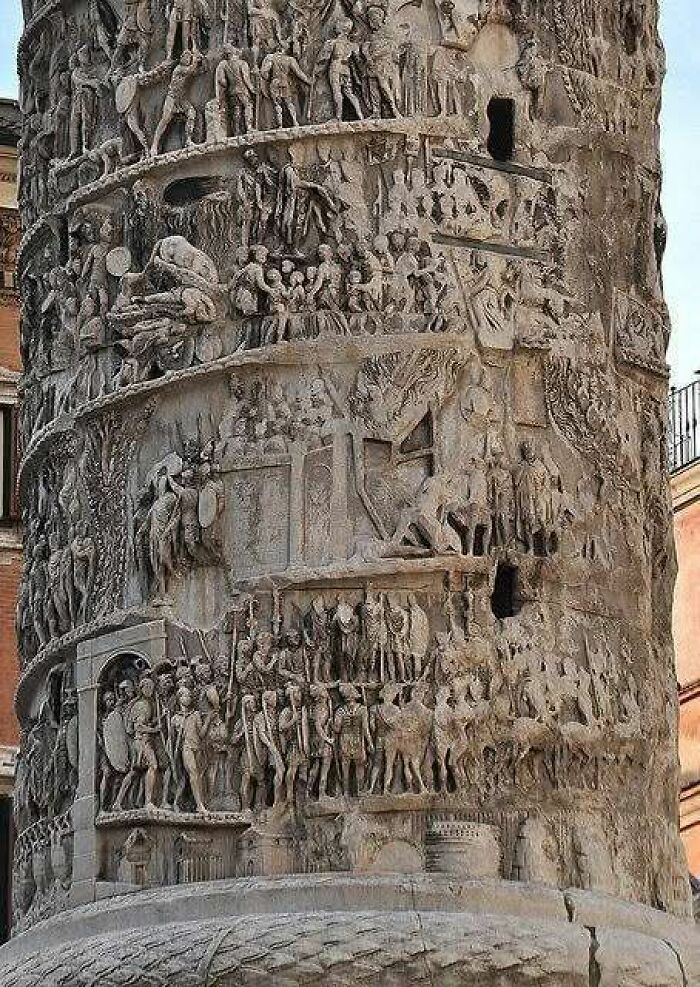
Column of Marcus Aurelius (180 AD), Rome

I feel like something is missing here. Are you sure it isnt nestled in Rome?
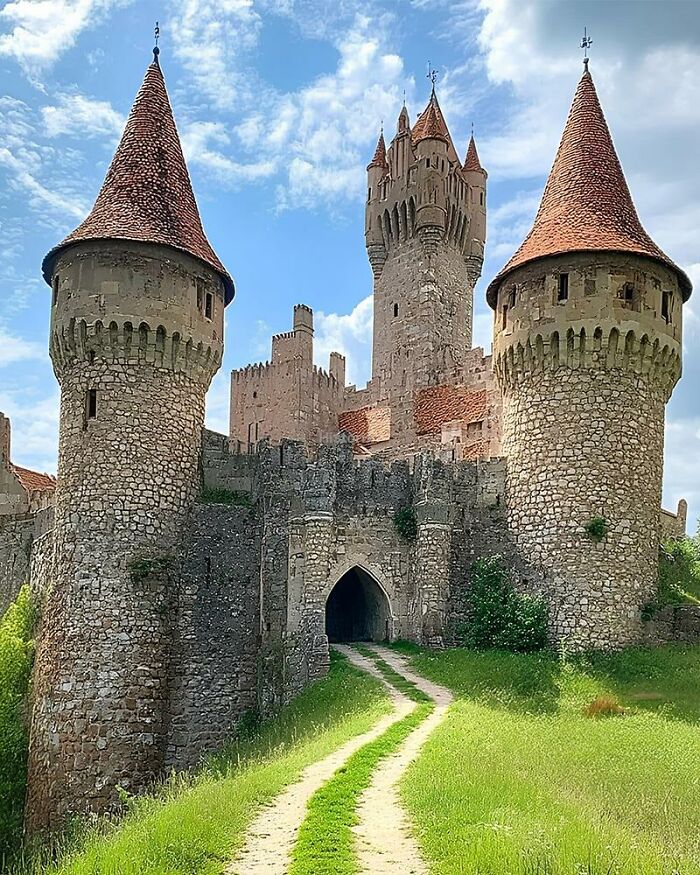
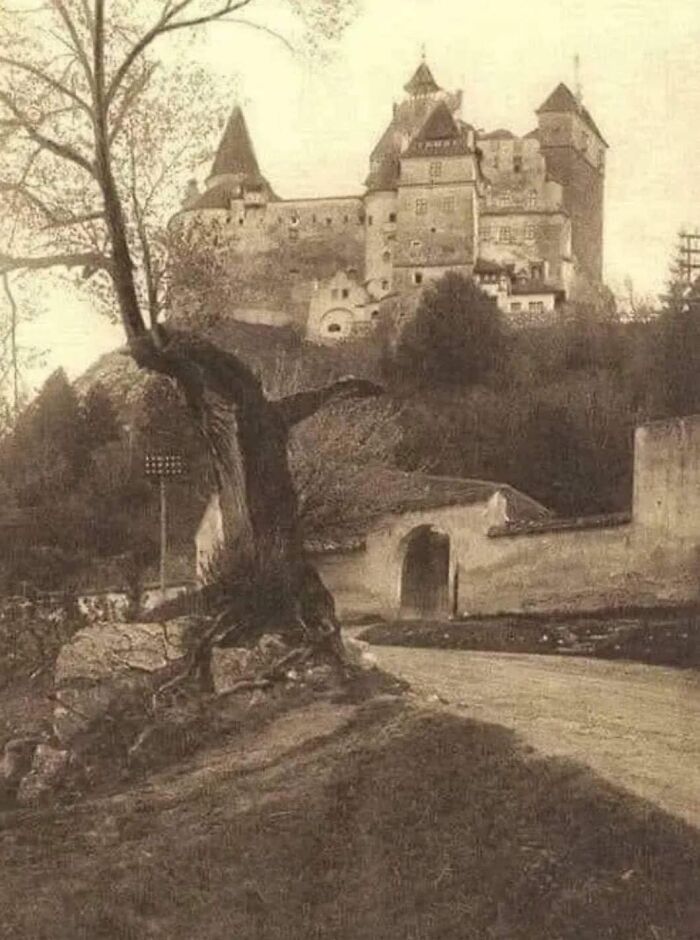
Nestled in the heart of Transylvania, Romania, Corvin Castle rises majestically like a scene plucked from a Gothic fairytale. Erected in 1440 by the formidable Hunyadi family, this fortress once stood as a bastion against the relentless advance of the Ottomans. As you pass through its imposing gates, prepare to wander through more than 50 rooms, each brimming with medieval artistry and echoes of valiant chivalry. The castle's meticulous restoration accentuates its enchanting character, while haunting connections to notorious figures like Vlad the Impaler lend an irresistible air of mystery. Whether you're captivated by its storied past or simply entranced by its enchanting allure, Corvin Castle invites you to embark on a spellbinding journey through the annals of Romania's rich history.

Say "nestled" one more time BP, I dare you. I double dare you, say "nestled" one more goddam time.
Planted by the audacious David Latimer back in 1960, this glass prison of plants has defied the odds and flourished for over six decades with just a single sip of water.
Inside this bizarre self-sustaining biome, water doesn't just sit back and relax—it’s in constant motion, cycling through roots, pulling off transpiration tricks, and creating a condensation dance. Photosynthesis pumps out oxygen and the good stuff, while cellular respiration turns organic waste into nutrient gold for those quiet nighttime hours.
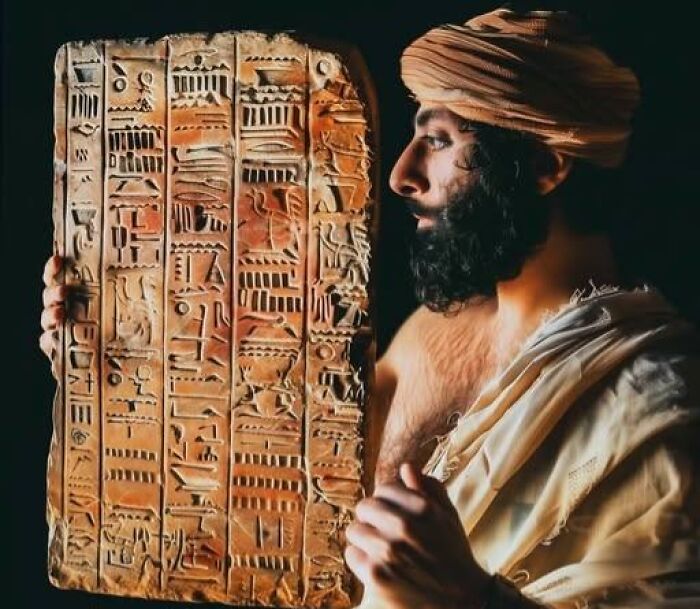
Ancient Babylonians did math in base 60 instead of base 10. That's why we have 60 seconds in a minute and 360 degrees in a circle.
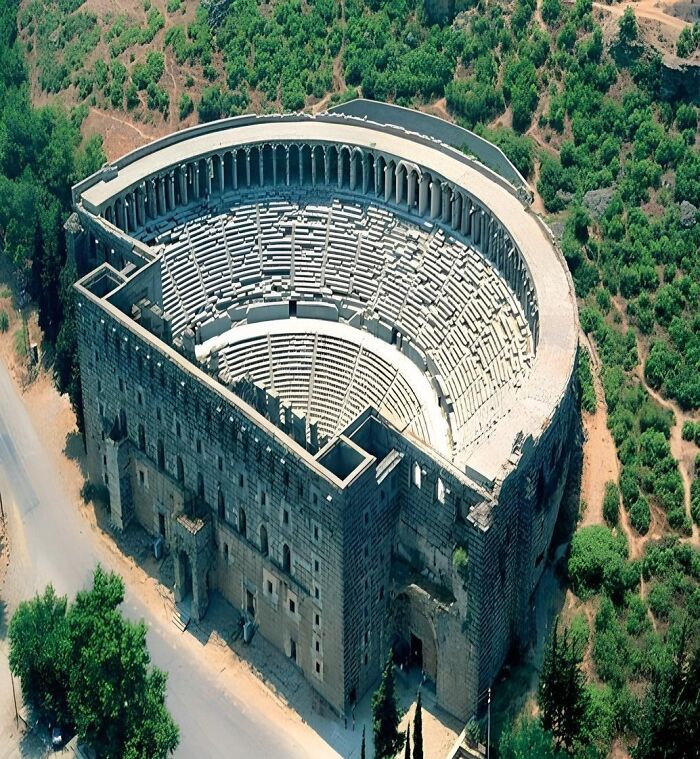
Erected in the year 155 AD, the theater of Aspendos emerges as one of the most impeccably preserved relics of ancient theatrical grandeur. Nestled within the historic Greco-Roman city in Turkey's Antalya province, this extraordinary structure is a testament to the ingenuity and finesse of ancient architectural prowess, captivating the imagination of all who behold its timeless beauty.
Check out this amazing hand-colored photo from 1865 that shows a Jewish girl from Damascus, Syria, decked out in her traditional clothes. The colors pop and the patterns are so detailed, really showcasing the rich cultural heritage of the Jewish community back then.
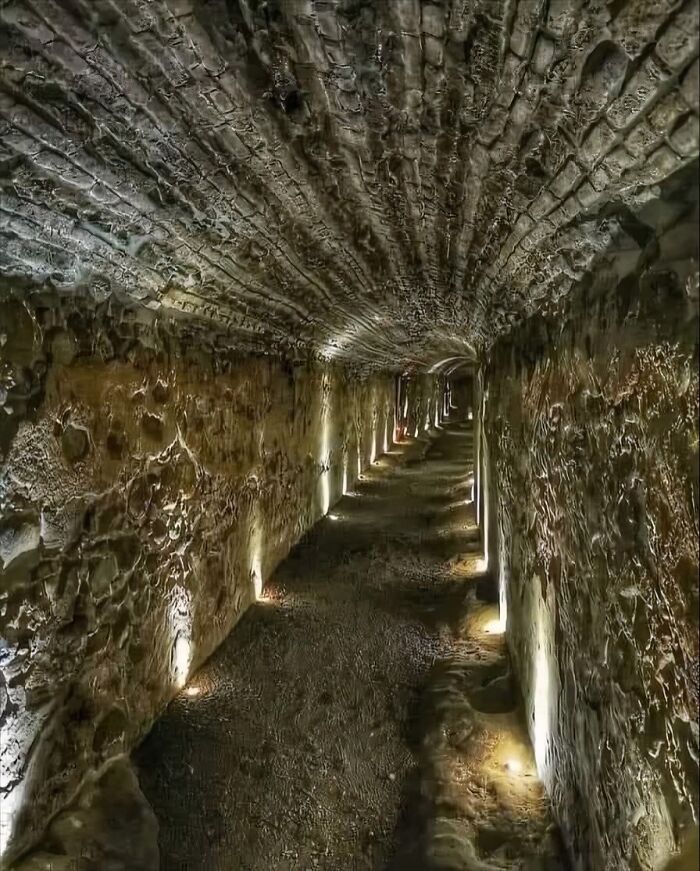
The rediscovered tunnels beneath Puebla, Mexico, are an incredible historical find, dating back up to 500 years. This 10-kilometer network, tall enough for horseback riders, was uncovered in 2015 after being considered a myth for centuries. Stretching from Puebla’s historic center to Loreto castle, where the Cinco de Mayo battle took place, the tunnels may have served strategic roles during the Mexican War of Independence and the Puebla War against France. Artifacts like toys, kitchen items, and weapons from the 1800s have been found preserved in the mud.
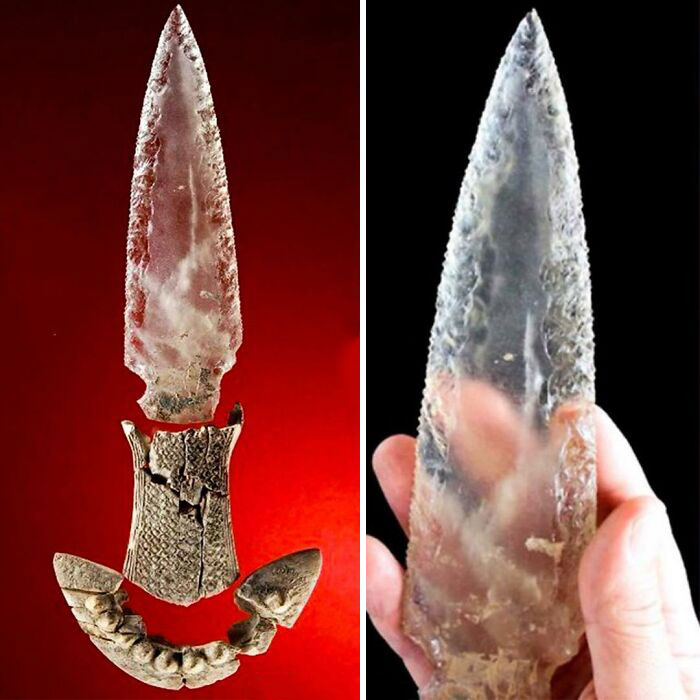
In 2007, an astonishing revelation shook the archaeological community near Seville, Spain. Picture this: a tomb hiding a jaw-dropping 5,000-year-old dagger made from rock crystal, stretching about 8.7 inches of pure craftsmanship, complete with an opulent ivory hilt and sheath. This wasn’t just any run-of-the-mill burial; it likely belonged to the elite of the Copper Age, housing 25 individuals and an impressive array of grave goods. Think amber beads, intricate ivory artifacts, and even remnants of gold blades. These treasures scream of a society steeped in complex hierarchies and rich ceremonial customs, with that striking crystal dagger serving as a bold testament to their cultural brilliance.
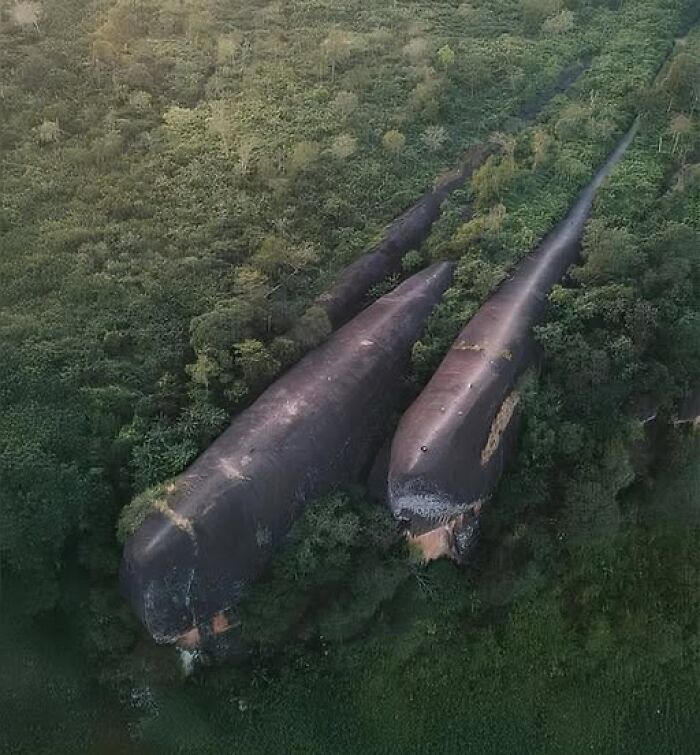
Nestled in the stunning landscapes of Thailand, Hin Sam Wan, or Three Whale Rock, is a captivating geological wonder that dates back an impressive 75 million years. From an aerial view, the rocks take on the charming appearance of a family of whales gracefully surfacing from the depths, making for a truly breathtaking spectacle. It's a remarkable showcase of nature's artistry, meticulously sculpted over eons, that leaves visitors in awe of its beauty.

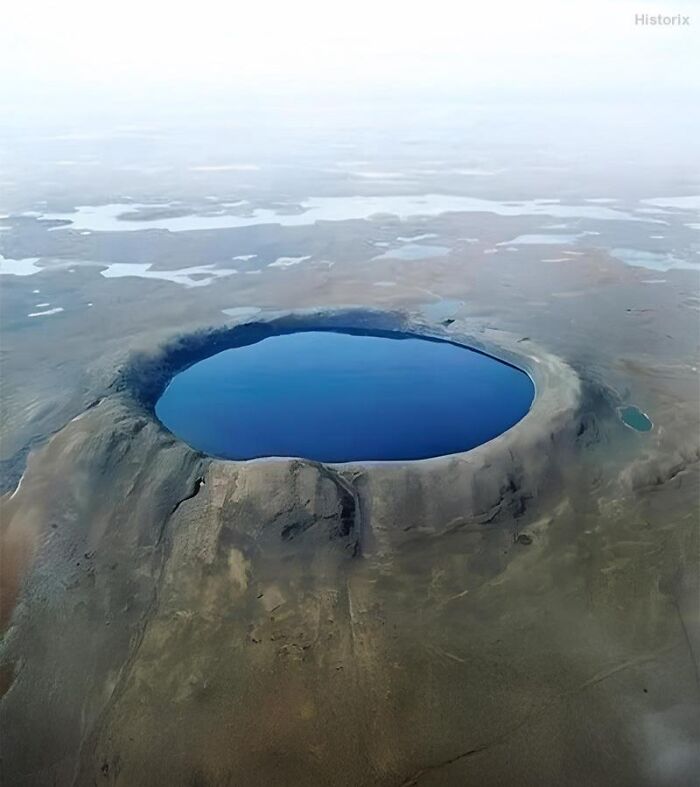
Nestled in northern Quebec, the Pingualuit Crater is a geological marvel that dates back an astonishing 1.4 million years, the result of a powerful meteor collision. This immense crater spans an impressive 3.44 kilometers (2.14 miles) in diameter and cradles the stunning Lake Pingualuk, which plunges to depths of 267 meters (876 feet).
What makes this lake truly extraordinary is its reputation for having some of the purest water on the planet, nourished solely by rain and snow—there are no rivers linking it to the outside world.
During World War II, pilots relied on the lake's perfectly round shape as a navigation aid. Today, as part of Pingualuit National Park, which was established in 2004, this breathtaking site invites adventurers and nature lovers alike to uncover its timeless beauty and intriguing history.
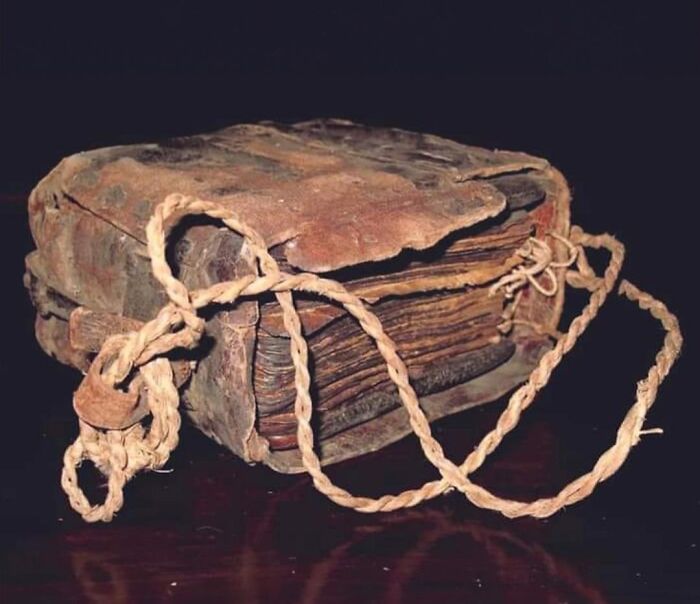
Journey back to the early fifth century, where the Ethiopian Bible emerges as the oldest and most complete version in existence, meticulously crafted on goat skin.
This extraordinary relic not only holds the title of the first illustrated Christian Bible but also serves as a window into the intricate tapestry of early Christian traditions and beliefs.

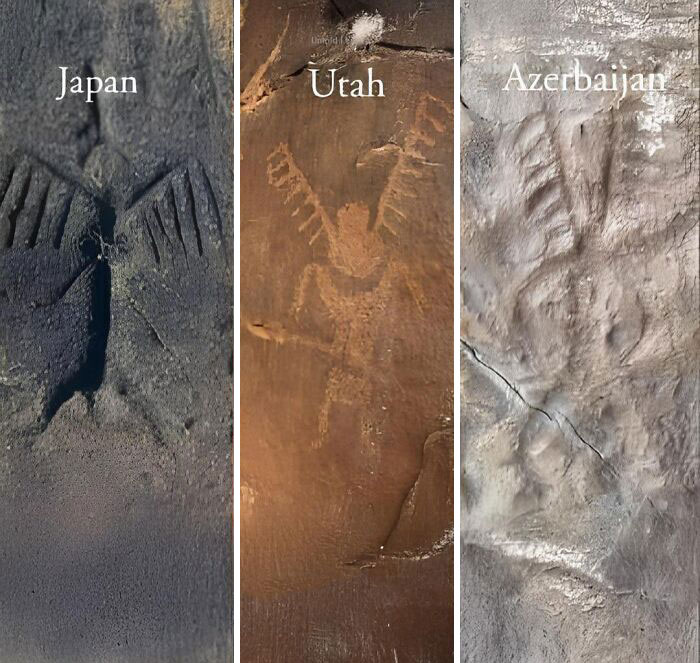
These eerily similar petroglyphs from Japan, Utah, and Azerbaijan throw down the gauntlet on our understanding of ancient civilizations. Nestled in Fugoppe Cave in Japan, scattered throughout Nine Mile Canyon in Utah, and emblazoned in Gobustan, Azerbaijan, each carving presents a winged or flying human figure — a striking visual that begs the question of how three culturally diverse groups, separated by oceans and eons, managed to conceive such an idea.
The timeline adds another layer of intrigue: Japan’s versions are roughly 7,000 years old, Utah’s range from about 1,000 to 2,000 years, while Azerbaijan boasts engravings that could be as much as 10,000 years old.
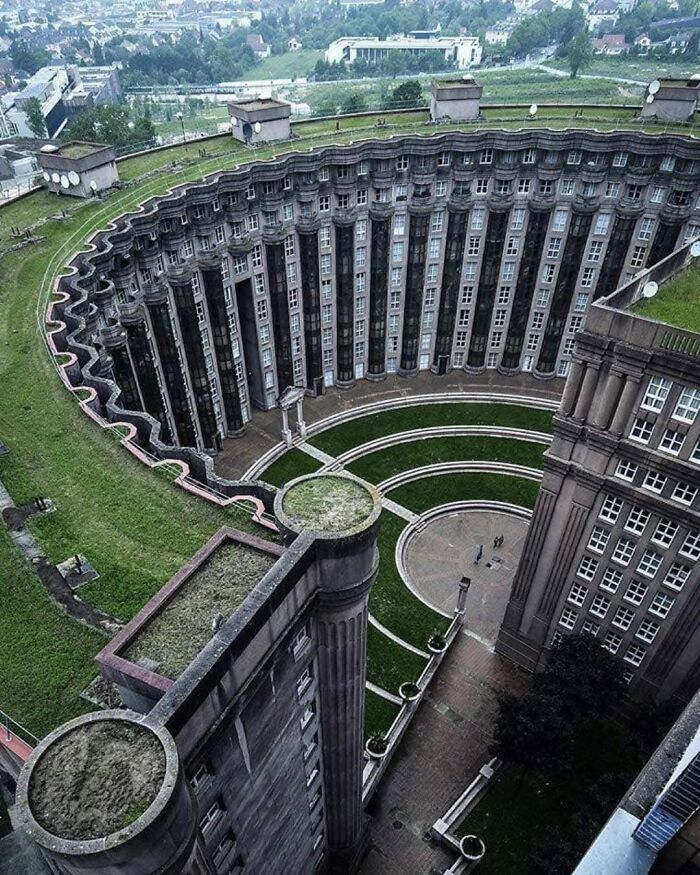
Constructed from 1978 to 1982 in Noisy-le-Grand, a suburb located ten miles east of Paris, Les Espaces d'Abraxas is a notable housing estate designed by the late Catalan architect Ricardo Bofill, who passed away last year.
It's where they shot Hunger games the last movie when there are traps in the Capitole.
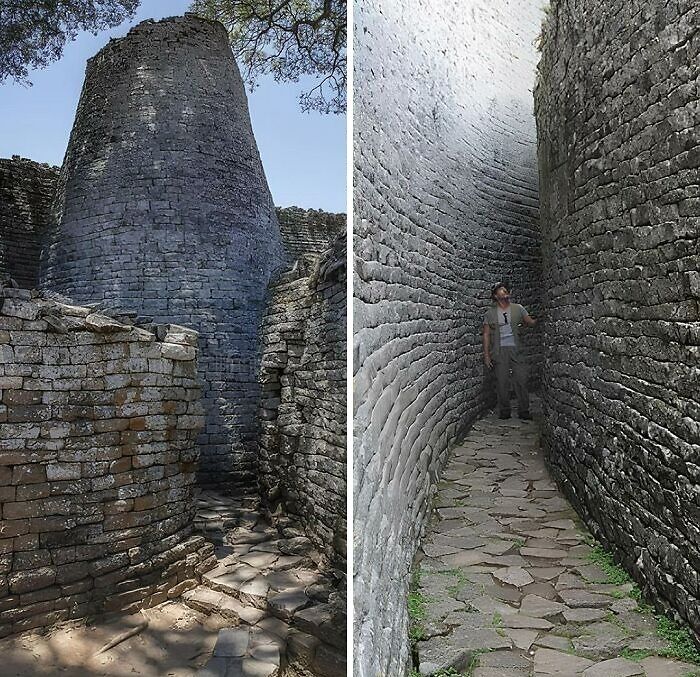
The Great Zimbabwe Walls, an awe-inspiring feat of ancient engineering, rise majestically from the earth, crafted from granite blocks that were expertly assembled without the use of mortar. These remarkable structures, dating back to the 11th century, showcase a meticulous craftsmanship that includes a unique inward slope, transitioning from rugged, raw blocks into elegantly polished courses. This ingenious technique not only reflects the builders’ mastery but also guarantees the walls' stability and durability throughout the ages.

I've been there a couple of times and it's well worth visiting. Over many years, people have had various theories who built it, but according to the National Park's history literature, it was built by African tribespeople.
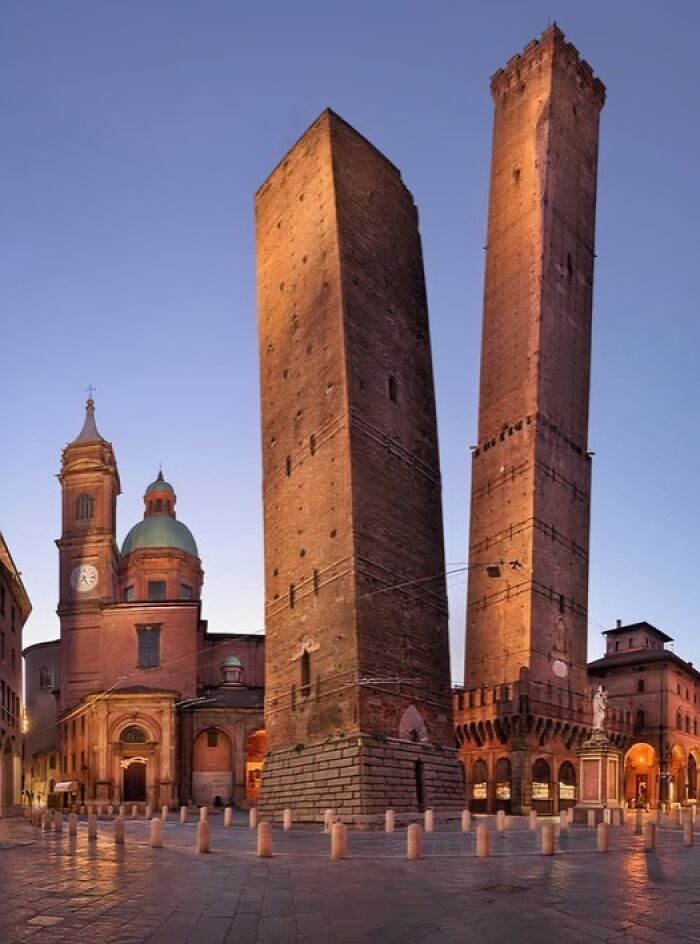
These two leaning towers are symbol of Bologna, a town in northern Italy which was once nicknamed ‘La Turrita’ on account of its 150+towers, of which only 24 remain today. Legend has it that they were inspiration for World Trade Center, since architect Minoru Yamasaki visited Bologna while designing Trade Center towers.
Both Towers take name of families who in 12th Century CE, ordered their construction, in a kind of competition to show which family was wealthiest and most powerful. Tallest of two is called Asinelli, while shorter is Garisenda, which leans more than Tower of Pisa by 0.1 degree. In fact, Garisenda was once taller than Asinelli, but when ground yielded in 14th Century CE, incline became so dangerous that they had to shorten it by 12m. Dante Alighieri saw it while it was still at its full height, and referred to it in Canto 31 of The Inferno where he compared it to doubled over giant, Anteo.
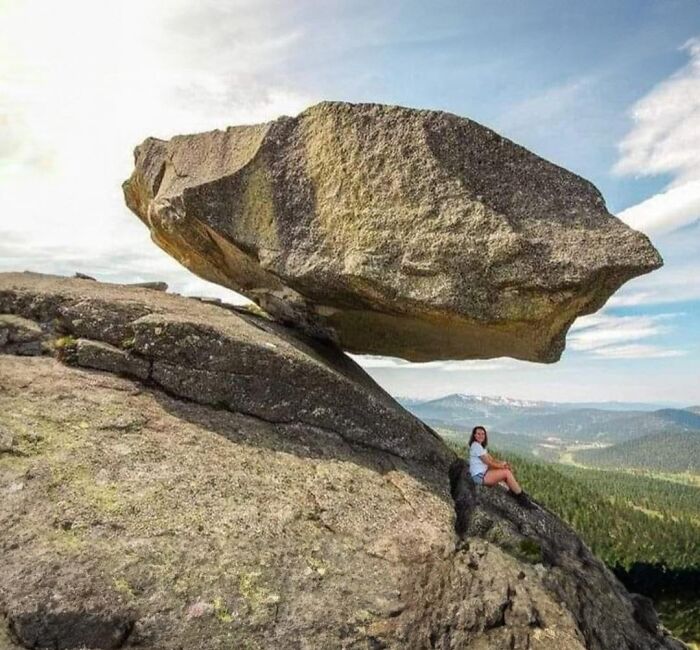
The Hanging Stone, situated in the Krasnoyarsk Territory's Ergaki Reserve, is an extraordinary natural phenomenon. This colossal boulder, approximately 600 tons in weight, delicately balances on the precipice of an abyss. For centuries, it has upheld its seemingly unstable posture, characterized by an exceedingly minimal contact surface with the underlying rock. Despite its precarious orientation, the stone exhibits remarkable stability, challenging conventional understanding and enhancing the breathtaking allure of the reserve.
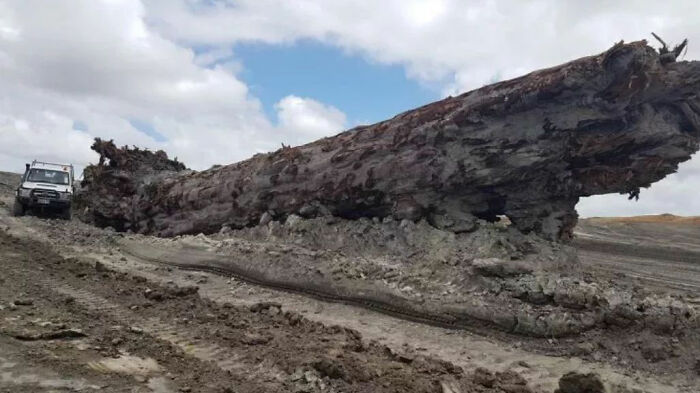
An Ancient tree discovered in New Zealand contains a 42,000-year-old record of a reversal of Earth's magnetic field.
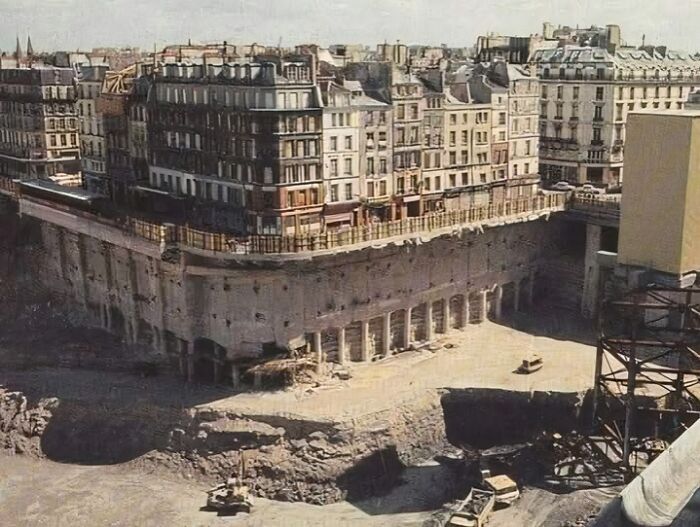
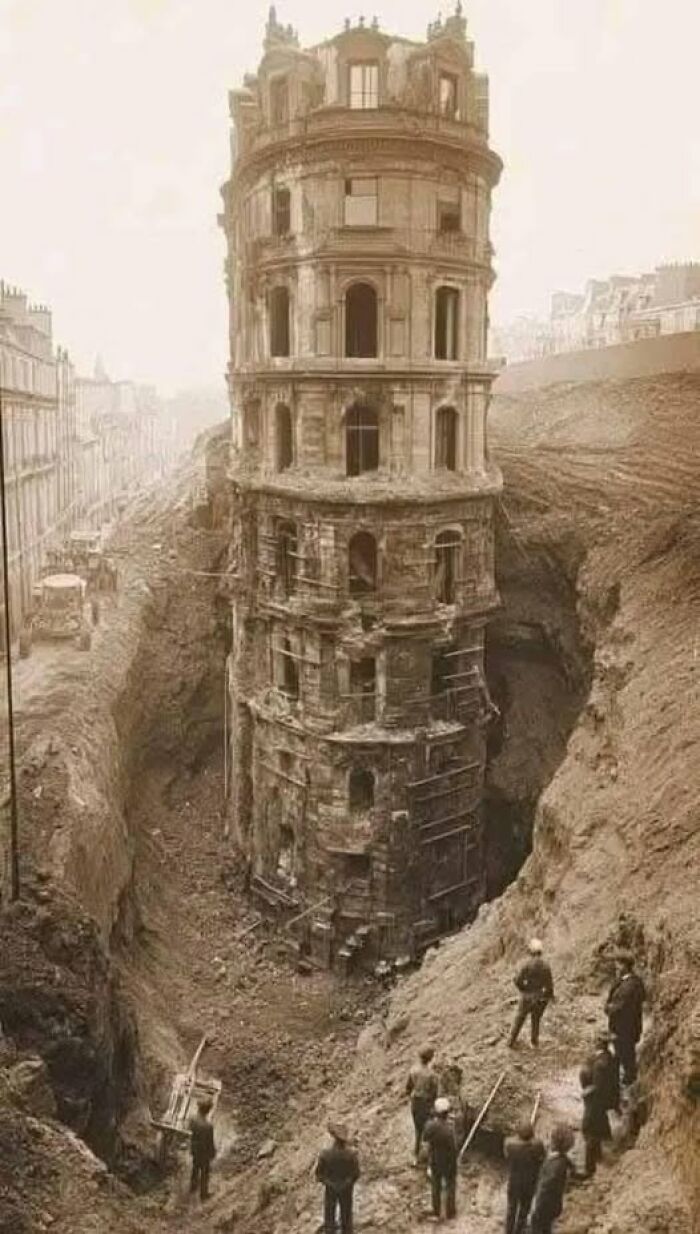
Buried Paris.
This is a photograph from 1973, during the construction of Les Halles in Paris. The structure wrapped above the metal scaffolding on the right is the Fountain of the Innocents!
The photograph shows underground buildings going down about five floors.

Description is plain stupid. This is a common palification, a technique used since the XVII century to reinforce dig sites... Also, what you see there is not part of the buildings, they are micropiles and cast concrete made before the digging in the early 1970s to consolidate the ground and prevent collapses.
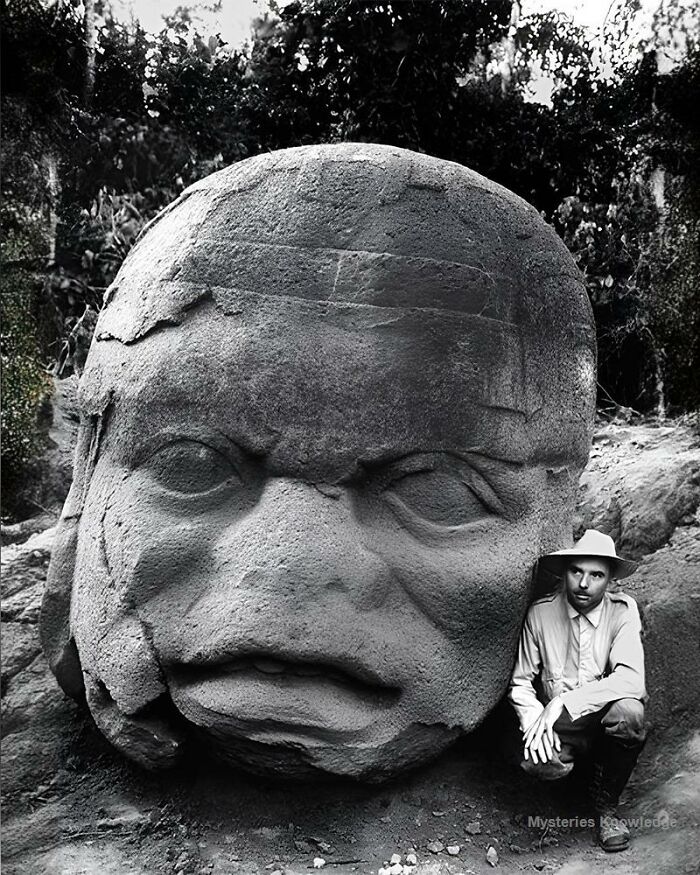
The awe-inspiring giant Olmec head, a monumental testament to the artistry of ancient civilizations, skillfully carved between 1500 and 400 BCE. These colossal masterpieces, each weighing an astonishing 50 tons, not only captivate the eye but also unveil the remarkable capabilities and intricate societal structure of the Olmec civilization, echoing their legacy through the ages.

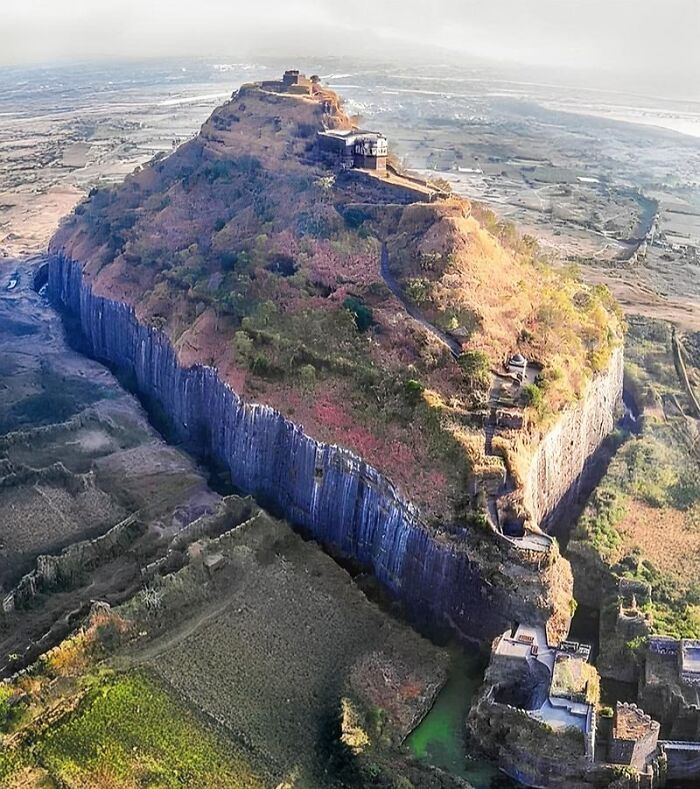
Daulatabad Fort is pretty awesome, sitting high up on some sheer cliffs that soar about 50 meters (or 164 feet) into the sky. This place wasn't just thrown together; it was carefully crafted to be tough to get into, taking full advantage of the natural landscape and some clever design. Its prime location and solid rock walls turned it into one of the most secure forts in India, keeping an eye on who comes in and out of the area for ages. It looks like something out of a fairy tale and has held its ground since the 12th century.
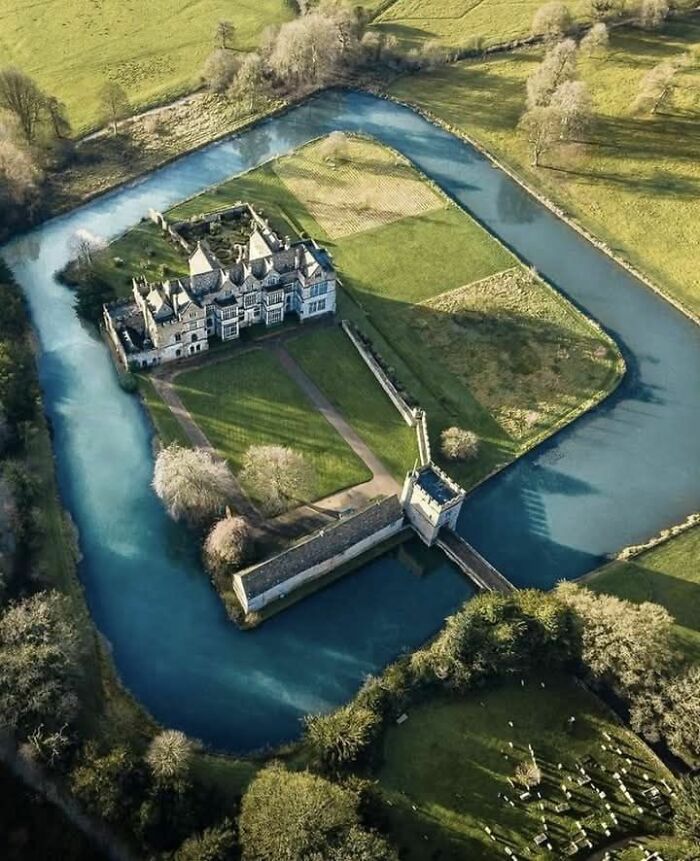
Broughton Castle, located in Oxfordshire, England, was originally constructed in the late 14th century. The earliest parts of the castle date back to around 1300, built by the Fiennes family.
The castle is surrounded by a moat and features a beautiful example of medieval architecture, with significant alterations and expansions made over the centuries, particularly during the Tudor period. It remains a private residence and is renowned for its picturesque setting and well-preserved condition. The estate is open to the public and has been used as a filming location for several historical dramas.
Does it have a drawbridge? If so, that's my dream home ;)
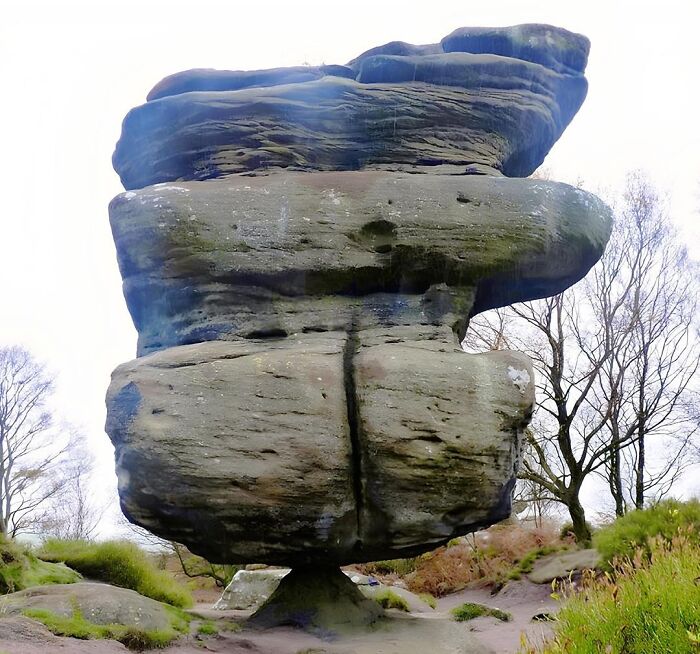
Brimham Rocks is a super cool spot in North Yorkshire, England, stretching over 20 hectares. It's an awesome geological wonder that’s been shaped by natural erosion for thousands of years.
One of the highlights here is Idol Rock, which really grabs your attention. This massive monolith weighs around 200 tons and reaches a height of about 14.8 feet, but here’s the crazy part: it’s balanced on this tiny, pyramid-shaped base! The base is only 11.8 inches around, so it looks like it’s just waiting to fall over, but somehow it stays put. It’s no wonder visitors have been scratching their heads over this formation for ages; some folks even think ancient Druids had a hand in creating it, but the truth is, it’s a natural wonder through and through.

AND it's a "super cool spot"! And there is even a "crazy part" about it!
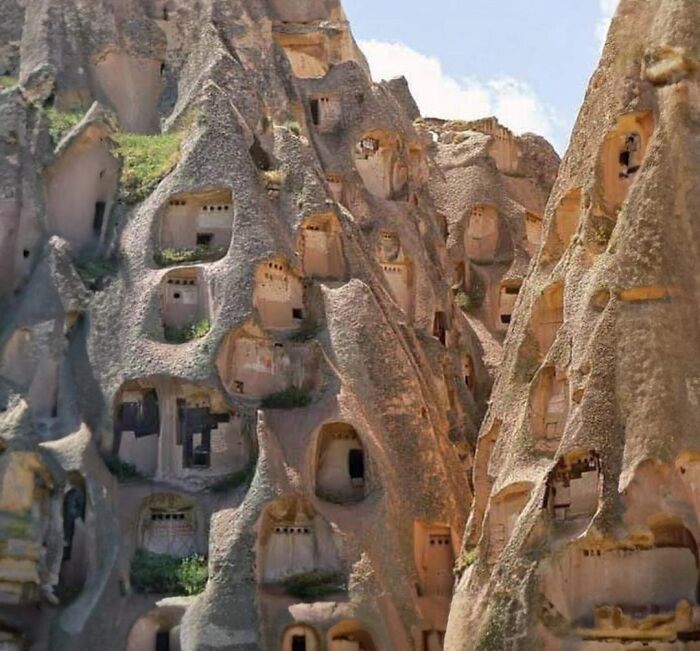
Cappadocia's rock-hewn homes stand as a remarkable testament to human ingenuity and adaptability. These ancient structures, meticulously carved into the region's volcanic rock, have served as shelter for countless generations, harmonizing with the stunning landscape characterized by fairy chimneys and unique rock formations. Venturing through these troglodyte dwellings offers a profound experience, akin to navigating a living history book, where each cave illustrates a narrative of resilience and cultural evolution.
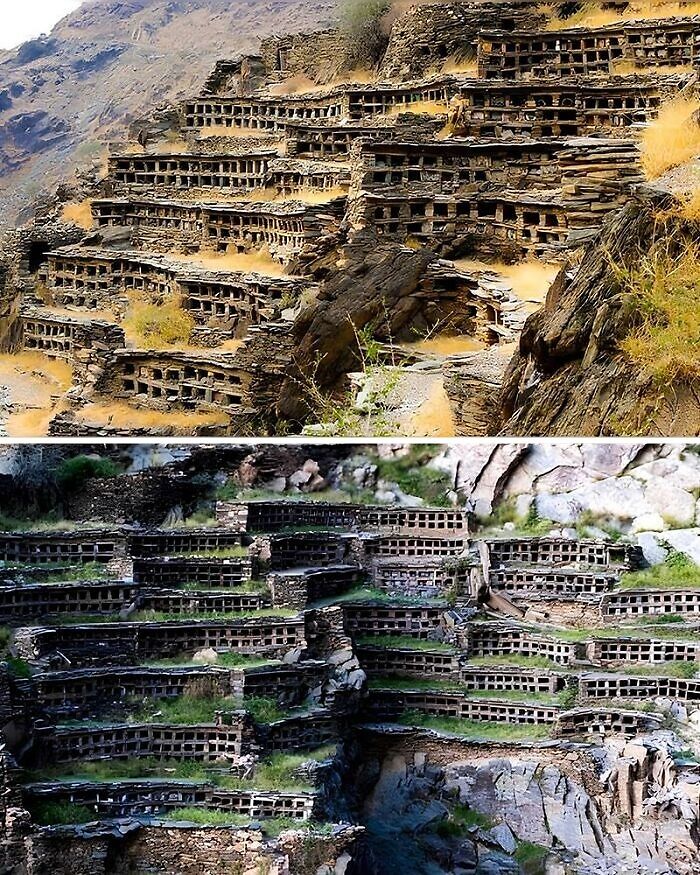
In the ancient village of Al-Kharfi, located south of Taif, Saudi Arabia, 1,200 clay and mud beehives stand as a testament to the endurance of human ingenuity in a challenging desert environment. These beehives were crucial to the livelihood of the village's early inhabitants, producing honey that served both as a vital food source and a medicinal remedy in a landscape characterized by scarce resources. The construction and utilization of these hives exemplify the remarkable adaptability and resilience of communities that have learned to thrive amid one of the harshest climates on Earth. The beehives of Al-Kharfi encapsulate a profound narrative of how human innovation and resourcefulness can prevail against adversity.
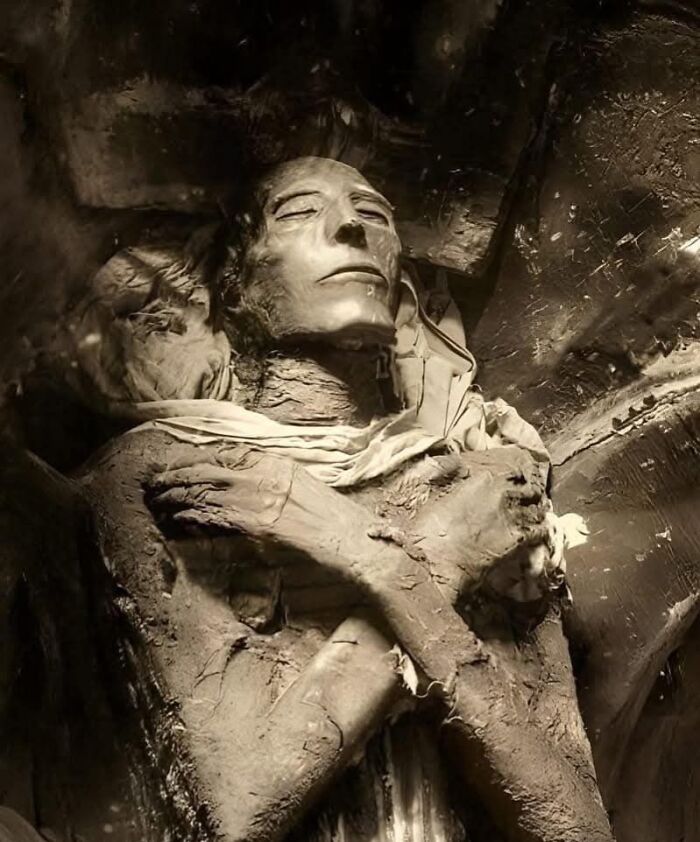
The mummy of King Seti I, one of Ancient Egypt's most renowned pharaohs of the 19th Dynasty, was discovered in 1881 in the Deir el-Bahari cache near Luxor. Seti I, who reigned around 1290–1279 BCE, was celebrated for his military campaigns and the magnificent temple he built at Abydos. His mummy was initially buried in the Valley of the Kings but was moved by priests in antiquity to protect it from tomb robbers. When rediscovered, the mummy was in remarkably good condition, providing valuable insights into mummification techniques and the physical features of the pharaoh. Today, the mummy of Seti I is housed in the National Museum of Egyptian Civilization in Cairo, drawing visitors intrigued by Egypt's ancient legacy.
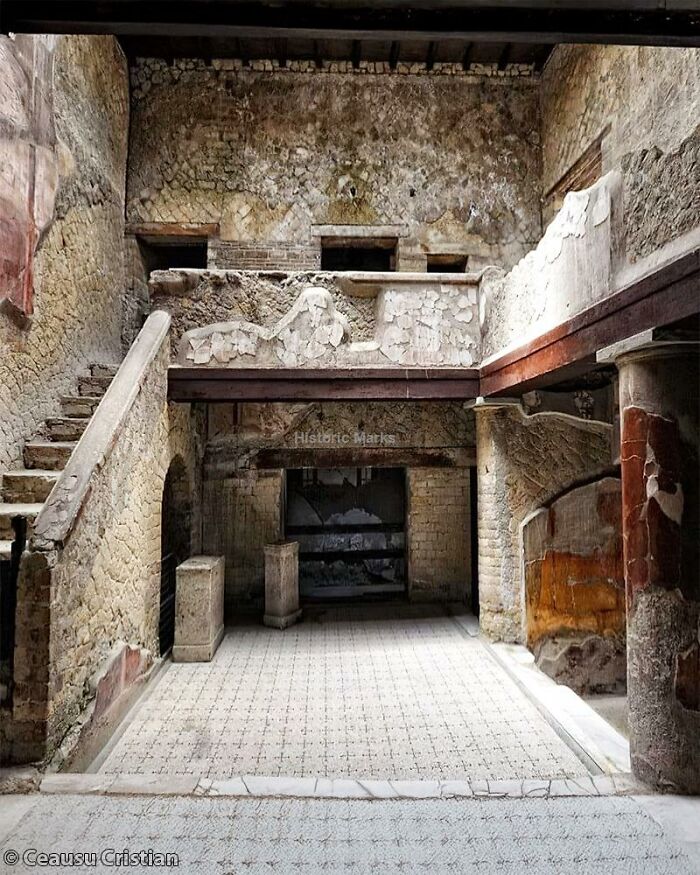
This remarkably preserved room from Herculaneum, a Roman city obliterated by the eruption of Mount Vesuvius in 79 AD, serves as a valuable window into the opulent lifestyle of affluent Romans. The site was rediscovered in 1709, with further excavations commencing in 1750. Herculaneum was an esteemed retreat, featuring luxurious residences, including a notable property owned by Lucius Calpurnius Piso Caesoninus, who was the father-in-law of Julius Caesar. The city was entombed in ash and pumice following the eruption, which effectively safeguarded its buildings and artifacts for centuries. These ruins not only enhance our understanding of ancient Roman habitation but also played a pivotal role in the development of modern archaeology as it exists today.
I enjoyed better Herculaneum than Pompei, smaller site but with much more details and less crowded
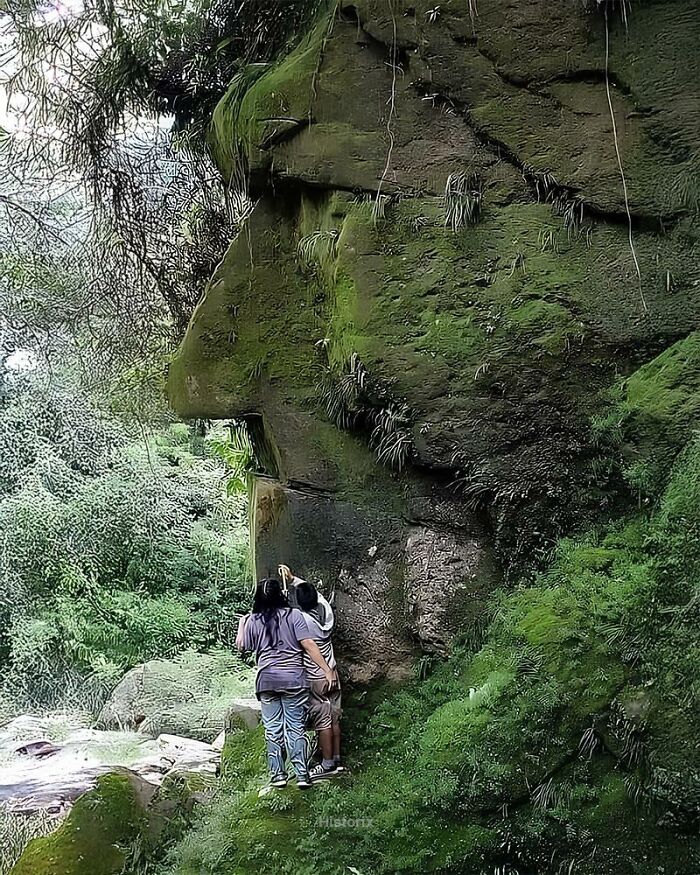
Within the dense jungles of the Peruvian Amazon, a geological formation known as the Face of Harakbut is situated on the cliffs of the Amarakaeri Communal Reserve in the Madre de Dios region.

There are many structures like this in Peru. The Inca modified stones, and built structures. For example, faces such as this, often guarded grain reserves.
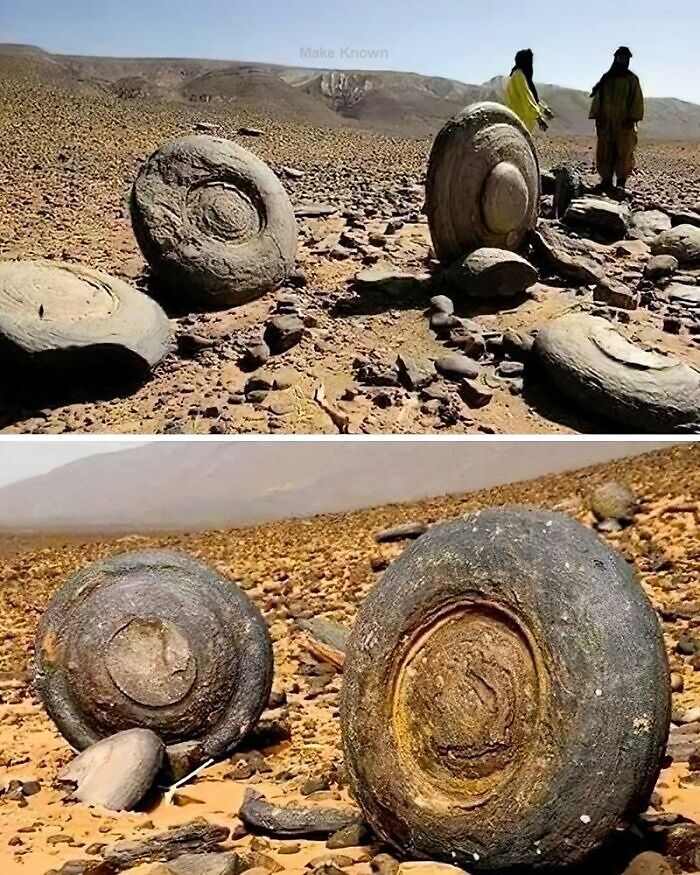
Nestled right in the middle of Libya's Tadrart Acacus desert is this incredible spot known as the Valley of the Planets. Scattered all over the place are these huge, disc-shaped boulders that stand out from your usual desert scenery. They’re smooth and round, and it’s believed they’ve been shaped by wind erosion over millions of years.
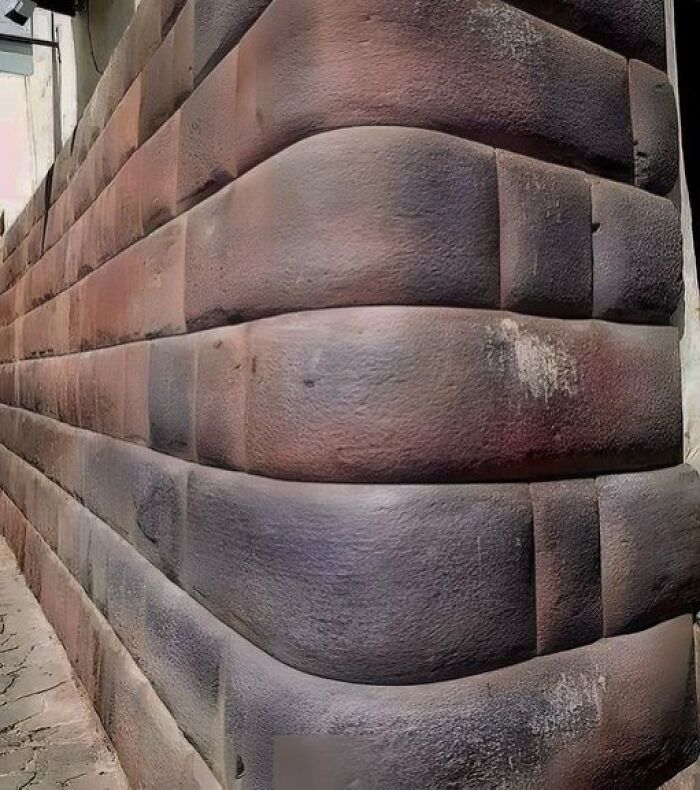
So, if you find yourself in Cusco, you’ve got to check out the incredible stonework there. It’s mind-blowing how these ancient folks managed to fit stones together perfectly without any mortar. I mean, seriously, how do you create structures that stand the test of time and seem to defy the laws of physics? And what’s up with those smooth, rounded corners? Did they know some secret trick to soften the stone or were they just working with some next-level building skills? It’s such a fascinating mystery!
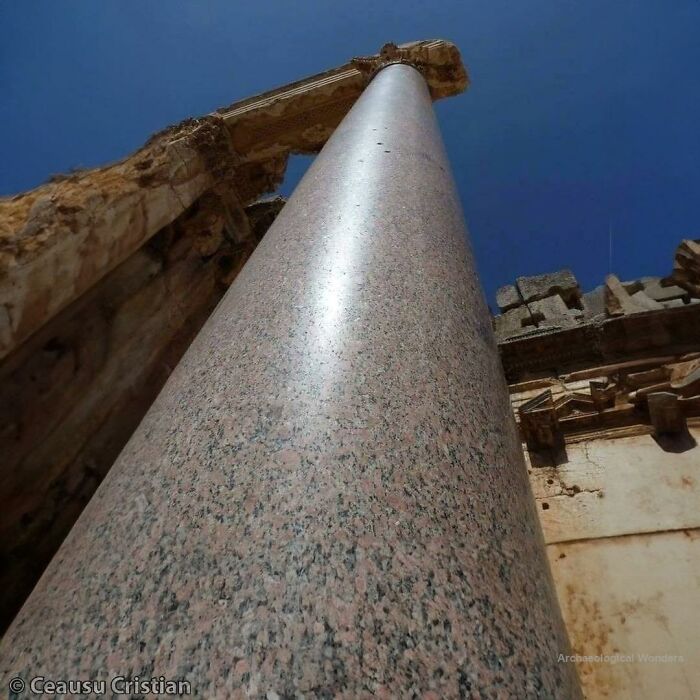
Marvel at the polished red granite columns of Baalbek, Lebanon, dating back to around 27 BC. These enormous columns, rising to a height of 19 meters (62 feet) and weighing multiple tons, highlight the remarkable engineering prowess of the Roman period.
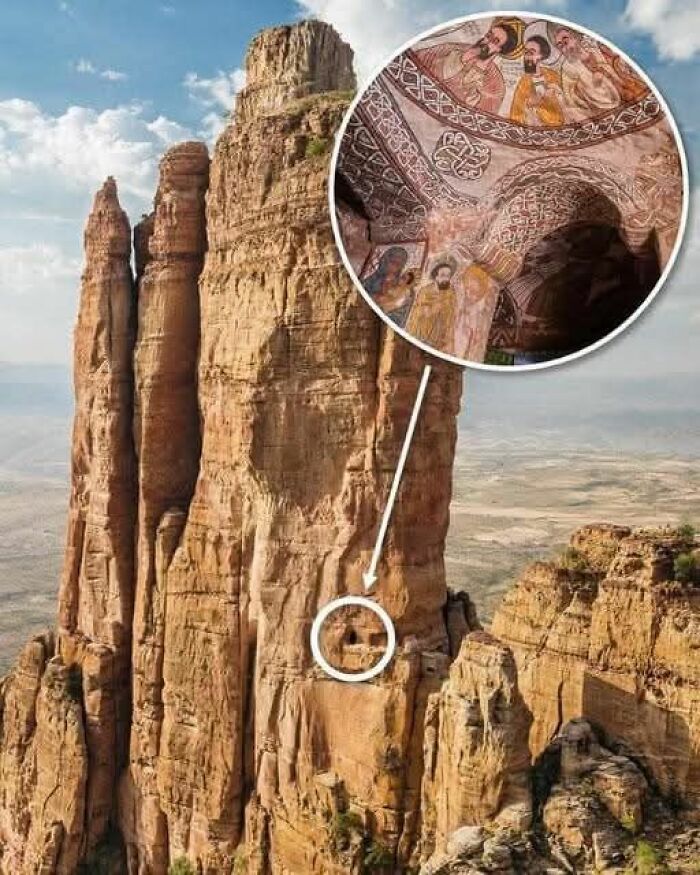
Abuna Yem’ata Guh | Tigray Region | Ethiopia
Situated at a height of 2,580 metres (8,460 ft), it has to be climbed on foot to reach. It is notable for its architecture, dome & wall paintings dating back to the 5th century.

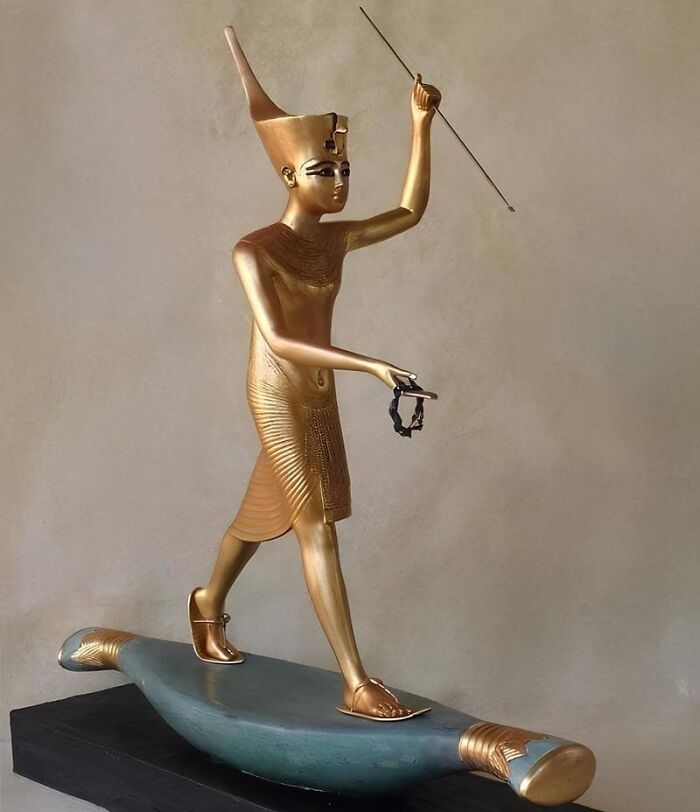
This stunning gilded statue, often mistakenly credited to Tutankhamun, actually represents the formidable Meritaten, the daughter of Akhenaten and Nefertiti. This woman wasn’t just a footnote in history—she may very well have ruled as pharaoh on her own terms. Crafted around 1341-1323 BC, the statue captures a ruler donning the red crown of Lower Egypt, poised on a striking green-painted papyrus boat that screams royal authority and a deep-rooted connection to the Nile. Sure, many of her precious possessions were later snatched by Tutankhamun, but the evidence in her tomb strongly suggests that Meritaten once wielded the pharaonic throne independently. This statue is more than just an exquisite piece of art; it’s a bold reminder of the skill and reverence bestowed upon a powerful yet often overshadowed female ruler in the history of ancient Egypt.
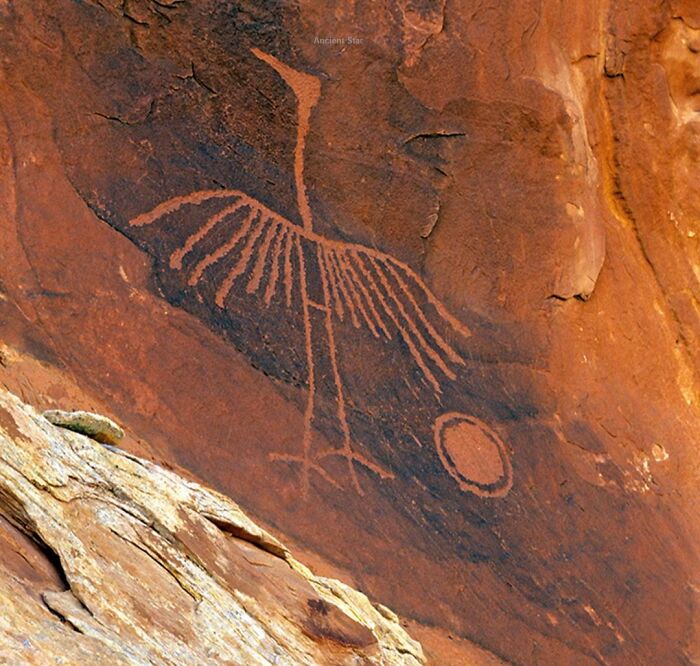
The Big Crane petroglyph located on Comb Ridge in Utah exemplifies the rich tradition of ancient rock art created by the region's early inhabitants. This particular petroglyph, along with many others in the vicinity, dates back thousands of years, serving as a significant window into the lives, beliefs, and observations of these prehistoric peoples. As Comb Ridge functioned as both a natural landmark and an artistic medium, it invites exploration into the narratives and messages these ancient artists may have aimed to convey to future generations. The study of such petroglyphs can deepen our understanding of cultural heritage and the human experience across time.
Australian Aboriginal rock art is estimated to be 40,000 - 65,000 years old.
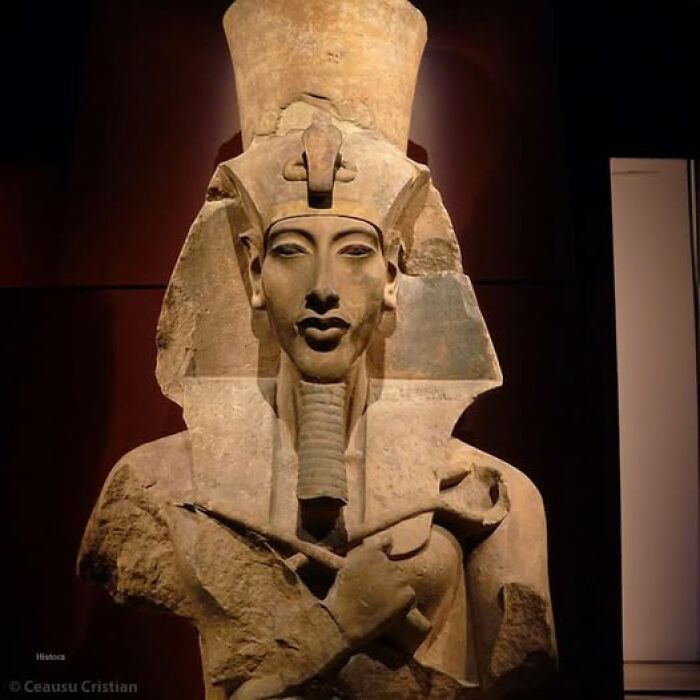
Akhenaten, recognized as Amenhotep IV, was a transformative pharaoh in the 14th century BC who fundamentally altered the religious landscape of ancient Egypt by advocating for the exclusive worship of Aten, the sun disk. His reign, alongside his queen Nefertiti, marked a notable period of artistic innovation and cultural evolution. The reforms instituted by Akhenaten have had enduring implications for ancient Egyptian society, particularly in the realms of religion, art, and governance, setting a precedent that would influence subsequent dynastic practices and beliefs.
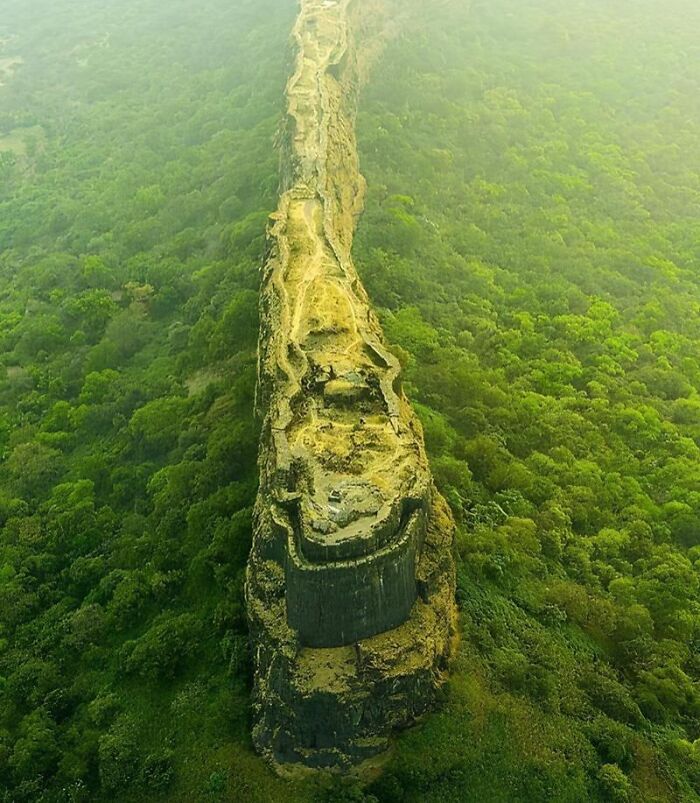
Perched near Lonavala in Maharashtra, Lohagad Fort stands tall at a staggering 1,033 meters (3,389 feet) above sea level, boasting a history that stretches over 2,000 years. This isn't just any ordinary fort; it has served as a critical bastion for powerhouse rulers including the Marathas and Mughals. Its imposing architecture features the jaw-dropping Vinchu Kata, a wall that literally resembles a scorpion's tail—talk about monumental ingenuity! If you think trekking is just a leisurely stroll, think again. Lohagad becomes an exhilarating experience during the monsoon, transformed into a lush, green paradise dotted with breathtaking waterfalls.
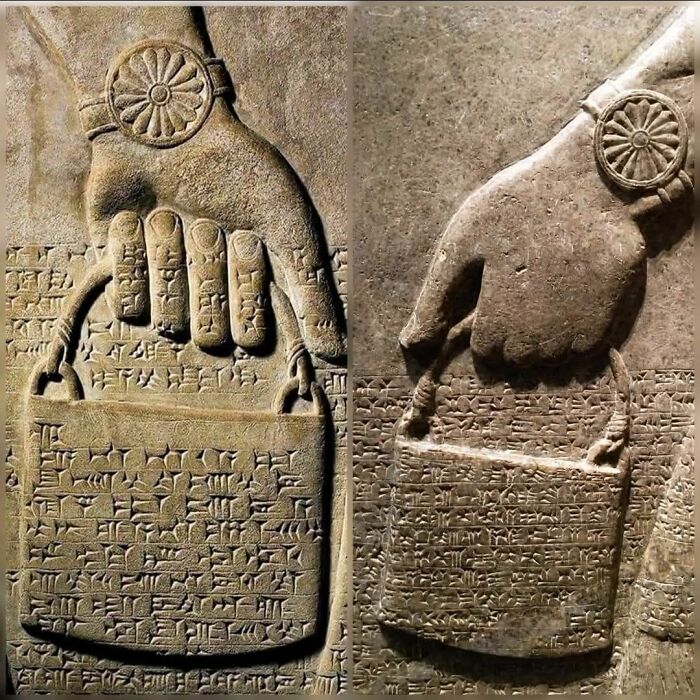
The Sumerian "handbags," often depicted in ancient Mesopotamian reliefs, have sparked curiosity due to their recurring presence in art across different cultures.
These mysterious objects, resembling modern handbags, are seen carried by deities or figures, and have been found not only in Sumerian art but also in ancient civilizations such as the Olmecs in Mesoamerica, and at Göbekli Tepe in Turkey.
The exact function of these "handbags" is still debated. Some theories suggest they might symbolize knowledge, portable altars, or tools used by the gods.
Their presence across disparate cultures raises intriguing questions about cultural diffusion and ancient symbolism, pointing to a shared motif or perhaps a deeper, universal meaning related to divine or ceremonial practices.
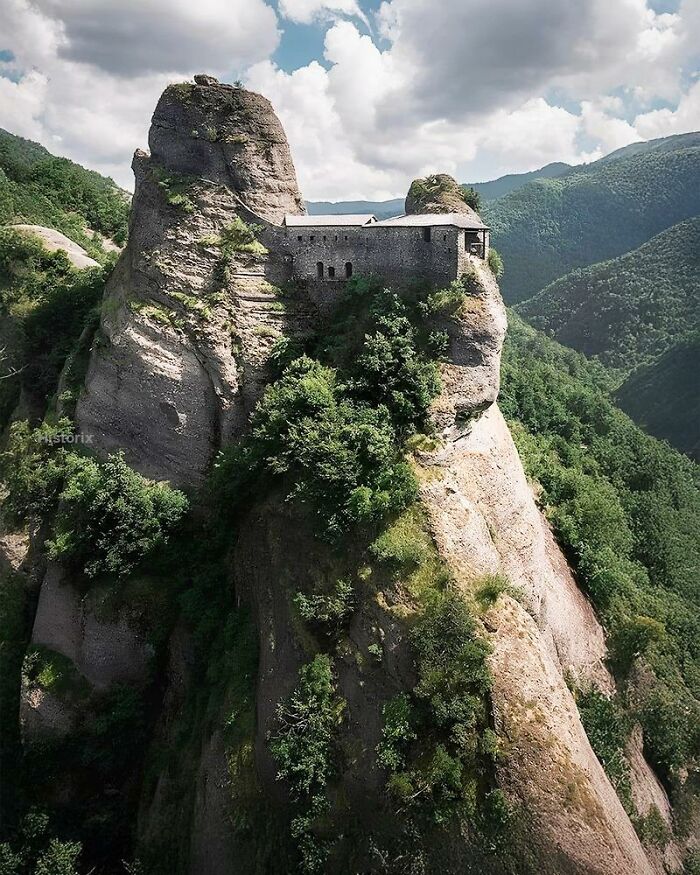
The Castle of Pietra is an often-overlooked treasure located in the mountainous terrain of Vobbia, Liguria, part of the Genoese hinterland. This ancient fortress, strategically positioned amidst imposing rock formations that serve as natural defenses, overlooks the Vobbia stream. As a designated part of the Antola Regional Natural Park, it is recognized as a protected national monument of Italy, drawing many visitors interested in both its historical relevance and stunning vistas.
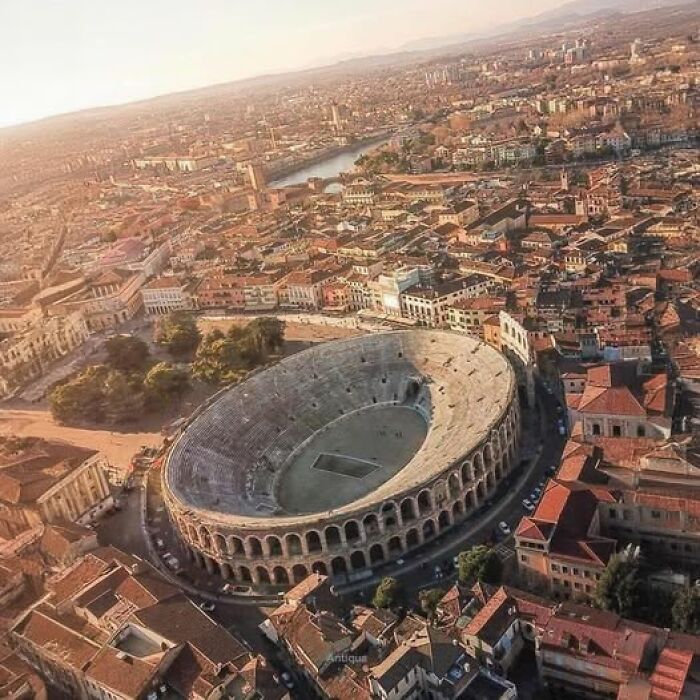
The ancient amphitheater in Verona, Italy, built way back in 30 AD, really shows off the amazing skills of Roman engineers and architects. It’s pretty impressive that it’s still so well-kept after all these years! This place was once buzzing with gladiatorial games and huge entertainment events.
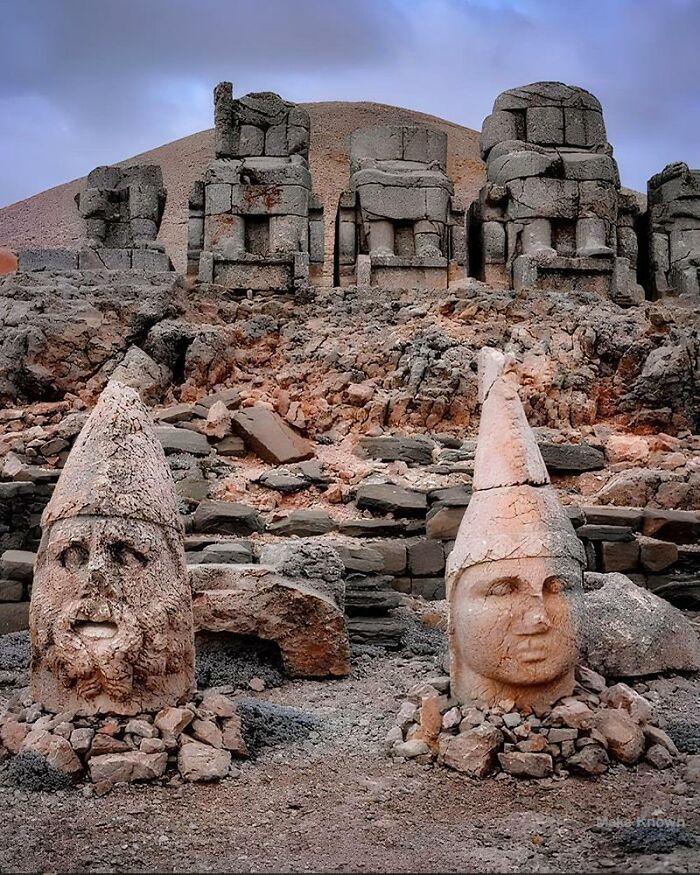
Mount Nemrut (Nemrut Dağı), located in Southeastern Anatolia, Turkey, is renowned for the funerary mound of Antiochus I, who governed the kingdom of Commagene during the 1st century BC. This remarkable site is distinguished by its colossal stone heads and statues, which were integral components of an elaborate royal complex.
I've been here. It has a magnificent view of the rising sun. That "hill" behind the statues is actually a tumulus (burial mound) made up of hundreds of thousands of stones the size of one's fist.
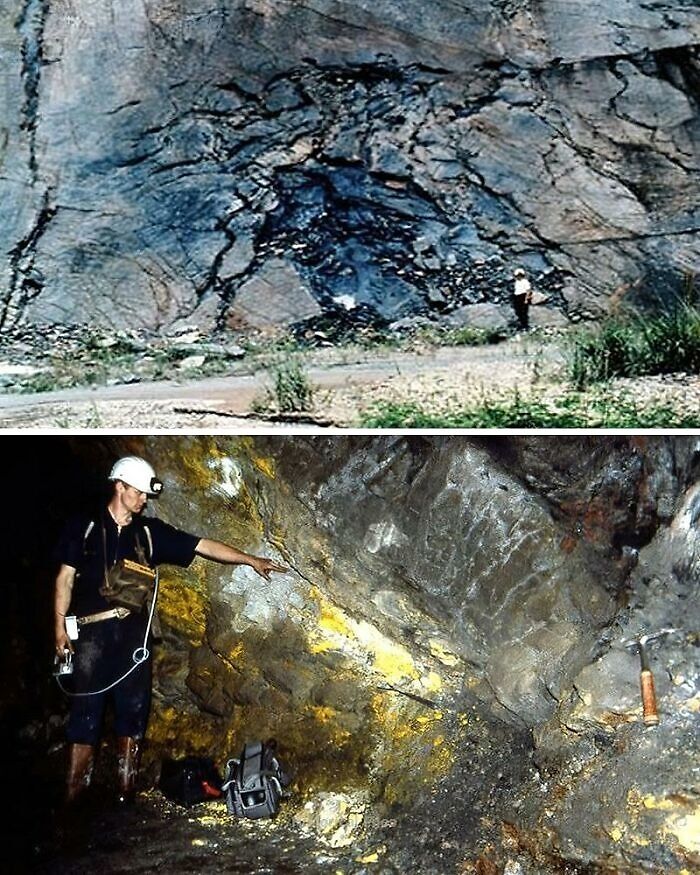
In Oklo, Gabon, a remarkable discovery has been made: a natural nuclear reactor dating back 2 billion years. This finding underscores the capacity of nature to replicate processes we typically associate with human innovation. Discovered in 1972, this site represents the only known occurrence of natural nuclear fission on Earth.
Scientists identified an extraordinary phenomenon when they observed that the uranium ore found at the site contained a lower concentration of uranium-235, indicating that nuclear reactions had indeed occurred. For this natural reactor to evolve, several precise conditions had to be met: an abundance of uranium-235, the presence of groundwater serving as a natural moderator, and an adequate release of neutrons to sustain the chain reaction.
The operation of this reactor was cyclical, with the presence of groundwater regulating its activity. As the reaction heated up, groundwater would boil off, subsequently pausing the reaction until conditions normalized. This ancient natural reactor evidences that our planet's history encompasses processes as complex as those evident in our contemporary technological advancements, functioning quietly for hundreds of thousands of years.
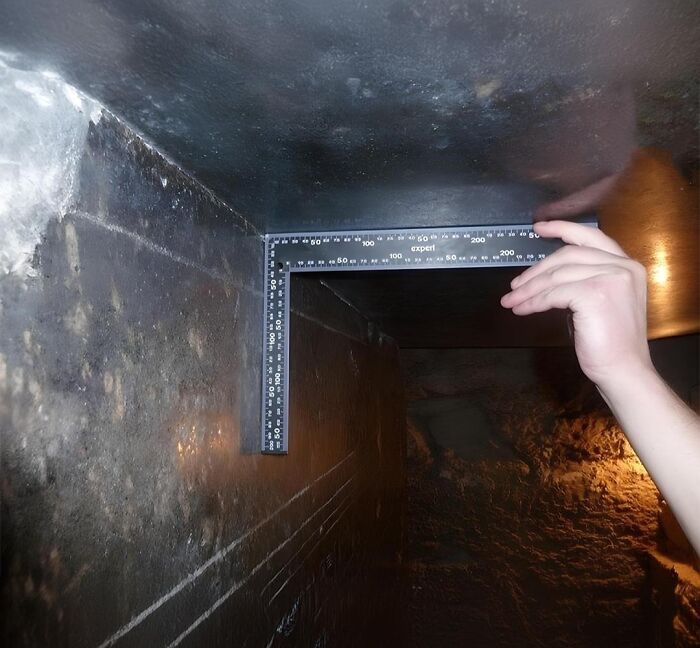
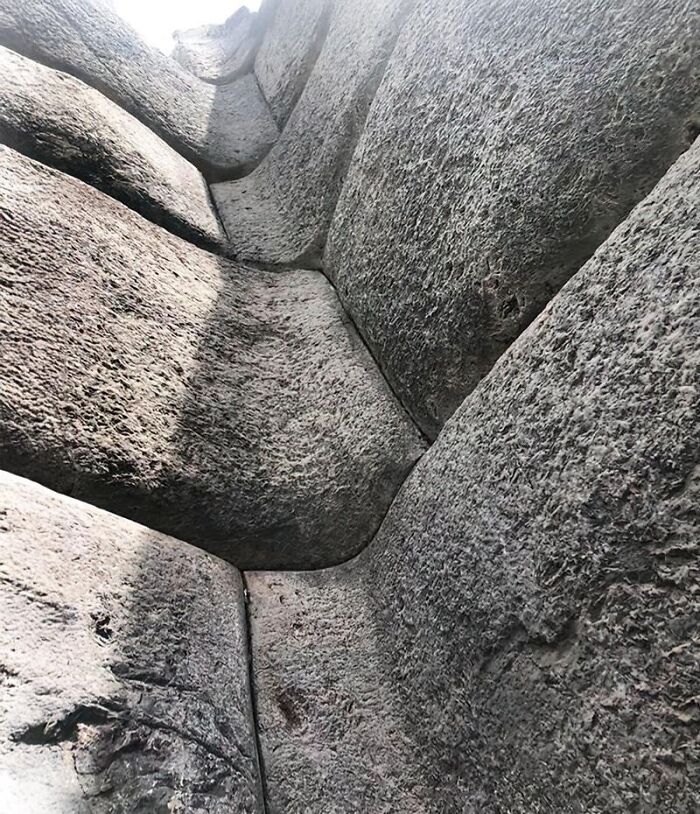
The remarkable precision exhibited in the construction of the Serapeum of Saqqara by the ancient Egyptians is a testament to their advanced engineering capabilities. Erected during the 13th century BCE, this burial site dedicated to the sacred Apis bulls features colossal granite sarcophagi, with some weighing as much as 80 tons. The meticulous dimensions and exceptionally smooth surfaces, achieved with relatively primitive tools, underscore the extraordinary craftsmanship of the Egyptians. The inquiry into the methodologies employed to accomplish such intricate accuracy invites further exploration into the technological innovations of ancient Egypt that may still be shrouded in mystery.
The ancients had superb building skills, designed to last. Not like nowadays, some building standards are shocking!
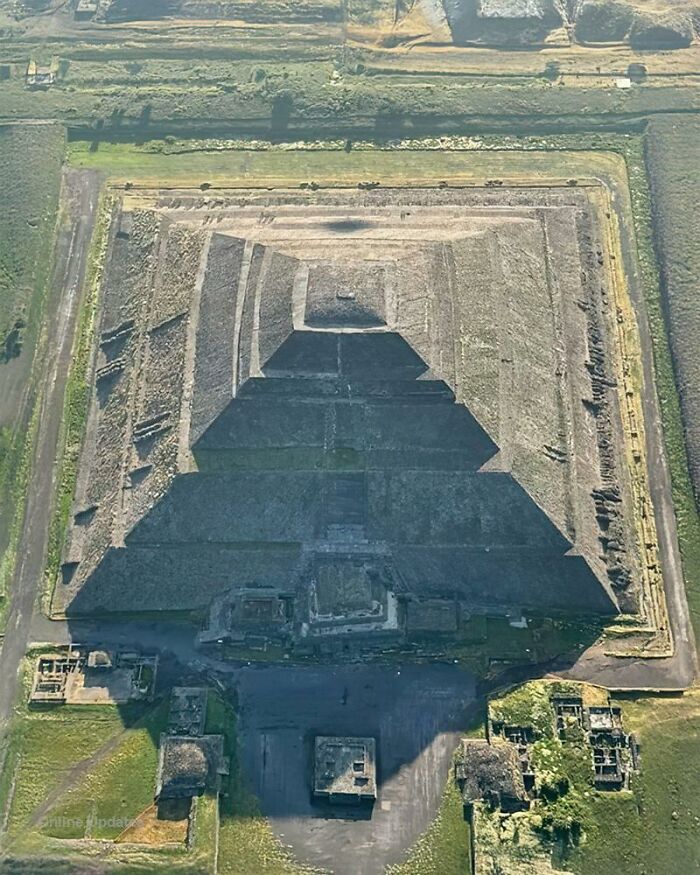
Teotihuacan is this massive ancient city located just a bit outside of Mexico City, and it used to be home to more than 100,000 people! One of the coolest sights there is the Pyramid of the Sun, which is absolutely massive, standing at 216 feet tall (that’s about 66 meters). The city was built around 100 CE and its pyramids and streets were super important to a vibrant culture that just faded away centuries later. Nowadays, it’s a UNESCO World Heritage site and still attracts tons of visitors.
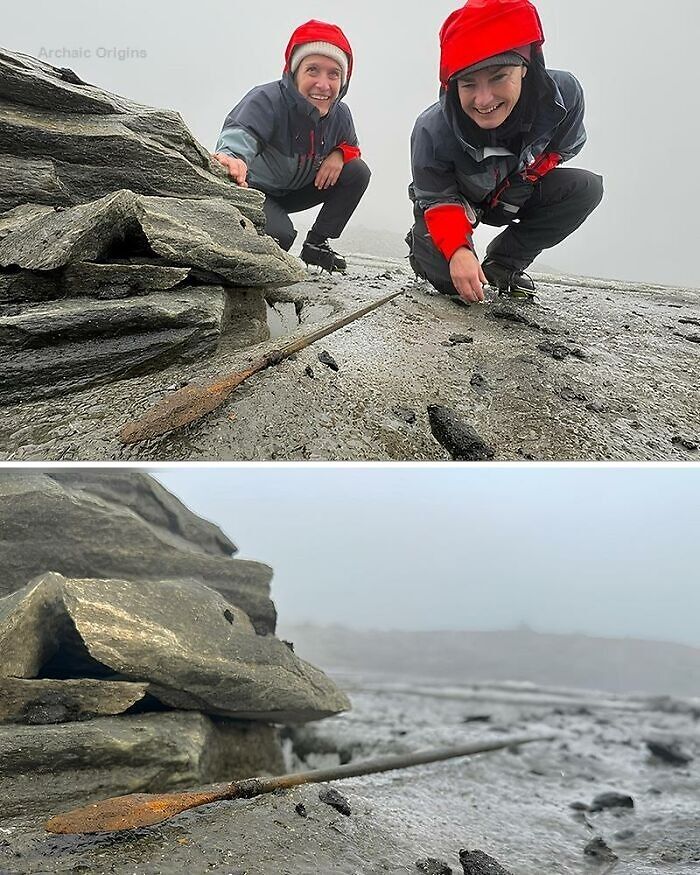
A 1,300-year-old arrow has emerged from the ice, preserved in astonishing detail since the moment it was lost to time.
This remarkable artifact boasts a nearly complete structure, featuring its iron arrowhead, sinew binding, and wooden shaft—all just waiting to share their stories. The only missing piece? The fletching, though its faint imprint still echoes the craftsmanship of its maker. This incredible find is part of the Glacier Archaeology Program, which has unearthed over 3,000 treasures from melting ice patches in Innlandet. These extraordinary discoveries, ranging from hunting tools to garments, span 6,000 years of history, offering us a mesmerizing snapshot of life long ago, frozen in time.
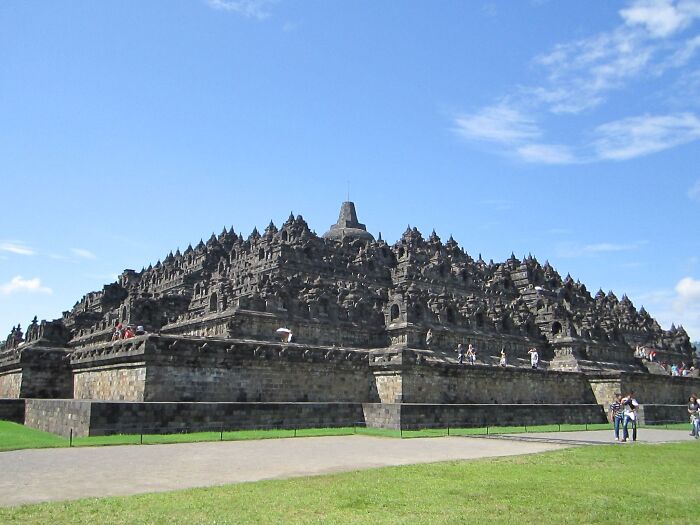
BOROBUDUR TEMPLE This temple is located in Central Java, Indonesia. Borobudur Temple is a Buddhist temple built during the Syailendra Dynasty, around the 9 AD And recognized by UNESCO as a world heritage site. It consists of six square terraces on top of which are three circular courtyards, the walls are decorated with 2,672 relief panels and originally there were 504 Buddha statues. Borobudur has the most complete and largest collection of Buddha reliefs in the world. The largest main stupa is located in the center and crowns this building, surrounded by three circular rows of 72 perforated stupas in which there is a Buddha statue sitting cross-legged in a perfect lotus position with the Dharmachakra mudra (hand gesture) (turning the wheel of dharma). This temple is a model of the universe and was built as a holy place to glorify Buddha while also functioning as a pilgrimage site to guide humanity to shift from the realm of worldly desires to enlightenment and wisdom according to Buddhist teachings. Pilgrims enter through the east side and begin the ritual at the base of the temple by walking around the sacred building clockwise.
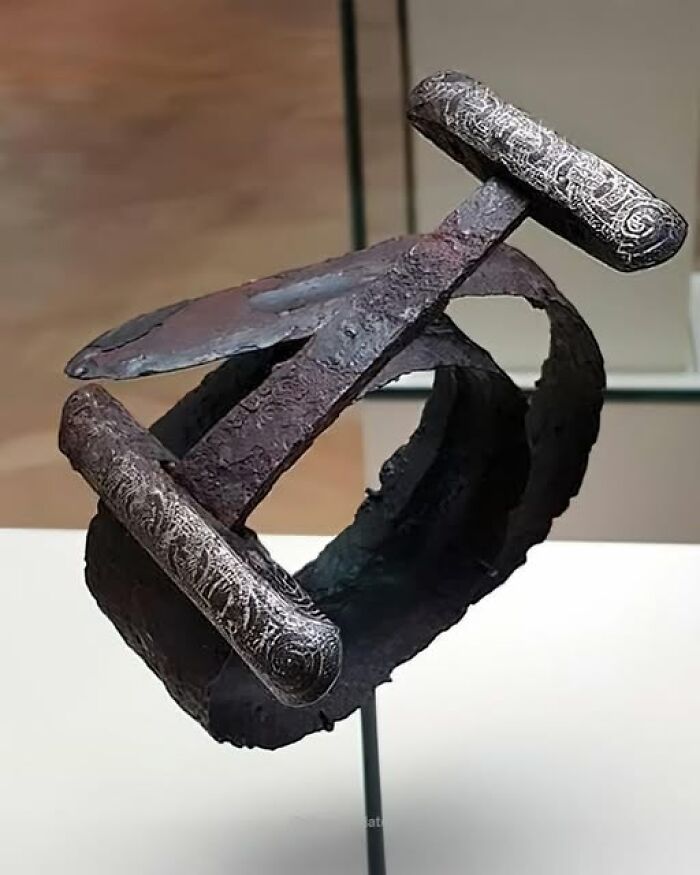
This bent Viking sword, which dates back to the late 10th century AD, was unearthed in a grave located in Vold, Hedmark, Norway.
It is believed that the sword's pommel was lost during a ritualistic destruction process prior to being interred with its owner.
Viking warriors often had their weapons intentionally bent or broken as part of burial rites, representing the conclusion of their functionality in this life.

Actually, the pommel is right there, it's the upper cross-bar of the sword (the lower one is the hand guard - they are both decorated here). Does the writer mean the sheath?
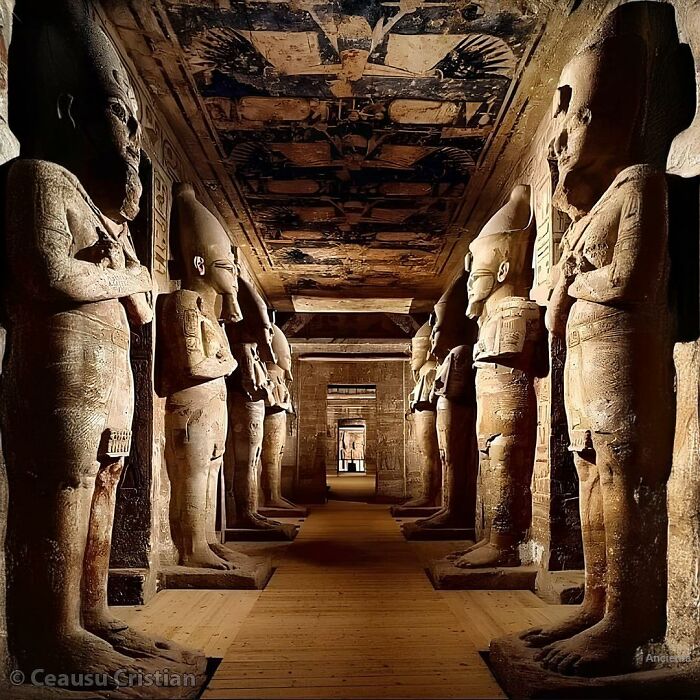
The Temple of Ramses II at Abu Simbel in southern Egypt exemplifies the grandeur of ancient Egyptian architecture. Constructed circa 1264 BCE, this remarkable edifice is adorned with colossal statues of the pharaoh, expertly carved to pay homage to the deities and commemorate the reign of Ramses II. Notably, the temple's architectural design includes a precise alignment that enables sunlight to penetrate the inner sanctum on two occasions each year, showcasing its remarkable engineering and aesthetic sophistication.
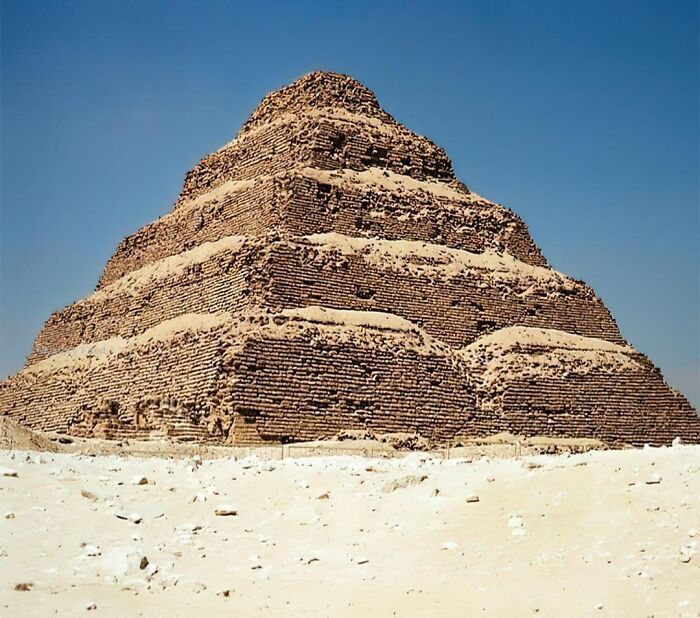
The Step Pyramid at Saqqara holds the esteemed title of Egypt's very first pyramid, built around 2670 BCE for the visionary Pharaoh Djoser by the talented architect Imhotep. This groundbreaking structure represented a bold new direction from the conventional mastaba tombs, with the ambitious goal of ensuring that the Pharaoh's legacy would endure through the ages. The Step Pyramid is not just a tomb; it’s a monumental testament to innovation and the eternal quest for immortality.
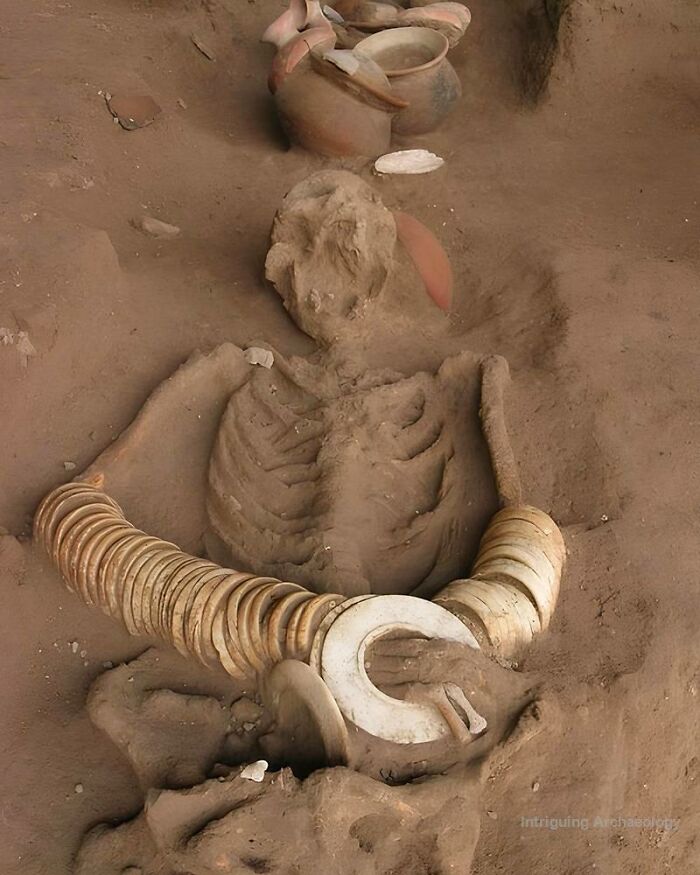
The burial site at Ban Non Wat in Thailand presents significant archaeological findings. The remains recovered from the site, which date from 1000 to 800 BC, were accompanied by a remarkable assortment of shells and marble bangles. This evidence underscores the craftsmanship and cultural rituals prevalent during that period. The ongoing excavations, which have identified over 640 individual burials, indicate a sustained occupation of the site from the Neolithic through the Iron Age. This continuous occupation affords researchers a unique opportunity to gain insights into the socio-cultural dynamics and daily lives of the populations that inhabited the region.
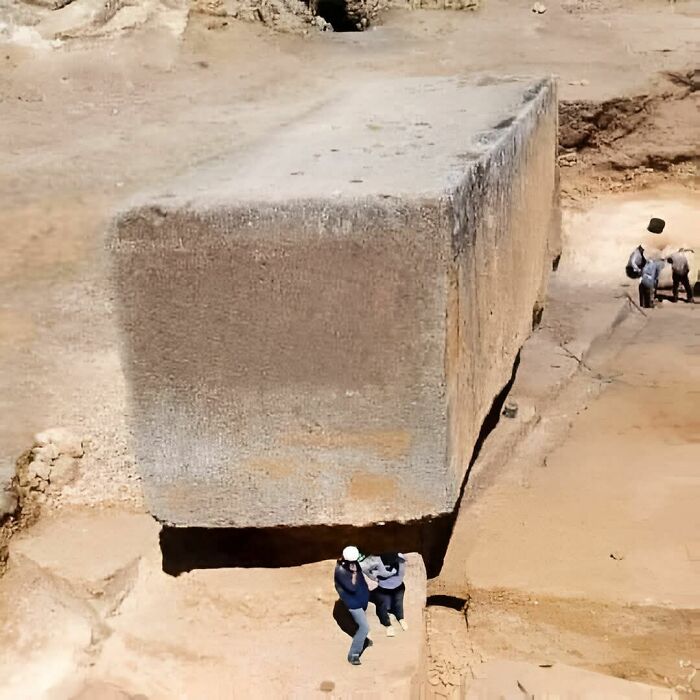
This is one stone out of 2 million and 300 thousand stones that were (supposedly) cut, dragged and lifted to build the Great Pyramid more than 5000 years ago.
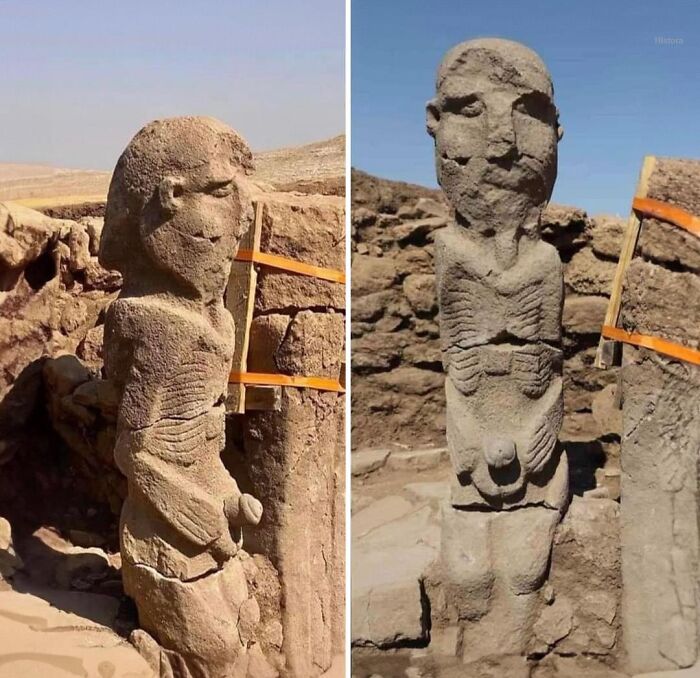
Archaeologists at Karahan Tepe have made a significant discovery, unearthing a 7.5-foot-tall statue of a seated man depicted holding his genital organ. This site, which is considered a counterpart to Göbekli Tepe in Sanliurfa, Turkey, is estimated to date back to around 9400 BC. This remarkable finding provides valuable insights into early human culture and artistic practices, highlighting the complexities and expressions of human society during that period.
Statue of Wank-Yer-Nọb-Bub, the god of good knọb-polishing.
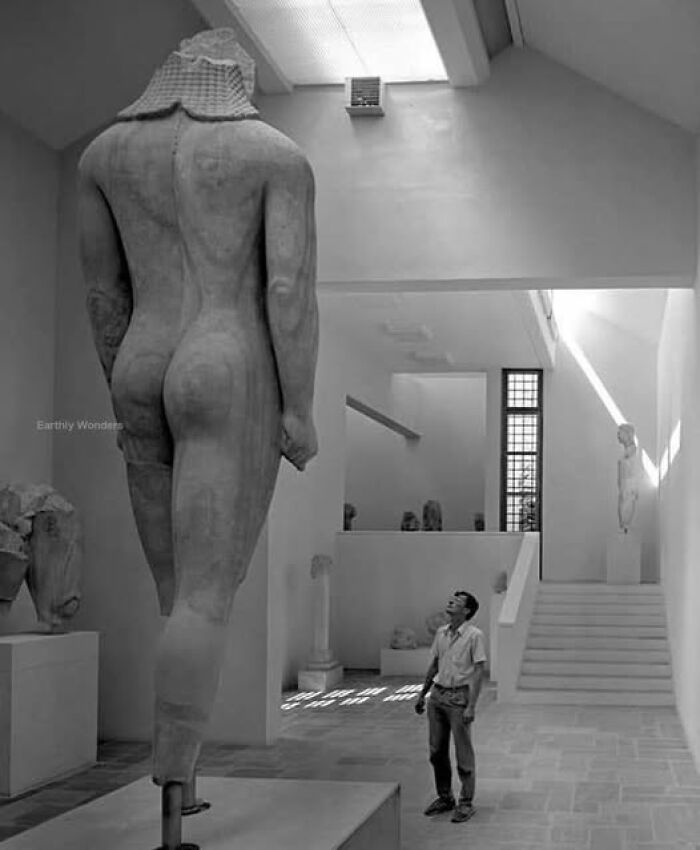
In the year 1980, archaeologists stumbled upon a treasure that would reverberate through the ages: the Kouros of Samos. This magnificent marble statue, soaring to an astonishing height of nearly 5.5 meters (18 feet), dates all the way back to 600-570 BC. Unearthed on the Sacred Way within the sacred precinct of the Heraion, the Kouros stands as a testament to the grandeur and artistry of ancient Greek craftsmanship, its striking presence captivating all who encounter it. The sheer scale and exquisite detail of this relic beckon us to explore the rich narrative of a civilization long past, igniting curiosity about the stories it could tell.
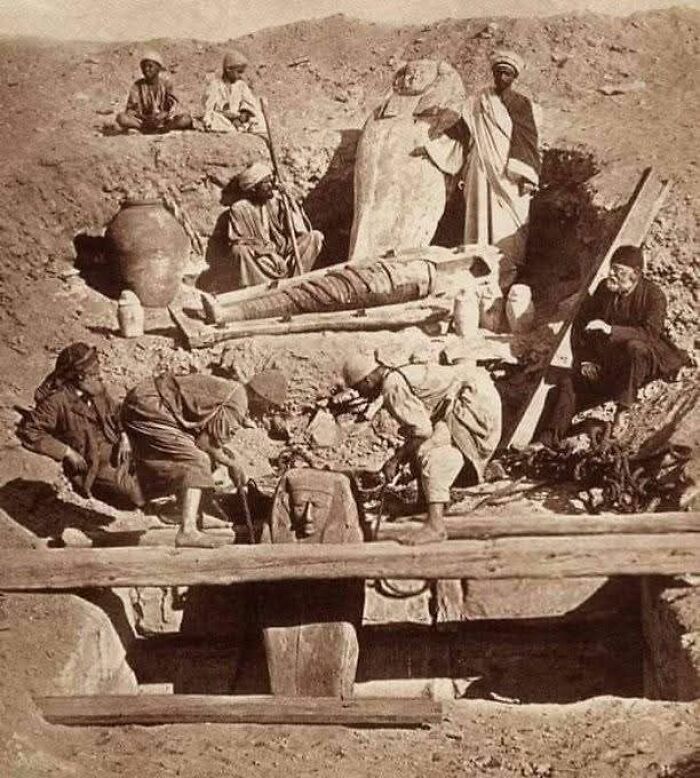
Picture is during extraction of mummies from a well in 1881 AD. It was discovered by chance in 1881 AD Deir el-Bahari cache is considered one of largest archaeological discoveries in 1881 AD, and its greatness is not matched after that date except for discovery of tomb of Tut.

The colossal stone walls of Sacsayhuamán loom over Cusco, Peru, and while the mainstream narrative attributes them to the Inca civilization, a provocative theory suggests they could be the remnants of some ancient, lost culture, cleverly repurposed by the Incas themselves.
These gargantuan blocks, fitting together flawlessly without a trace of mortar, boast rounded edges and interlock like a masterfully crafted puzzle—an engineering marvel that would make today’s architects weep.
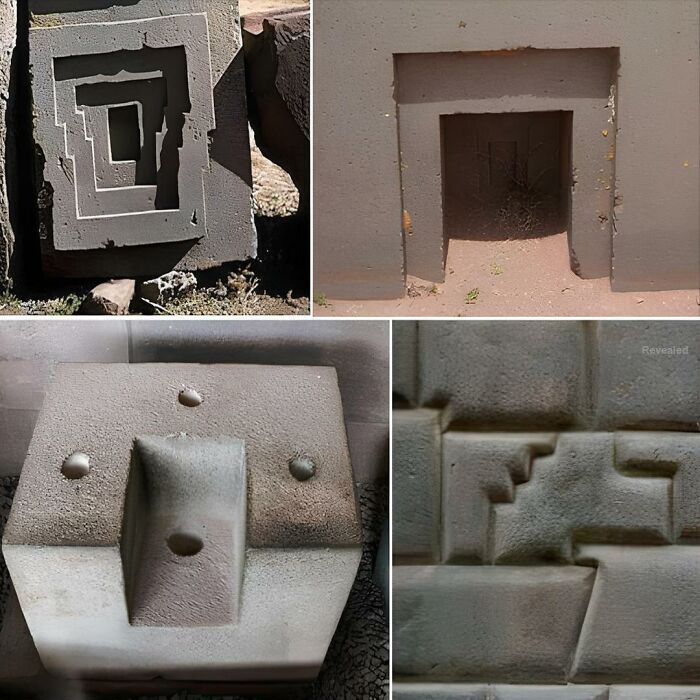
Prepare to be amazed by the jaw-dropping stone masonry unearthed in Bolivia and Peru! These ancient structures are not just remarkable; they're a testament to the incredible ingenuity of civilizations that thrived long before our modern era. Each stone, perfectly carved and meticulously placed, speaks volumes about the advanced techniques and unparalleled craftsmanship that defy our simplistic understanding of history.

Hey, BP team do not call yourself "writers" if the AI is doing the job for you
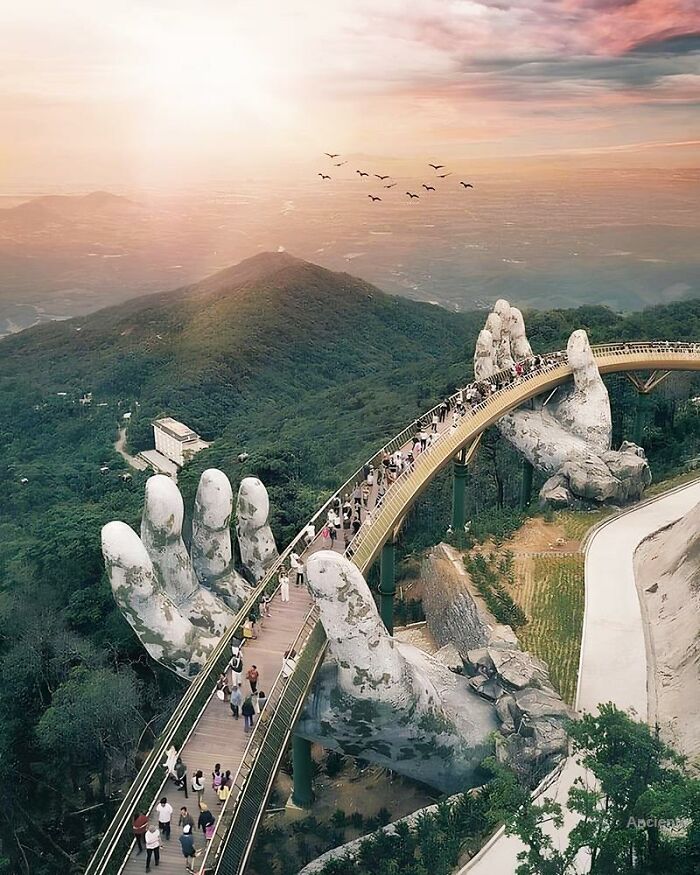
The Golden Bridge, better known as the Hands Bridge, is not just a stunning sight—it's a bold statement in the Ba Na Hills near Da Nang, Vietnam. Stretching 150 meters (492 feet), this audacious structure is lifted by two gargantuan stone hands, giving the illusion that it is buoyed by the very gods themselves. This daring design pushes the limits of creativity, merging nature with human brilliance. With jaw-dropping views and an aesthetic that demands attention, this bridge is not merely a tourist attraction; it’s a magnet for those seeking the extraordinary.
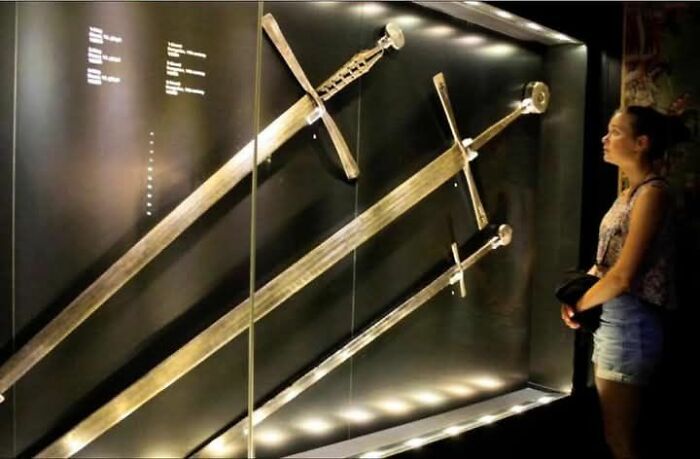
Enormous Hungarian swords from the 14th century, including an exceptional example measuring 270 cm (8.9 feet) in length, are displayed at the Topkapi Palace Museum in Istanbul, Türkiye.
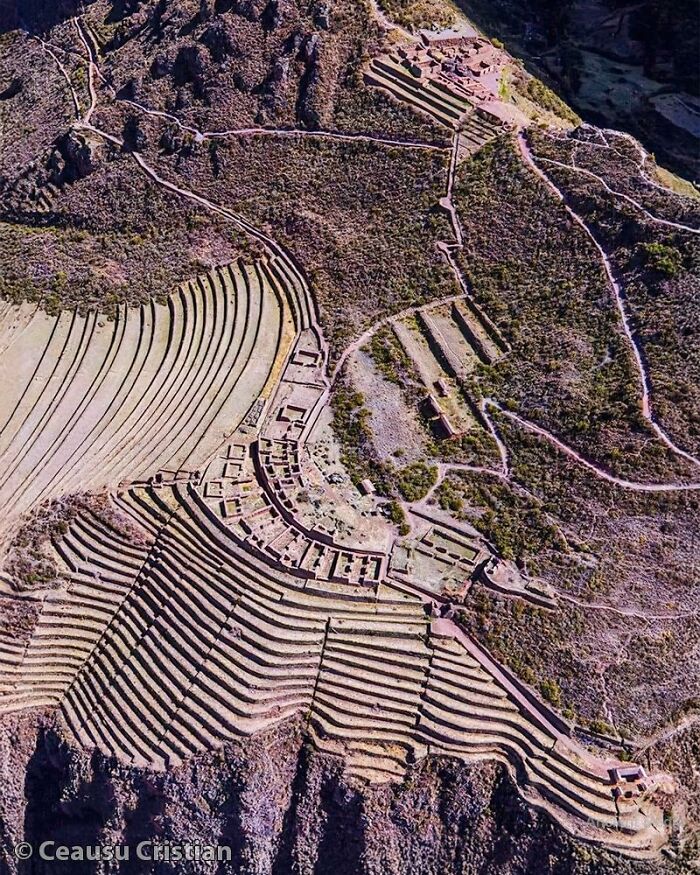
Pisaq, the jaw-dropping Inca citadel in Peru, is not just a historical site; it's a testament to audacious design and sheer ingenuity.
Located in the Sacred Valley, Pisaq’s complex layout is nothing short of genius. With its agricultural terraces, residential quarters, and ceremonial structures all melded seamlessly into the rugged landscape, it's clear the Incas weren’t just building—they were redefining what it means to live in harmony with nature.
Porta Nigra, a remarkable Roman structure located in Trier, Germany. The Porta Nigra, meaning "Black Gate" in Latin, is an ancient city gate that dates back to the 2nd century AD. It stands as one of the best-preserved examples of Roman architecture in the world and has long been a symbol of Trier's rich history. The gate, originally built as part of the city's fortifications, was later used as a church and underwent various modifications over the centuries.
The structure’s burial beneath the earth is due to changes in the surrounding landscape over time. As Trier expanded, the city’s ground level gradually rose, eventually covering parts of the gate. What remains visible today is only the upper portion of the Porta Nigra, while the lower floors were once hidden beneath layers of soil and sediment.

It would be nice if you could stop using ChatGPT to write the captions. They are repetitive and all state the obvious. The location and dates would be enough.


It would be nice if you could stop using ChatGPT to write the captions. They are repetitive and all state the obvious. The location and dates would be enough.





































 No fees, cancel anytime