Get Premium
Dark mode theme is available exclusively for premium users. Learn more about the benefits of subscribing.
No fees, cancel anytime.

 Dark Mode Ad-Free Browsing Unlimited Content
 Ad-Free Browsing Unlimited Content Dark Mode
Join 1.2 million Panda readers who get the best art, memes, and fun stories every week!


Even though it’s something we interact with every single day, food can actually be pretty weird when we think about it. After all, spoiled milk is something we might throw straight into the trash, but cheese is a wonderful, versatile staple most of us know and love.
Someone asked “What is a food that makes you think, “How did humans discover this was edible?”” and people share their favorite examples. So get comfortable as you scroll through, grab a snack, upvote the best ones and be sure to share your own thoughts in the comments section below.
This post may include affiliate links.
 The first person to eat an oyster - how hungry was that m**********r?
"Hey guys, I found a loogie in this slimy rock! Want some?".


Other primates eat oysters, so it likely predates the emergence of humans.
I think of watching a bear mowing down on them and then I'd be curious and join the bear in the oyster picnic

Might've been after fire was invented hopefully. Smoked oyster are delicious
Famous quote from the great Somebodyorother: "It was a brave man that first et an oyster."

The answer to almost all of these is the same; we saw animals eating something, and figured 'well, if they can, we can', and so we did.


Aw, c'mon. Civilizations grew up around the Seas and Oceans. Humans ate everything they could.

I'm guessing that people must have been very hungry to even try eating these. I would, I have to say rather starve.

Ancient Romans! Oysters were a luxury food served at banquets. From there, eating oysters spread throughout Europe. Over in the New World, Native Americans were eating oysters raw, fire roasted, or steamed in a seafood wrap for about 9,000 years. the Native Americans not only would have consumed them raw but also fire roasted and steamed them inside of seaweed wraps
 That expensive coffee made from beans collected from animal droppings.
Who the hell looked at that and said "Why not? Let's give it a go.".


K: "This coffe tastes like shît". [O]:" "What did you expect, it was poop this morning". Edit 3: it was not M, it was O, because in MiB 3 W Smith said "OK".. 🤦♂️ (and also no one corrected me, or did you understand anyways?)
Load More Replies...
Kopi Luwak - coffee beans eaten by the civet cat then pooped out, collected and processed into a brewable food item. Super expensive and no I don't think I could bring myself to try it!
Tried it once and its taste is very pleasant. Then I found out in what conditions the civets are kept and it completely lost its appeal...
Load More Replies...
Too bad they now lock up the cats, feed them only beans (whereas their natural diet is much more varied) and collect their droppings from the cage 😢

1. Hey, this cat poop has coffee beans in it. 2. Nobody would drink that! 1. I bet you I could get people to buy it, just need to find the right market. 2. Well they better be rich. 1. Yes, I got this.
It's just marketing. The more exotic it is, the more people will buy it. The snooty rich people think they are special and cultured.
Load More Replies... I traveled the length of Vietnam for five weeks and when I asked our house sitter what he wanted us to bring back for him...weasel poop coffee. It was easy to find in a market in Ho Chi Minh, but wtf?! He said it was delicious.

I learned of this coffee in the movie bucket list. I did try it once it's not bad but it's def not worth that price lol

that's what desperate coffeejunkies do " the only beans here,are already eaten? Nevermind"


 Cheese is weird.
Hey ogg, that milk you were storing has gone weird and lumpy, should I throw it out?
Nah, it's still good, pass it here.
SirTwitchALot reply:
Rennet, which causes milk to curdle is naturally present in the stomachs of calves. Some speculate that people may have used stomachs as storage vessels. You put some milk in there, and it curdles. Food is scarce, so you're not about to let it go to waste, thankfully the chunky milk actually tastes pretty damn good!

Plains Indians ate the solidified milk in bison calves stomachs. It’s how primitive people learned to mix milk and rennet

“Primitive” is considered a slur these days. If you think about it, everyone who invents something is at the top of their game for their time!
Load More Replies...
Cows milk itself. You know the first person to try it didn't bring a bucket or bowl.
Humans do also? Edit: as in breastfeeding.
Load More Replies...
And blue cheese. Hey Ogg your "cheese" thing has gone all moldy. Still want to keep it?"
The human male trait of tasting anything, no matter how bad it looks, before tossing it out still lives..
Load More Replies... Researchers think that yogurt was an accident, so maybe it's true with cheese. Yogurt's been around for about 7,000 years, whereas cheese for about 8,000-10,000 years.

I always wondered how someone started to mix milk and rennet..that's a good explanation- way better than some freaky creep experimenting with body secrets- like I imagined before thx

When I was in middle school they showed us a documentary put out by the dairy industry about commercial cheese making. It was horribly disgusting. I don't know who thought this was a good idea. Still love the stuff though!
 Honey. Let's follow these highly territorial murder flies to their stronghold and eat their vomit.
_Molotovsky reply:
That's easy, watch a bear. It's kind of a cliche now because of cartoons but bears LOVE honey, and will climb trees to get to the hive. Probably doesn't hurt that their skin is thicker and getting stung probably tickles, but they will go to some lengths to get it."
"Some enterprising caveman watched the bear go for the hive and probably decided to taste what was left. I wouldn't want to fight the bear for it but it probably was the first sweet thing ever tasted other than fruit, so it was valued."

Valued and it has healing and antiseptic properties! So who was the first person to figure out slathering yourself with a sticky liquid would heal wounds. Then you would have to leave it there without licking or eating it off.
There are people who can carefully extract part of the honeycomb and not get stung. They learn how to carefully approach and reach into the hive and carefully remove it. Also, not everyone has a bad reaction to bee stings. So someone like that, came out of the cave, observed a bear get some honey, and decided to try it. Being successful, they brought the honey back to the cave, and officially became the tribe’s bee shaman. Maybe.


And it keeps forever. I had to look it up to be sure but they've found 6,000 year old honey in Egyptian tombs, both alone as used to cure other foods. It's pretty amazing: https://beemission.com/blogs/news/worlds-oldest-honey
Load More Replies...
Bears are also seriously after the larvae. It's not just honey.


If you can get your paws 😏 on sourwood honey, give it a whirl.
Load More Replies... 

 Vanilla flavoring from beaver butt.


I just googled it and vanilla comes from vanilla beans - so it's plant based. Of course there is artificial vanilla.. that's where beaver is the main character.

It does, HOWEVER, there is a secretion made in the beaver rear that tastes like vanilla and has been used as vanilla flavoring for a long time, as vanilla pods were rare and expensive.
Load More Replies...
We do have an odd sense of humour, but what you'd probably hear is "I'm really sorry but you should know that vanilla flavouring comes from beaver bottoms. OK, thank you!" 🍁
Load More Replies... Good old Castoreum. Usually just called "natural vanilla flavouring" (in the UK at least)



 The amount of effort you have to go through to make cashews edible
The f**k did someone figure that out.
Maleficent_Nobody_75 reply:
Yes. The shells that surround the cashews apparently contain very toxic oils and the extraction process they need to do can be hazardous to us humans if not handled correctly. The extraction process has to be done manually, hence why the process is difficult and time-consuming. Probably the reason why they are one of the most expensive nuts on the market when I think about it.

I come from a place famous for it's cashews, if you get the sap from seed's cover on your skin it causes a rash. The sap was used in the older days to paint outside of small wooden boats prevent damage from water and insects..
Load More Replies... 
Folks have díed after going down in cargo holds where raw cashews were stored. The nuts oils displace the oxygen levels, making it deâdly

I remembered they’re a drupe, but had to double check in case I was wrong.
Load More Replies...


 Ever think about coffee beans? Hey, I'm gonna roast this seed, smash it up and drown it in hot water. Bet it tastes great.'.
TheFerricGenum reply:
This one is not that difficult to come by. The beans are edible when freshly picked, and actually contain more caffeine (caffeine is lost through baking). So I bet people were regularly drawing on these as a food source since they are an upper. Someone along the line probably realized cooking things can keep them from spoiling a bit longer and started roasting their beans. If food was scarce, it’s possible they boiled these beans at one point to try to stretch their food supply. They liked the taste, and realized grinding the beans helped draw out the flavor easier.
OK, but how about civet coffee? Who was the brave soul who tried that first?

I'd say a poor bastard whose pet civet ate all his stash.
Load More Replies... 
I watched a docu crew go to an african village where the people were harvesting cocoa beans that they thought were completely useless. They did it anyways because they were being paid but it wasnt much. The docu host brought chocolate 🍫 and let some of the workers taste it. It was wild. One man freaked out and ran with the chocolate bar. Humans are horrible to other humans for profit dating back to ancient and even modern slave times.

Imagine some dried coffee plants catching fire. The aroma of the burning dry beans would have been worth exploring.

I don't understand how anyone tasted these, and though, "mmm, I like that". Coffee is revolting


 The enigmatic durian – a fruit so pungent it could make a skunk blush. It's like someone stumbled upon this spikey orb, dared to take a bite, and thought, "Yes, let's create a culinary sensation that smells like a blend of rotten onions and gym socks." Truly, the mysteries of gastronomy know no bounds!

I just assumed that whoever first tried it had no sense of smell.

Orangutans will walk miles through the forest to find these. They love them. Also they are banned from certain hotels in Asia because of the smell.
I think that if the orangutans are willing to bathe properly, they should be allowed in the hotels like everyone else! Ook!
Load More Replies... Lots of the hotels I've stayed in throughout SE Asia have a little sign in each room letting guests know that there's a fine if you bring in durian.


It was something my kids wanted to try after a Smithsonian article. The Asian market sold them frozen. When they thaw out, they smell like rotting chicken. The taste is like a vanilla custard but most of us associate smell with taste. I'll leave it to braver souls.


There are two types of Durian. One tastes like a custard, and the other like stinky onion cheese. I like them both.
Have you ever tried a custard Apple Because those are amazing And they taste kind of like custard
Load More Replies...  Blue cheese…someone left that out for too long, looked at it, shrugged their shoulders and went for it.
Facing starvation can turn even the most delicate and discerning palate into the stomach of a goat. You would eat roadkill that’s a few days old if you’re hungry enough.
Load More Replies...
High-priced blue cheese may smell like the air in the hippo and pachyderm house at your local zoo, but it tastes simply amazing...🤤 🦛 🐘 🦏 🧀
Okay blue cheese is some awesome mold but I ain't touching the maggot cheese!!!
Load More Replies... 
One of the happiest accidents to ever befall mankind. I love me a cheese with some serious funk.

BP., what is so obscene about the word K N O B? You folks must have a dirtier mind than even I have 😁
Load More Replies... 


 Gelatin.
I swear whoever invented gelatin was probably a serial killer.
Most likely noticed how after cooking a cut of meat with bones in it would gel when cooled. Now making it into a dessert is kinda weird.
There are savory gelatin dishes, so that’s most likely how it started, since the origin lies with meat and bones.
Load More Replies...
My wife's favorite food "treat" is Aspic. It's prepared by boiling about 15-20lbs of chicken, beef, and pork bones and flesh in a 5qt pot for 12+ hours with an obscene amount of garlic, onions, carrot and celeriac. The liquid is than strained into little glass bowls and cooled in the fridge over night, resulting in a disturbingly firm crystal clear gelatin.


Well actually back in ancient times they used up everybit of an animal they killed, they used the bones for weapons and such but one day probably discovered you could grind them and put it in water, later flavoring was probably added to make it nicer, I don't know for sure but it just makes sense to me
I think it was more the headcheese deal. Bear with me here. If you ever read the "Little House" books by Laura Ingalls Wilder she describes how, during butchering, her mother would boil the pig's head (so as not to waste anything). When the bones were removed and the resulting liquid/stew was put in a pan it solidified overnight, like cheese. Someone along the line (before or after Ma Ingalls, no idea) realised that boiling animal bones without the meat meant a (mostly) flavourless solid and ta daa! Gelatin.

Lucky for all of us. There are now vegan gelatins. Try simply delish or just type in vegan gelatins and you will find brands and places you can buy them. Goodbye horse hooves forever.
I can't eat jello. Even as a kid in the 80s, iwas repulsed by it and thats BEFORE I learned the truth. #neverjello
Once again, I'm guessing that it was first eaten at a time when people had to eat everything they could, simply to survive.
Serial killer? Literally any chef who works with bone-in meat is aware of the existence of gelatin.

If you just boil some bones, you'll end up with gelatin. Would have happened millions of times by accident
 Foods that are poisonous unless prepared in a specific manner.
I mean who was it who first realised that the kidney beans that were poisoning everyone raw, were perfectly safe after being boiled for 20 mins?
Here is our first lonnnggg word for today. "Eating raw or undercooked kidney beans can indeed cause food poisoning. This is due to a natural toxin called phytohaemagglutinin found in the beans."
Well, humans originally ate meat raw, and noticed that it made some of them sick. Then they came upon fire, and maybe an animal that died in it and was, um, “cooked”. They ate it, and it tasted good—-and no one got sick. So, having fire and being able to cook meat to make it safe for everyone to eat, someone must have put two and two together and thought of cooking the beans that made people sick, just to see if that solved the puzzle for being able to make use of the plentiful and easy to grow beans. Maybe.

One theory of cooking meat is that when homo sapiens came along and had their comparatively small jaws and extra developed vocal tracts they needed meat to be more tender as what they gained in verbal lingustic skills they lost in bite strength and risked choking. Neanderthals had massive jaws but couldn't speak very well. I studied and wrote a paper on it way back in Uni but now I'm old my brain can't explain it very well. You can Google the theory though I suppose.
Load More Replies... 
TIL something I never knew. Good thing I've never tried to eat kidney beans uncooked.

Not very hard to find out. A lot of things are bad unless cooked/boiled/some process involving heat

This is the one for me. Like with acorns, cassava, etc. LIke you have to boil it, rinse the water, etc. and then cook it to make it edible. People had to have been desperate or insanely curious to experiment with them enough to figure out how to get them edible.

I think these are called rajma in india, pakistan, and/or neighbouring countries. If those are actually rajma, then this fact is not totally correct. I've eaten soaked uncooked rajma many times, never had any food poisoning. Can anyone from India or Pakistan reply to this?


Kidney beans are poisonous raw. Just 3 uncooked beans will cause gastric distress. This is true.
Load More Replies...  F*****g sea urchins. why would you even want to crack that open and eat it.
Well, certain urchins are invasive species, reproduce rapidly and can decimate ocean habitats like kelp forests. Weird to eat, but really we should be eating more of them to help keep their numbers down.

"Weird to eat, but really we should be eating more of them to help keep their numbers down." - may also apply to Billionaires or to 'The Rich', in general
Load More Replies... I ate sea urchins in Japan. But I didn't dare to harvest any of them. Better to let the experts do it. Some sea urchins are poisonous to eat.

Good fresh sea urchin is nutty, slightly sweet and salty with a consistency similar to pudding. If you like salmon roe you will love it.
Ikura! I love salmon roe. Little explosions of salty fishy goodness!
Load More Replies... Called Kina in New Zealand, tried it once and never again but my kids love them
»I don't mind you keep in me all the pins and needles. If I could stick to you, you'd stick me too.«

Some crazy Dude got poked on his foot and said - I'm gonna fu***** eat you! :D
I rans a sushi restaurant in N. CA for a few years and I tried uni (sea urchin) every which way, even freshly cause...that cràp is foooooul!
I agree. There is pretty much nothing inside that shell but a bunch of sharp teeth and a lot of salty water, nothing much to eat at all. Why bother.
 One of the first staple foods is kinda weird: Acorns. Acorns were actually farmed very early in human history, but to make them edible you have to soak them and treat them. Sure, you see animals eat them all the time, but animals also eat tree bark and leaves. Somehow people figured out, that you could turn the inside of acorns into flour and basically eradicate hunger by simple picking up acorns for a couple of days.

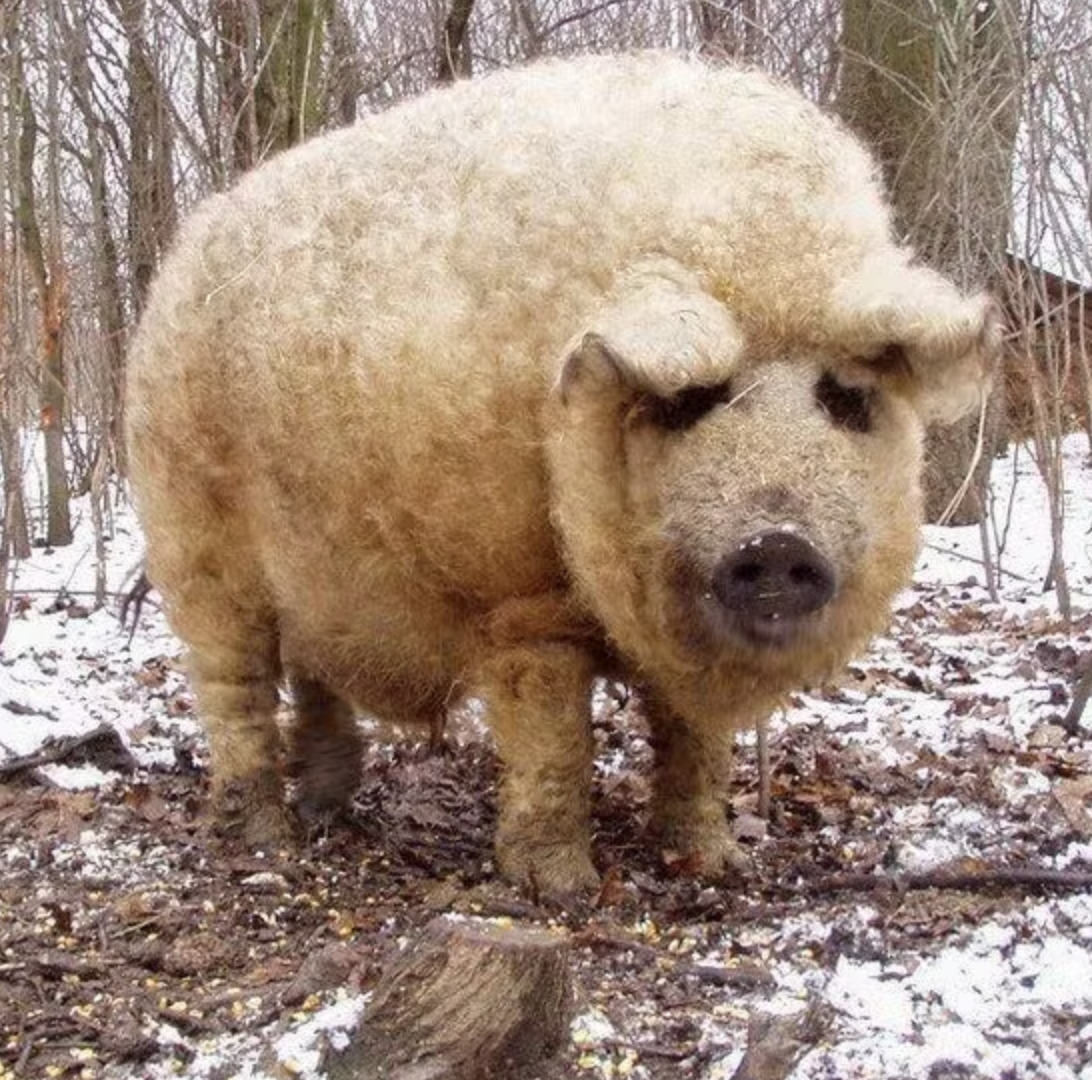
Acorns are poisonous to horses, but pigs love them, and their meat is extra tasty when they have eaten lots of acorns. I have lots of oak trees, and horse, so to prevent them from eating acorns I let a local pig farmer have his mangaliza pigs in my forest all winter. Yesterday he arrived with 20 teenage pigs, and come spring I'll get the meat of one of them.
I wish we had a use for acorns! Lots of them on the ground and they feel like stepping on Legos when barefoot! The squirrels are not doing their due diligence!

Technically, while humans can’t eat tree bark, we can consume the bit in between the bark and the wood; the cambium layer of some trees, such as pine and birch, is actually edible and safe for human consumption, raw or cooked. And no, I haven’t eaten tree before, but yes, I do want to.

Acorns can have the bitterness leached from them by cracking them, putting them in a hole in sand, and pouring a lot of water over them. And I mean a lot!

I once ate a raw acorn. It was *not* the most pleasant experience.
This is actually a more interesting question because acorns do need processing to remove the high level of tannins and make them safe for humans to eat.I believe they are ground up and then soaked for several days in running water and it is intriguing to wonder how this first came about. I would dispute that acorns were 'farmed' as oak trees are huge and take years to grow, but acorns have been gathered and eaten throughout history, possibly often as 'starvation food'.
To be fair, a lot of what we as humans eat is also tree bark and leaves. Cinnamon, for instance. Or lettuce. Tree bark, and leaves.

The Eskimo eat whale meat and blubber, and you would too if you had to eat whale meat.
Reminds me, lots of trees are in fact edible (if anyone here watches Food Theory you'll know what I'm talking about, please tell me there are other theorists here)
 Nettles. "Ow, that m**********r stung me! Maybe I should boil it for its crimes....".
I learned how to cook stinging nettles in the Boy Scouts. Part of surviving in nature when you're hungry.
I'd be doomed, I'm allergic to them! Pity too, as nettle tea tastes nice- hence how I know I'm allergic...
Load More Replies... young nettles are not stinging and are easy to use. They're one of the first vegetables in spring. Reason why the Romans took seeds with them whenever they colonised a new region. Like Western Europe. (The non-stinging nettles were grown for the fibres, to make textiles. They're not edible).
this! young nettles are delicious and full of vitamins..their seeds are full of nutritions for hair, so they fed it horses. and they grow anywhere and fast
Load More Replies...
Nettles are the kind of weed that is rampant in my area. Every year it conquers more ground. During starvation times, a war for example, people make do with what is available.
When there is no war, steep them in water and make nettle tea for the garden. Your veggies will love you for it!
Load More Replies...
Well, once you have learned that certain plants, mushrooms and herbs ate good to eat when cooked or baked and others are not, one would carefully try. Touch the plant/mushroom. Touch usually won't kill. Then lick it. If save, take a tiny bit, eat it and see what it does. If nothing, you could try a little more. Experiment. You have learned that some have medicinal features. Try and find out, but carefully.


Used to eat the new shoots in salad as a kid, and my mother made nettle beer (very slightly alcoholic) and only takes a few days to make. Used to use rubber gloves to go out picking the nettle tops.


 Hakarl. I think it was probably starvation that led someone long, long ago to eat that rotten dead shark that had been fermenting in beach sand for months. Surely that could be the only reason someone would eat it because I have heard hakarl smells and tastes like p**s.
I've heard that the smell of surströmming can be detected even in Iceland, at least that's what the Swedes say...🇸🇪 🤷🏽 🇮🇸
Load More Replies... 


I ate it and it is beyond p**s. Its one old solid piece of very intensive p**s.

Sounds unpleasant to me, but the concept of salting and saving meats isn’t a new one.
 Potatoes. Early potatoes were small, hard, and poisonous.
Methods of making them not poisonous included soaking them in running water for weeks or, in the high Andes, leaving them out on rocks high in the mountains so they effectively freeze-dried. Alternatively, you could mix them with clay when eating them - the clay would adsorb some of the toxins.
Not just potatoes but the whole nightshade family is poisonous: Tomatoes, Eggplants etc. along with potatoes. Can you imagine if we hadn't made them edible by breeding out the poison? Vegetable selections would be so much restricted. I can't imagine my food life without these vegetables.
There was no "breeding out the poison" and Tomatoes and Eggplants are fruits, not vegetables. The leaves and stalks of both were, and continue to be poisonous, the fruits never were. People were afraid that the fruits were poisonous, on the basis that the leaves and stalks very much are. They were not. Potatoes are a little different in that the leaves and stalks are as well poisonous, but the potato itself "can" be poisonous (to this day) if there are any green spots on the skin or flesh, which contain solanine.
Load More Replies... God bless the patient souls who figured potatoes out for all of us.

Just finding out that my body can no longer consume nightshade at all has been very sad for me!!!!

 There’s a fruit in Brazil that needs to be cooked around 7 days, otherwise it’s toxic.

That sounds like a regional US dish called poke salad you have to cook the leaves twice before consuming.

The leaves are from the pokeweed plant, and yes, it's poisonous raw.
Load More Replies... 

So sometime along someone was saying "it has been cooking for 4 days. It can't still be toxic. ... No. Let's keep cooking."

In certain parts of Brazil is called mandioca. i have eaten it a lot of times fried. No special preparation or long cooking is needed.

They are talking about "mandioca brava" , not the normal variety ("mandioca mansa"). It translates as "feral cassava" and "docile cassava" , or something like that.
Load More Replies... Therefore the whole cooking process must be done in a (24/7) shift system, right? 🤔 🤭
Did people just die for 6 days before they knew 7 was the golden number?

Cassava, manioc, or yuca, is not a fruit, but a tuburous root, that releases hydrogen cyanide if not properly prepared.
 Gummy bears. How are you not scared the bears would attack you from the inside? Actually, I hear the sugar free ones do.

The sugar free ones don't so much attack ... they try to escape from the body... quickly.
:::shudder::: My wife bought some hard candy home one day, came in a little tic tac like box. Fantastic, strong flavor. We sat there popping them like...well candy. Half an hour goes by and the stomach pains start in....and she discovers "oops, sugar free" Bad, bad day.
Load More Replies... 
Gelatin, in general, is good for diabetics because it improves blood-flow into the feet. (Strengthens capillary walls) But Wine Gums have a better gel-to-sugar ratio, and don't 'escape'.


 Fugu. To even be allowed to make it, you need a license to show that you can consistently make it in a way that won‘t kill your customer(not to mention the training required to get the license which IIRC can only be issued by the Japanese Government). How many tries were needed to figure out the propper way to make it and why did they keep trying after the first two or three tries?
SeiCalros reply:
Fugu fish aren't that lethal. Most people could eat a whole fish including the skin liver and ovaries which are the poisonous parts. One fugu fish COULD be fatal but most people who used to die from fugu liver had eaten several of them.
Uh no, SeiCalros. There is enough tetrodotoxin in one average size fugu to kill 30 adult humans.
Seicalros is talking out of his butt. Tetrodotoxin in puffers are lethal. Like in fraction of micrograms can kill you lethal.

I tried it in Japan and chefs who can prepare Fugu have a license in their shop and can be found on a special list (online). If you wanna try it just check it out and pay a lot of money - it takes time. Was it worth it? At least I can say I tried it but my mouth was a little bit dazed and the fish itself has no real taste, so you get some kind of sauce for the dipping. It was an expierence :)
There was a news story the other day about the youngest person to ever gain the training and licence to prepare fugu, a 9 year old girl.


A Japanese 10-year-old has become the youngest person authorized to prepare fugu puffer fish — a delicacy that can kill if its poisonous parts are not properly removed.
Fifth grader Karin Tabira passed a test this summer that certifies her to slice and gut the fish for consumption.
She recently used her new skills to serve a platter of paper-thin slices of fugu sashimi to the governor of Kumamoto Prefecture, where she lives.
"I was happy when the governor said 'oishii' (delicious)," she told reporters at an event where Gov. Takashi Kimura ate the dish.
Tabira was among 60 people — mostly professional chefs — who passed the test in Yamaguchi Prefecture this summer, out of 93 people who tried. Screen-Sho...78-png.jpg 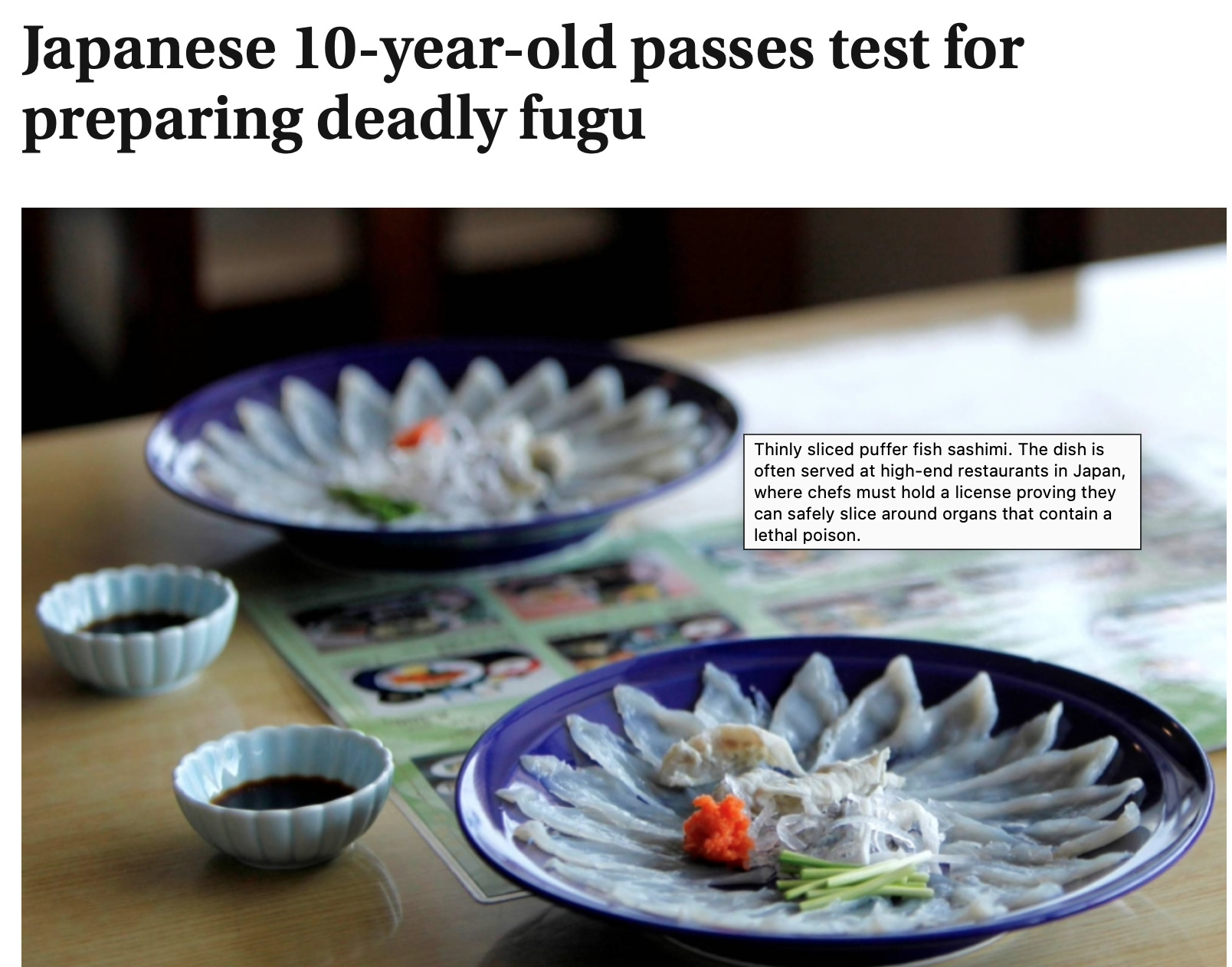
Someone tried to sell fugu to my Filipino husband when we were in Okinawa. He looks Okinawan apparently - I also see what they mean - and everyone spoke Japanese to him. They nearly dropped their fugu when the little European lassie responded in Japanese! :D
 Chocolate. I mean don't get me wrong I get why they were playing around with the plant and all.
The sheer process of getting to Chocolate as a product is so weird and bizarre and kinda gross...and then it comes out as the lovely candy we know and love.
Well, but every step/ingredient is edible, so it's not far fetched to combine them.. Are you equally amazed by cake? Imagine the process of mixing so many different things and then heating the result up. How crazy is that?!
Yes I always thought the development of the cake and bread amazing. Until I read that earlier explanation of how bread is believed to have been discovered and makes perfect sense.
Load More Replies...
we have the history on part of it. the south americans didn't use sugar, they were drinking it bitter (and using it as currency) for a few thousand years. the spanish came along and added sugar in the 1500s. it got into baked goods in the 1600s when the french got hold of it. the british made it into candy first, in the 1800s. so for a long time the creativity had plateaued at "unsweetened, add hot water" and then it kind of took off as it got passed around europe. fascinating to read about really.
Everything you said is correct but I have to point out that calling chocolate 'candy' is an American thing. Over here, candy is either made from boiled, flavoured sugar, poured into moulds and cooled, or melted and spun, as in candy floss (US - cotton candy).
Load More Replies...
I used to work near a chocolate factory - you'd think it would smell heavenly, but no. It had to be one of the worst smells, like hot garbage left out to bake in the sun mixed with all the BO in the city. Only when vanilla is added did it reduce the smell of gross.
Ahh google the original recipe for chocolate, it's weird and spicy and a drink so interesting rabbit hole there 🙃

Cadbury invented a method that the incorporated milk. Chocolate was no longer rock hard and bitter.. Demand boomed.
No, they didn't. Milk chocolate was invented by a Swiss chocolatier, Daniel Peter, in 1875. Cadbury didn't produce milk chocolate until 1897. Peter initially added powdered milk made from condensed milk supplied by his neighbour, Henri Nestlé,
Load More Replies...  What the f**k was bread guy doing? What compelled him to collect tiny pieces of grain, dry them out, smash them into a powder, get them wet again (but not too wet), and then put the whole thing over fire?

There's decent evidence that bread was made by accident. A slurry Guinness like mixture was made because heating soaked grains opened the outer husks release the edible part inside. The heat along with fermentation killed some nasty bugs in the water. Some drunk dude fell asleep with a batch over some coals and the water baked off leaving the first bread.

It was most probably a dudette, if we look at who was and still is preparing grain in most cultures
Load More Replies...
Even a dense human can make the connection that powders become a slurry when wet and have phases between "mostly liquid" and "mostly solid". Just look at dust, dirt and mud. Turning grain into "wheat dirt" was not a big stretch. And baking it would seem natural enough (see: earthenware).

Bread and beer is the reason we started agriculture, they just tasted so good we needed to make more of it.
I believe agriculture came about when hunter gatherers realised there were benefits to staying in one place and growing their own food, it happened around 15,000 years ago. The first beer was made around 12,000 years ago, so close, but agriculture came first and beer wasn't the reason for it.
Load More Replies... First, you harvest (pluck) grain and eat it raw. It's edible. Then you either bake or boil it. You get porridge or baked grain. Then you add something like honey or other sweet produce. By then you have discovered a crude oven ...

Dried seeds have longer shelf life. Wheat seeds eaten whole absorb liquid and cause stomach pains. So they dried and smashed them.
 Our earliest ancestors in Africa likely ate a ton of yams, which were basically hard roots that I believe are also sometimes toxic. People were probably dead set on making the root vegetables where they ended up edible. Eating root vegetables as a staple might be the most engrained human tradition.

I think it’s Cassava (yuca) that is poisonous as it contains cyanide. Both raw and cooked can cause poisoning if I’m correct. Cooked cause it can interact with other food items consumed.
Load More Replies... Yams are so much sweeter than regular potatoes. Roasted with a little butter, they are delicious.
Yams are not potatoes & come from a different botanical family. There is confusion between the two ' because the yams' marketed & sold in supermarkets in some developed countries are actually sweet potatoes. They are also in a different botanical family to yams & potatoes. Edited to add: apparently, in the US, anything sold as a yam must also contain the term 'sweet potato' on the label
Load More Replies... most nutritions are concentrated in seeds and roots,they need more time to spoil than fruits or leafs that's why mankind always aimed for them ,try to make it edible

Fire let us eat otherwise poisonous roots and leaves etc. Raw meat won't kill you like a raw bean will! So that's why fire gave us so much more foods in the world

 Almost every edible mushroom. Lots of trial and error there, I bet.
shadowa1ien reply:
Shiitake mushrooms are like this. They're not deathly poisonous, but if eaten raw in medium to large amounts can cause severe itching for up to several weeks. Now imagine my face as I read that little tidbit on Google... after I had popped a raw shiitake mushroom in my mouth and had already swallowed most of it. The moral of the story, if you aren't sure, google before taste testing. my logic was since there's no warning on the store packaging, it must be fine! I didn't get the severe itching thankfully.
The morel of the story, on the other hand, looks like the mushroom equivalent of Swiss cheese.

Same way we learned about poisons. Well, Jake ate it, and you don't see him around anymore.
The moral of the story is to use qualified advice; Google just happened to be right this time. There's actually a bunch of people who got sick recently from using AI generated info on mushrooms.

There is this super delicious mushroom that you have to boil three times to make safe for consumption. Though even then it isnt 100% safe so i no longer eat it :( Too tired to Google a translation but it's murkla in Swedish.

 Lobster, crab, shrimp...
This is 100% a historical starvation food. Being unable to farm or hunt with weapons (due to a lack of land, weapons or hunting prowess), many people living near the sea would chase down whatever they could catch in the surf and eat it.
Starvation food, like so many others on this list. If you're going to die of starvation anyway, might as well eat some "unlikely" things. Maybe it will work out. And some of them did.
Load More Replies... Crickets, ants, beetles? Ugh bugs are gross! Shrimp, crab and lobster? Mmm those bugs are wet, yummy!


People used to tell me "It's an acquired taste." Yeah, well, why would I want to acquire a taste for a giant underwater cockroach that costs $28 a pound?
It used to be fairly cheap and for a couple of centuries, even considered to be a food for the poor...
Load More Replies... 
"Hey, look at that weird ocean dwelling bug-like thing. Yeah...let's eat that!!!"


"Starvation food"? What are people smoking? It was FOOD, just like fish. People ate these long before they were Homo sapiens, because protein is protein. Things only became "poor people food", when other food items became expensive. Hell, during the Great Depression, chicken became expensive, and suddenly, people were making "fake chicken" with pork. Sheesh, the lack of understanding of how people lived at any other time or place is amazing. "Starvation food" are things like horse hooves, not crab or shrimp. Sheesh.
Your personal bias does not outweigh the reality of history
Load More Replies...  The french are masters at this :
- engorged livers from geese and ducks that have been force fed
- snails : they’re everywhere but for some reason only the French eat them, but not slugs because that would be weird
- frogs : they’re everywhere but for some reason only the French eat them, but not toads because that would be weird
- cheese with maggots in (my Norman FiL)
- Camembert cheese dipped coffee (my Norman FiL)
- Pigs ear salad
- pig and sheep’s brain (they sell them at my local supermarché)
- Normandy sausage made from god knows what (delicious it is) but I think it comes from the stomach / intestine (my Mum calls it A**s Sausage)
- not to mention turning rotten grapes into an art form / national obsession
- sheep’s testicles (FiL)
- raw beef (and if its not dodgy enough well add a raw egg too)
- Horse (like really good beef, but better).
Fois Gras was actually developed in ancient egypt, ancient greece and some parts of turkey, the, Casu martzu (maggot cheese) is Sardinian and illegal throughout europe

It's important to note that nobody seems to care that the cheese is forbidden. But the maggots can apparently nibble on the inner walls of your intestines if they survive, causing damage, if you don't chew them up
Load More Replies...
This is mostly rubbish, these foods are, it were, commonplace in other countries.
None of these things are exclusively French, and many of them go back thousands of years. Humans have always found ways of preparing food from the poorest ingredients, often creating dishes which then form a part of the cultural psyche. They're not always good (IMO, like the Andouillette alluded to here, which really does taste, or at least smell, of shít) , mostly an acquired taste.

I'm not sure if the horse belongs here as it's not a weird thing the French do, almost the entirety of the world eats horses. It's more of a weird thing that the Americans don't, seeing horses as pets.

Foie gras originated, à very long time ago, with people finding out that the liver of migrating birds who'd eaten themselves silly before leaving was delicious, so they tried to reproduce the process. For the rest... well, poor people have to find their protein where they can.

Escargot is actually delicious. So is camambert with coffee. Don't knock it til you've tried it.
Escargot seconded. I haven't tried the camembert coffee, although I like both of those things.
Load More Replies...
Italians also eat frogs, snails and horse meat. And have maggot cheese.
Americans eat frog legs, but I'd never heard of any of us eating the rest of the frog.
Load More Replies... Unfortunately I saw a programme about the making of fois gras, it was horrific. They literally torture those poor geese. I've tried fois gras once (before I knew how it's made!) in a fancy restaurant, and it was no better than a rich pate. The cruel practice should be banned!!


The sausage tasted like a*s is from the south of France and tastes like poop in a sausage skin.
 Maybe not quite food, but like tobacco and Marijuana. The amount of trial and error of just smoking random things to see what happens must have been an interesting time.
Steamed-Barley reply:
It's brewed from a combination of Chacruna leaves and the vines of Banisteriopsis caapi - two completely different plants. The leaves contain DMT, while the vines contain MAOIs, which inhibit enzymes and allow DMT to enter the bloodstream and reach the brain. Both are necessary for the potent psychoactive effects to occur, you can't take one without the other.
It's been used since at least 1000 years ago. How the hell they found the correct combination is just... wow.
Fires in the vicinity of tobacco plants? Trying to put out a raging fire and discovering the smoke makes you feel a certain way but only when these leaves were involved. Or adding dried leaves to camp fires, same deal and then cos it felt good they got closer to the fire to inhale more smoke then some bright spark rolled up a leaf, lit it on fire and got a direct hit...
Julio was downwind of the burning hemp factory. After half an hour he said "Sheeit man, I ain't making rope no more!" Cheech and Chong or Firesign Theater.
Load More Replies... The tribal shaman figures were tasked with vision quests throughout prehistory looking for answers from the deities. Ingesting weird substances was part of their job. Probably a lot of them died over the centuries. Tobacco (Ah Se Ma) was a vision quest herb. The native Americans warned the colonizers that it was to be used with care, because it was a jealous, dangerous spirit plant. We see how much they listened.


Smoking fibre plants was a origin for many tribes etc. The tobacco plant was the king.
The smell of smoke - any kind - just gags me. How did we get from here to there?
 Artichokes.
oldcrustybutz reply:
I kinda feel like they're a specialization from a generalization though.
There are the more generalized Cardoon thistles where you more eat the stalk and stems which wouldn't be that big of a stretch to throw them on some coals, peel, and enjoy. Later someone found that the flower base was even better because you can use it as a bunch of tiny spoons to deliver copious amounts of butter to your cardoon hole.
Brussel sprouts are brassicas. All brassicas are edible. Therefore brussel sprouts are edible. It's possible you've never had them fixed properly. There are many ways. Boiled to death in a vat of water is not one of them.
Load More Replies... Fun fact: the Jerusalem artichoke is not an artichoke - and it doesn't come from Jerusalem.


The best dip for artichokes is hollandaise. In my humble opinion.

 That blowfish stuff. The kind that they have to be super careful when preparing. How'd they figure out being good enough to prepare it?


 Balut. A duck embryo still in the shell.
In Europe, there's something quite similar to that (found in Germany, Austria and France amongst others). For that you basically take a small songbird, poke the eyes out or place it into permanent darkness so it forgets day and night, and feed it constantly until it's very fat. Then, the bird is drowned in alcohol, roasted and eaten whole with a napkin over your head. However, most people won't eat it anymore and I myself also find it really weird. If someone wants to know more, look up (Fettammer/Ortolan).
It is illegal to eat ortolans today, the specie is protected due to being near extinction.
Load More Replies... It may sound gross to eat for some, but I mean.. you can eat eggs, you can eat duck.. why not the thing in between? Figuring that out wasn't that hard..
It's repulsive. Feathers, feet beak and all. So repulsive that even in the country that popularized it, those that consume it do so behind a napkin or covering. Whether in shame or to prevent offending and angering those around them is debatable. My aunt is Filipino, i asked her once if she ever ate that abomination and her response was "UGH NO. Those people are monsters"
Load More Replies... Nope, because I don't want to »barf« myself...barf = biologically appropriate raw food...🧑🏽🍳
I have a rule against eating babies...no lamb, no fertilized eggs....
 Green Olives? Poison until soaked in brine? How did that get figured out?
Unprocessed olives are not toxic. In fact, the opposite is true. Olives contain oleuropein, which studies have found to be very beneficial to human health. However it also has an extremely bitter taste.
I live in an olive-growing region. I can personally confirm that green olives right off the tree are not toxic; they just taste horrible. The wild pigs around here love them though.
Load More Replies...
My first taste of an olive was at my aunt's house in New York. I was 14. Nearly 60 years later I still hate them.

My understanding is that the ancients didn’t like them because of the bitter taste but some branches were hanging low into the ocean and the people started noticing birds eat them ie. natural brining, so the people started eating them too. The rest is history
What the Hell type of neo-Stalinist Karen is trying to censor joking about not liking olives. Seriously, if you down-voted this, please cease any interaction with anyone else.
Load More Replies...

Okay but how desperate was the person who discovered cow milk...
Load More Replies... I think a lot of these things occurred when humans noticed the unintentional results of doing something else entirely. Sitting around a campfire that you made out of old dug up roots....hey that burnt root actually smells delicious and the dogs are eating it. Lets try it too.

Yeah like Lobsters. You really can't imagine someone who has gone their entire life eating different animals, looking at an animal and *not* thinking about eating it?
Load More Replies... These questions say more about the poster's ignorance of even very recent history and dislocation from food sources than anything else. But as ever, Pandas to the rescue!
I think a lot of it was about survival. Humans ate whatever was edible, and learned to process the leftovers in order to make them edible as well. Nothing was wasted because every calorie counted, flavor was less important (at least at first).
What a lot of people don't realise is that the vast majority of the vegetables we eat doesn't exist in the wild. They have been selectively bred (evolved by artificial selection) from wild ancestral plants that neither look nor taste like the ones we eat today. So to ask 'who was the first person to see a Brussels sprout and think "ooh, looks tasty"?' is to ask the wrong question, since sprouts were deliberately developed entirely by humans, along with cabbages cauliflowers, broccoli, kale, and so-on, from a single species of brassica originating around the Eastern Mediterranean, a coastal plant with leaves that look similar to those of dandelion leaves and that grows a tall (1-2m / 3-7ft) flower spike covered in small, yellow flowers. Even the wild cabbage found in Europe, while almost identical to the original species, is most likely feral rather than wild, deriving from seeds blown from the early domesticated plants in gardens and fields.

from what i've read we probably got to booze from whole fruits that naturally fermented. either on our own or by watching birds and primates go for them
Rhubarb. I mean how? Why? Three guys sitting there each given a part to try and everyone goes, yip we can eat the stalks. Oh and BTW throw those guys in the pit, they're not hungry anymore, just dead
"During World War I, the British government suggested using rhubarb leaves as a food source to help ease food shortages. However, this recommendation was quickly withdrawn after reports of sickness and even death due to the toxic nature of rhubarb leaves" Our government was never the sharpest knife in the drawer, and still isn't.
Load More Replies...
Most of these foods were being eaten by our ancient ancestors, long before we became homo sapiens. Just observe what monkeys and apes eat in the wild. The ones that require some prep were all probably accidents. Serendipity. It's believed soap came from a sudden rain storm that flooded a cooking firepit, and the water mixed with wood ashes and fats from cooked food and made a slippery foam on everything. Surprise! the things under that foam were clean.
Okay but how desperate was the person who discovered cow milk...
Load More Replies... I think a lot of these things occurred when humans noticed the unintentional results of doing something else entirely. Sitting around a campfire that you made out of old dug up roots....hey that burnt root actually smells delicious and the dogs are eating it. Lets try it too.
Yeah like Lobsters. You really can't imagine someone who has gone their entire life eating different animals, looking at an animal and *not* thinking about eating it?
Load More Replies... These questions say more about the poster's ignorance of even very recent history and dislocation from food sources than anything else. But as ever, Pandas to the rescue!
I think a lot of it was about survival. Humans ate whatever was edible, and learned to process the leftovers in order to make them edible as well. Nothing was wasted because every calorie counted, flavor was less important (at least at first).
What a lot of people don't realise is that the vast majority of the vegetables we eat doesn't exist in the wild. They have been selectively bred (evolved by artificial selection) from wild ancestral plants that neither look nor taste like the ones we eat today. So to ask 'who was the first person to see a Brussels sprout and think "ooh, looks tasty"?' is to ask the wrong question, since sprouts were deliberately developed entirely by humans, along with cabbages cauliflowers, broccoli, kale, and so-on, from a single species of brassica originating around the Eastern Mediterranean, a coastal plant with leaves that look similar to those of dandelion leaves and that grows a tall (1-2m / 3-7ft) flower spike covered in small, yellow flowers. Even the wild cabbage found in Europe, while almost identical to the original species, is most likely feral rather than wild, deriving from seeds blown from the early domesticated plants in gardens and fields.
from what i've read we probably got to booze from whole fruits that naturally fermented. either on our own or by watching birds and primates go for them
Rhubarb. I mean how? Why? Three guys sitting there each given a part to try and everyone goes, yip we can eat the stalks. Oh and BTW throw those guys in the pit, they're not hungry anymore, just dead
"During World War I, the British government suggested using rhubarb leaves as a food source to help ease food shortages. However, this recommendation was quickly withdrawn after reports of sickness and even death due to the toxic nature of rhubarb leaves" Our government was never the sharpest knife in the drawer, and still isn't.
Load More Replies... Most of these foods were being eaten by our ancient ancestors, long before we became homo sapiens. Just observe what monkeys and apes eat in the wild. The ones that require some prep were all probably accidents. Serendipity. It's believed soap came from a sudden rain storm that flooded a cooking firepit, and the water mixed with wood ashes and fats from cooked food and made a slippery foam on everything. Surprise! the things under that foam were clean.


 No fees, cancel anytime
 then open in external browser


 and click "Open in External Browser"