Get Premium
Dark mode theme is available exclusively for premium users. Learn more about the benefits of subscribing.
No fees, cancel anytime.

 Dark Mode Ad-Free Browsing Unlimited Content
 Ad-Free Browsing Unlimited Content Dark Mode
Join 1.2 million Panda readers who get the best art, memes, and fun stories every week!

Many of us spend hours online and rarely stop to wonder who or what is behind the screen. We scroll through posts, watch videos, follow creators, and chat with strangers, usually assuming there is a real person on the other end.
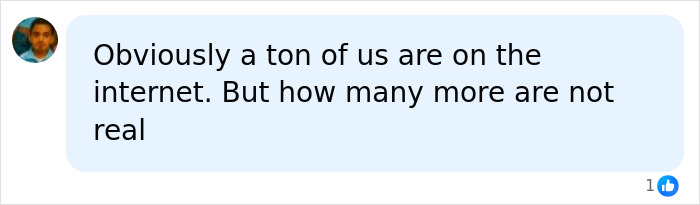
But that assumption is getting harder to trust. AI can now create faces, personalities, and even whole online identities that look real enough to attract real followers. Some of the people getting attention online are not real at all, which has brought the long-discussed Dead Internet Theory into a real conversation.
So is the internet really turning into a place full of people who are not real? We will look at where the Dead Internet Theory started, how AI-generated content is changing the web, and what the latest evidence does and does not show.
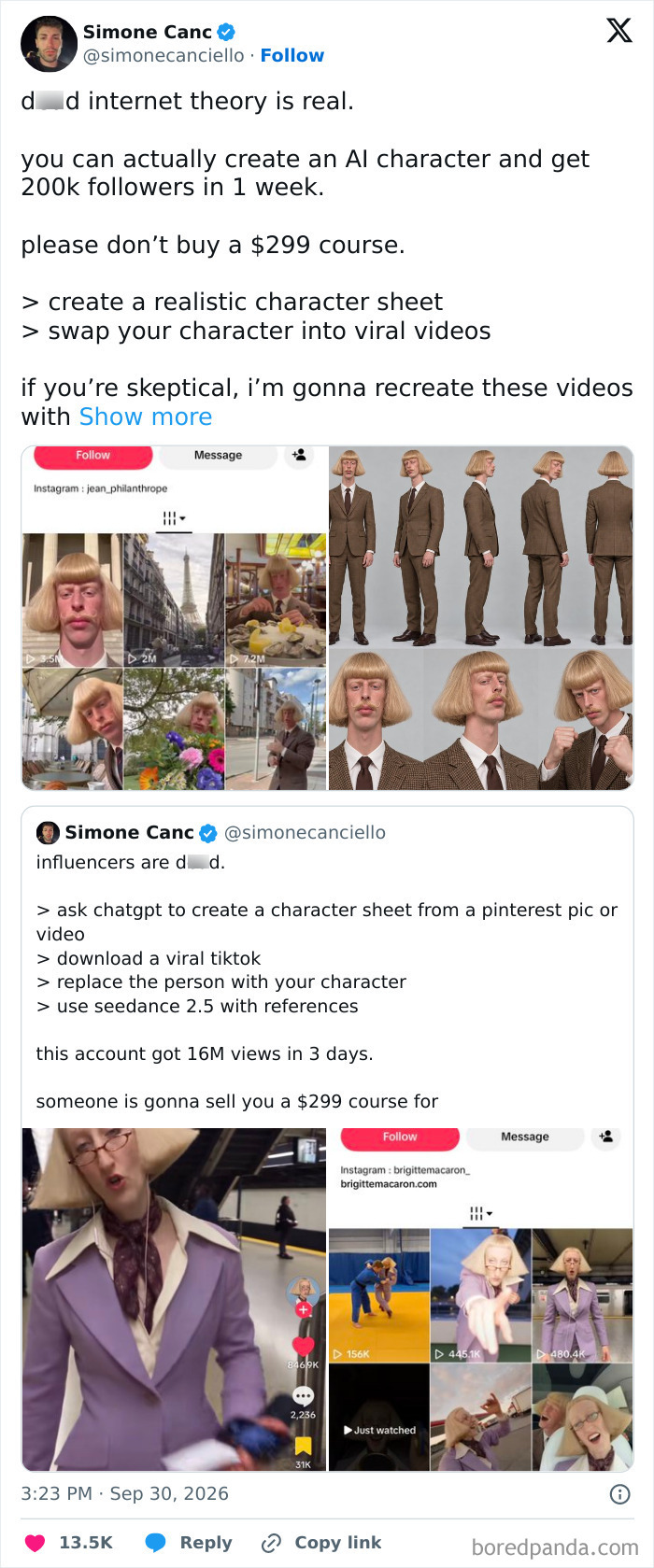
At first, Jean Philanthrope seemed like just another odd internet personality, but things soon took a stranger turn. His $JEANPHIL memecoin shot up to a $12.2 million market cap before it crashed. Then, just days later, an AI-generated rival named Archibald Brown showed up with his own token.
The quick rise and fall of both gave new life to an old question: how much of what we see online actually comes from real people? Netizens began to feel worried about who they really are and what this means for the internet.
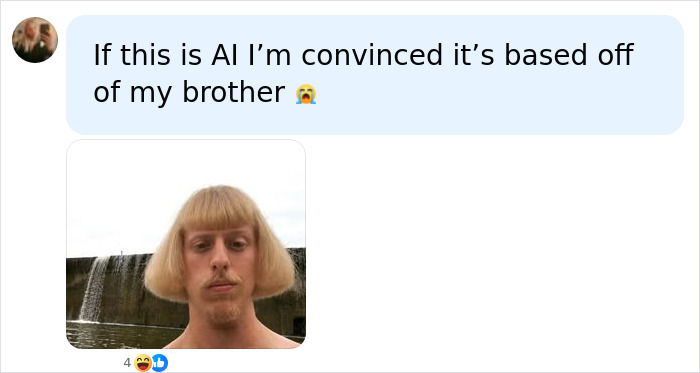
Jean Philanthrope showed up on Instagram in September 2026, dressed in a brown suit, with a blond bob and a curled mustache, silently shadowboxing in stranger and stranger places. This AI-generated character quickly gained over 228,000 followers, turning a made-up personality into a real social media hit.
Then, Archibald Brown appeared as Jean Phil’s supposed English counterpart. His account soon had over 110,000 followers, with videos focused on their made-up feud. Both characters promoted their own meme coins, making these AI-generated personalities into ongoing entertainment and online identities people could trade.
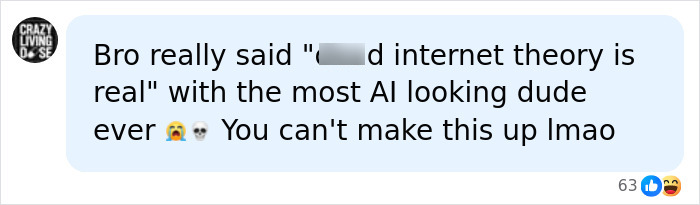
The unusual popularity of Jean Phil and Archibald Brown connects to an older idea called the Dead Internet Theory. This theory first showed up on the Agora Road’s Macintosh Cafe forum in 2021, where a user named IlluminatiPirate claimed that bots had taken over much of the human activity that used to define the web.
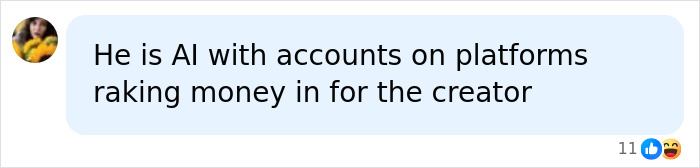
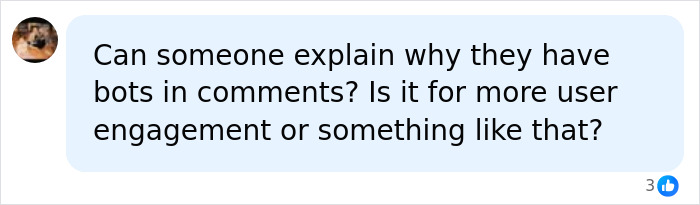
The theory is not just about bots being online. It suggests that automated systems make posts to get clicks, comments, and likes, and that other bots provide the responses those posts get. At its most extreme, the theory says machines are making content for other machines, with humans becoming a smaller part of the audience.
For a long time, this idea seemed unlikely. But now that AI can quickly create realistic text, images, videos, and even online personalities, some parts of the theory are easier to picture. The theory itself is still unproven, but its main question is harder to ignore.
The curled moustache rivals belong to a much bigger world of virtual personalities. These accounts use familiar ways to connect with audiences and boost engagement. Non-branded virtual influencers often get more engagement than branded ones.
Aitana López is an example of how realistic virtual influencers have become. This AI-generated Spanish influencer has almost 400,000 followers on her social media and has landed major brand deals. Shudu and Imma, who are also computer-generated fashion personalities, built their audiences years before.
The idea of following a person who exists only on a screen predates today’s generative AI boom. Shudu appeared in 2017 as a computer-generated model created by photographer Cameron-James Wilson, and by 2018 she had hundreds of thousands of social media followers. Brands including Fenty Beauty also featured her in campaigns.
Imma followed in 2018, when Tokyo-based Aww Inc. introduced the pink-haired virtual personality on Instagram. She went on to work with brands including Porsche, Calvin Klein, Magnum, and IKEA. These characters did not need generative AI to become influencers; their creators built their identities through CGI, 3D modeling, photography, and carefully managed social accounts.
View this post on Instagram
The same shift has moved beyond social media and into streaming platforms. The Velvet Sundown released two albums in June 2025 and quickly passed one million Spotify streams. The band later confirmed that its music, promotional images, and backstory came from AI, turning a seemingly ordinary new act into a major debate about authenticity.
The episode showed how easily an artificial artist could enter the same ecosystem as human musicians. Listeners could stream the songs, encounter the band’s social profiles, and treat its members like ordinary performers before learning that no traditional band stood behind the project. That makes AI-generated music another piece of the same puzzle.
Spotify now marks some profiles with an AI Persona badge when the public identity appears to represent a photorealistic AI-generated person. The platform says listeners have complained about discovering that an artist profile that looked human actually represented an artificial identity. Spotify also keeps these profiles out of algorithmic recommendations by default.
The scale becomes clearer on Deezer, where fully AI-generated tracks exceeded half of all new daily uploads at their June 2026 peak. The platform received about 90,000 such tracks per day. Deezer also identified up to 85% of AI-music streams as fraudulent.
The concern goes beyond having AI create more content. Researchers at Indiana University and other institutions have shown how large language models can work with social bots to produce human-like posts at scale, while detection systems struggle when they encounter this content outside controlled datasets.
That creates a system where artificial accounts can increasingly imitate genuine users. That creates the more unsettling version of the problem: AI can generate a post, automated accounts can interact with it, and that activity can make the post appear popular enough to attract further attention.
Once machines start producing, amplifying, and reacting to synthetic content, the internet will become busy without becoming meaningfully more human.
Do you think AI-generated people and bots are changing the internet for the worse? Would you follow an influencer knowing they do not exist? Share your thoughts in the comments!

By entering your email and clicking Subscribe, you're agreeing to let us send you customized marketing messages about us and our advertising partners. You are also agreeing to our Privacy Policy.
Thank you! You've successfully subscribed to newsletters!
























 No fees, cancel anytime















27
2