Get Premium
Dark mode theme is available exclusively for premium users. Learn more about the benefits of subscribing.
No fees, cancel anytime.

 Dark Mode Ad-Free Browsing Unlimited Content
 Ad-Free Browsing Unlimited Content Dark Mode
Join 1.2 million Panda readers who get the best art, memes, and fun stories every week!

Some people hear a fact they believe is wrong and simply cannot resist stepping in to correct it. The problem is that confidence can be a terrible substitute for actually being right, especially when the person doing the correcting has their own facts mixed up.
That awkward dynamic has produced plenty of funny moments, like innocent misunderstandings to confidently delivered corrections that quickly backfired. Online folks recently shared some of the funniest times they watched people correct someone else, only to discover that the person being corrected was right all along.
Their stories are a reminder that sometimes the best response to a correction is simply to let someone finish before deciding they need fixing.
This post may include affiliate links.

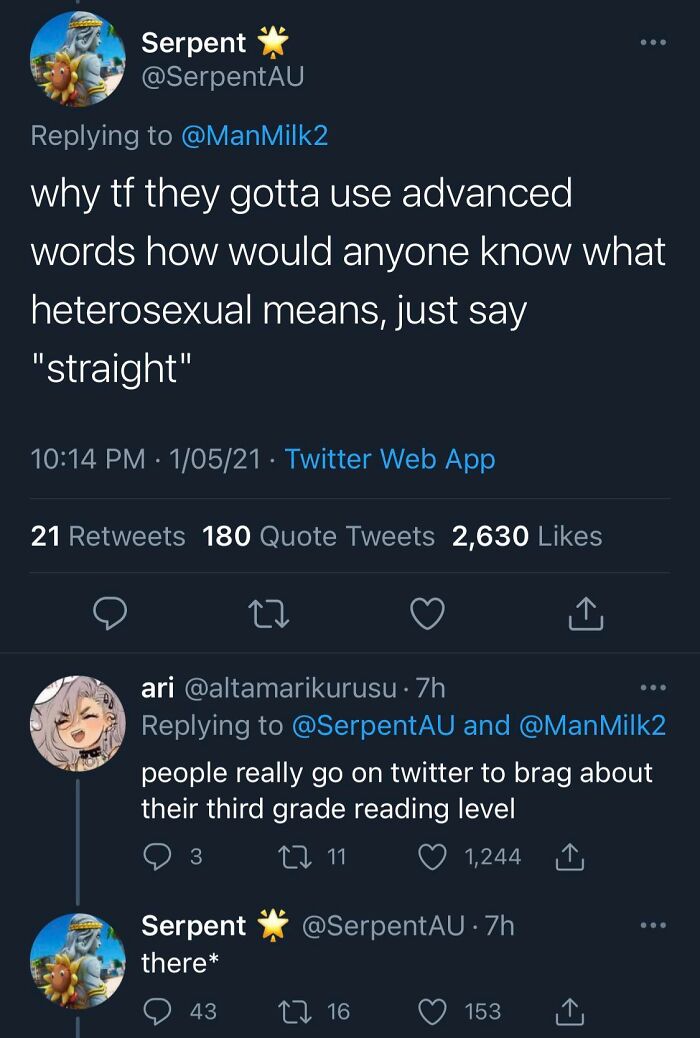
Doesn't "straight" imply that anyone who isn't is bent? I think I'll stick with hetero for now.
Psychology Today explains that confidence is not always a reliable indicator of accuracy. People can feel intensely certain about an opinion because certainty does more than help them decide what they believe; it can also reinforce their sense of competence, control, and social standing.
Being right feels rewarding, particularly for someone who sees themselves as knowledgeable or capable. In social situations, that confidence can become even stronger when a person is accustomed to being viewed as the one who knows things. The desire to maintain that reputation may encourage someone to defend a position rather than pause and consider whether they could be mistaken.
That can help explain why some corrections are delivered with far more certainty than the situation deserves. Once people become invested in an answer, reasoning is not always about discovering whether they are right or wrong; it can also become a way of defending what they have already decided.
If someone has built part of their identity around being intelligent, informed, or competent, discovering a mistake can feel surprisingly uncomfortable. Instead of treating the correction as a small adjustment to one fact, they may experience it as a challenge to the image they have of themselves, making it harder to simply accept that someone else knows better.
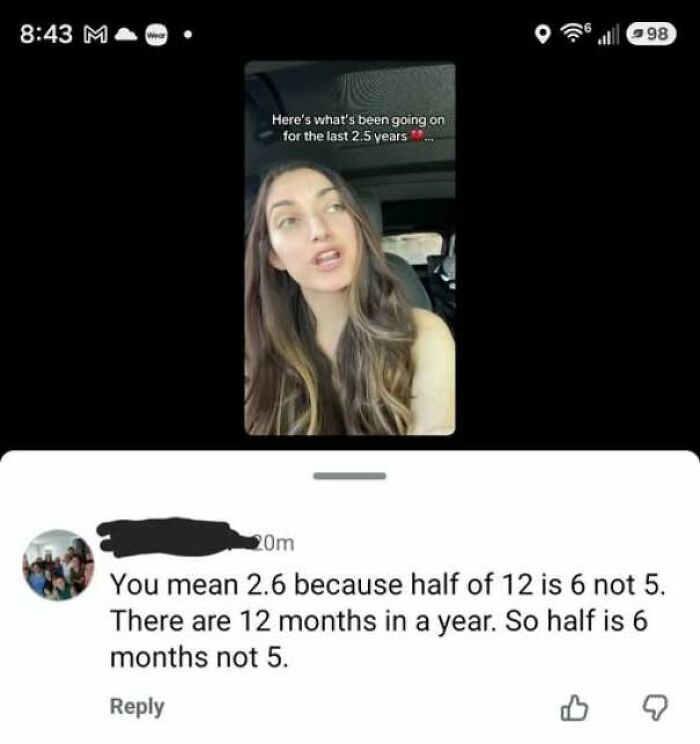
Yikes, I need to start eating. It's 11:45PM and I have 89 lbs 15.5 oz. to go to get my 90 lbs of cheese in for the day.
Psych Central points to another reason people can become so attached to what they already believe, which is that familiar ideas require less mental effort. Our existing beliefs act as shortcuts that help us process an enormous amount of information without having to carefully investigate every claim we encounter.
Confirmation bias strengthens this process because people tend to notice, remember, and accept information that fits what they already believe while scrutinizing information that contradicts it. This can be perfectly efficient when our existing knowledge is accurate, but it becomes a problem when the belief itself is wrong.
Familiarity can make that problem even harder to spot. An idea that has been repeated for years may start to feel true simply because it is familiar, even if repetition has not produced any new evidence. This tendency, known as the illusory truth effect, means that people can become increasingly comfortable with an incorrect claim simply because they have encountered it many times.
Someone who has heard a particular "fact" repeatedly may therefore have little reason, from their own perspective, to question it when another person suddenly offers a different explanation. Their certainty may come less from having checked the information and more from having encountered the same belief often enough for it to feel unquestionably true.
There is also a social side to being corrected. Verywell Mind explains that people may interpret a factual correction as something much bigger than a simple disagreement over information. If being knowledgeable or competent is important to someone's self-image, being told they are wrong can feel like evidence that they are less capable or credible than they thought.
That discomfort can produce a defensive reaction, particularly when admitting the mistake would mean acknowledging that their confidence was misplaced. In other words, the awkwardness sometimes comes not from the correction itself, but from what the person thinks the correction says about them.
The setting can make that reaction even stronger. Being corrected privately gives someone room to reconsider what they said without feeling watched or judged, while being corrected in front of other people can feel like a loss of face. Sarcasm, condescension, or an overly confident tone can make matters worse by turning a factual disagreement into a social confrontation.
A person who might have calmly accepted a correction in private may become much more defensive when they feel they are being made to look foolish in front of an audience. Suddenly, a tiny factual disagreement can become a battle over who appears knowledgeable.
You're in America. Speak Navajo. Or Comanche. Or Iroquois. Or the language of any of the other 572 federally recognized Indigenous tribes.
That does not mean every mistake should be left alone, however. Atlassian makes an important distinction between helpful correction and unnecessary correction. Speaking up makes sense when an error could affect someone's safety, create a significant practical problem, change the meaning of what they are saying, lead to a poor decision, or have consequences in areas such as work, education, finances, medicine, or the law.
Corrections can also be worthwhile when someone has specifically asked for feedback or would genuinely want to know about the mistake. In those situations, accuracy provides a real benefit rather than simply satisfying someone's urge to be right.
On the other hand, there are plenty of moments when keeping a correction to yourself may actually be the more considerate choice. If someone is telling a personal story, venting, using informal language, or making a harmless mistake that does not change what they mean, interrupting them to demonstrate a technicality may accomplish very little.
The same goes for corrections based mainly on personal preferences, regional speech, or a desire to show superior knowledge. Sometimes the most useful question is not "Am I right?" but "Does this actually need correcting?" Knowing when to answer that question with a simple no might save everyone from an unnecessarily awkward conversation.
These examples show just how quickly a confident correction can turn into an awkward moment. Sometimes the person doing the correcting simply misunderstood the situation, while other times they were so certain of themselves that realizing they were wrong made the whole exchange even funnier.
Of course, everyone gets things wrong from time to time, but these stories prove that a little hesitation before correcting someone else can save a lot of embarrassment. Have you ever been confidently corrected by someone who turned out to be wrong? Share your own experiences in the comments!
The entire “England, United Kingdom, Great Britain-are Wales and Scotland countries-Ireland and Northern Ireland-one is a part of Great Britain and one isn’t”. I need a chart to consult. And this doesn’t even include the British Isles.

























 No fees, cancel anytime