Get Premium
Dark mode theme is available exclusively for premium users. Learn more about the benefits of subscribing.
No fees, cancel anytime.

 Dark Mode Ad-Free Browsing Unlimited Content
 Ad-Free Browsing Unlimited Content Dark Mode
Join 1.2 million Panda readers who get the best art, memes, and fun stories every week!


Blessed be those who didn't have to go through the trouble of learning the English language. Some might say that learning Japanese or Icelandic might be the most difficult task out there, but even the most complicated aspects of those languages have some kind of logic behind them. English grammar and the language itself, on the other hand, has some truly nonsensical characteristics to it and a plethora of arbitrary rules.
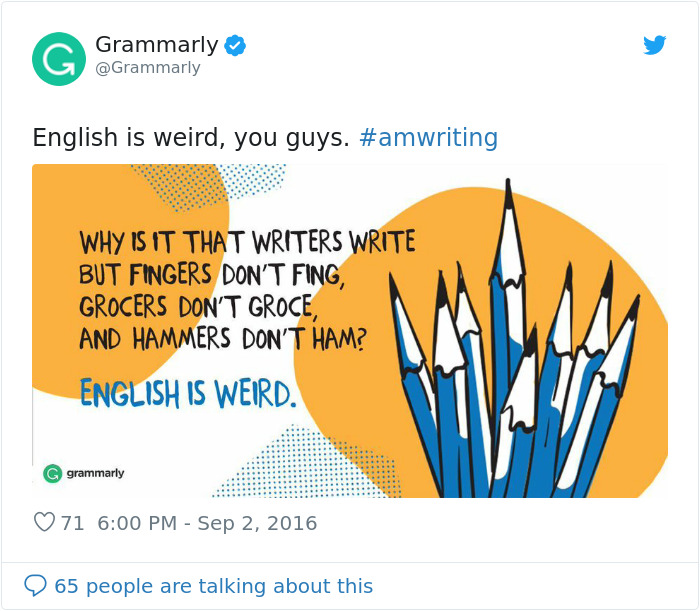
Those with English as their native language never have to consciously work through the kinks of spelling out Wednesday or why writers write, but fingers don't fing and grocers don't groce. Learning English as a secondary language is a real minefield once you figure out the basic grammar rules and step into more specific areas. And these people decided to point some of the most confusing things out there to prove their point. English is a weird language and at times makes no sense whatsoever, especially for a language that is so widespread.
This post may include affiliate links.

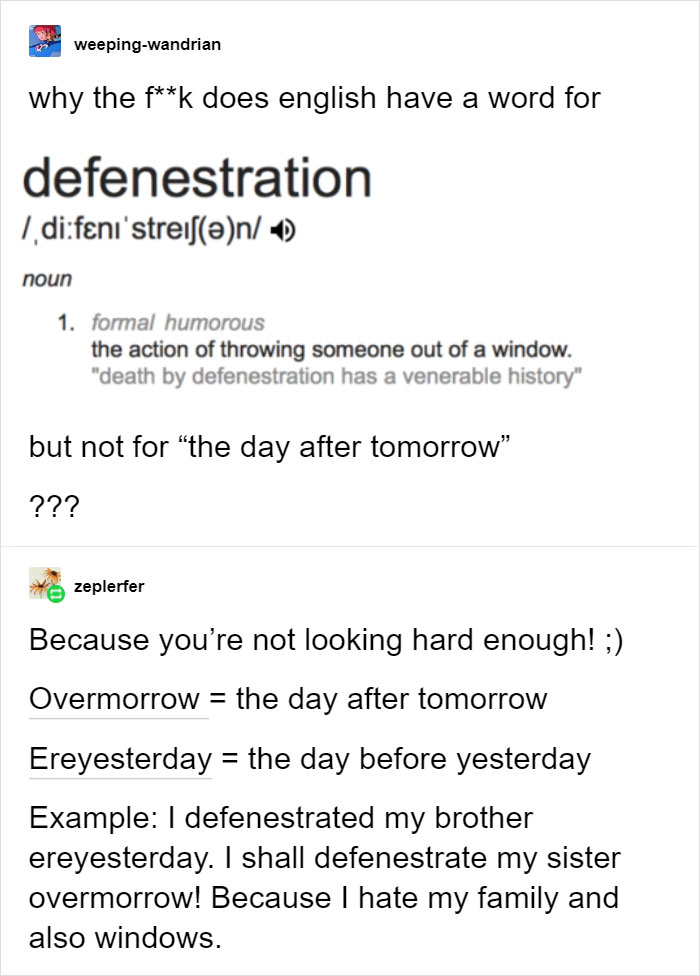
Who's up for the defenestration of Donald Trump. I say we do it overmorrow.

In German, where you have words for Everything, it's literally called window-toppling. But it only has three renown applications in history (which is probably why there's an English word too): The first, second and third defenestration of Prague (the latter of which wasn't even a real defenestration, just plain murder).

In Swedish we have and use the words overmorrow (övermorgon) and ereyesterday (förrgår).

They exist and are used every day in most European (at least) languages. That's why a person is wondering why they don't exist in English. :)
Load More Replies...
My ancestor was defenestrated from Prague Castle in 1618. (Fun fact: he didn't die!)





Defenestration was a historic event, I believe many European countries have this word because of this (in Polish it's similar - defenestracja; comes from latin). It happened in Prague (3 times actually, but the 2nd had most impact worldwide since it's believed to be a reason for the 30 years war).
In European Latin languages it exists, too. It has two meanings: literally means to throw someone out of the window but it's commonly used with the meaning of quickly putting someone out of his post, often in politics.
Load More Replies...





You’re venturing into George Carlin territory here
Load More Replies...

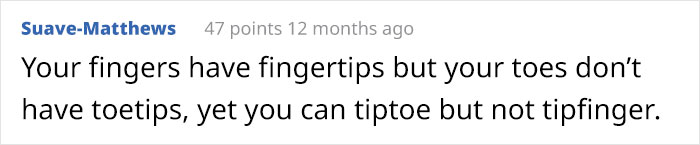
...You tiptoe on the tips of your toes... And I'd be willing to bet someone out there can use their fingers to walk.


To be fair, many linguists would easily find a logical answer to most of the problems presented in these messages, as English language has a lot of nuances (like words being borrowed from Latin and Greek, or the fact that some words had their origins lost or they ceased to be used in spoken language). However, that doesn't mean that they still don't fail to confuse people trying to learn the language, as even the most sound explanation might seem nonsensical when the original problem could be solved by, well... changing the language? Ah, let's leave this for the linguists to figure out and non-native speakers to be confused about, right?

It's at 69 likes, so . . . “ Forgive me father, for I have sinned ” vs “ Sorry daddy, I was naughty ”
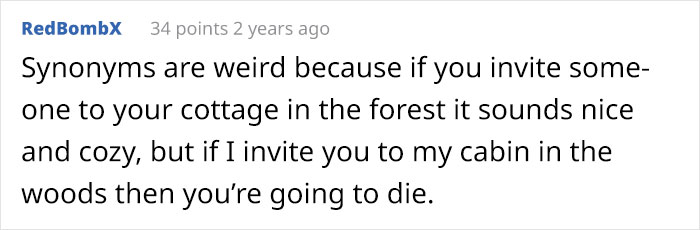
Also, "A tiger is the largest member of the family Felidae" sounds more sophisticated than "A tiger is the biggest kitty-cat in the world".
Load More Replies... I never understood why people had cabins. or cottages. It's like a second home, with all the contingent work and upkeep. I've never heard a friend saying 'I'm going to the cabin and just relaxing.' It's always 'we have to go to the cabin and mow the lawn/winterize/prune the trees/put the dock out'. Now, On the other hand, having friends with cabins is absolutely awesome.

It's awesome because they do the all the work...lucky you!
Load More Replies...
A drive in the country sounds nice and scenic but I wouldn't want to be taken for a drive in the country. In old time radio shows when criminals say they're going to take someone for a drive out in the country, it means they're going to die.
Oh I don't know. Hansel and Gretal went to the witch's cottage. Meanwhile I just spent time in a cabin in the Sawtooths and it was heaven on earth.
Hold on... a cottage and a cabin are two different kinds of building. They're not synonyms. That's like me saying "Look at my mansion", and pointing at a trailer.


The beauty of the English language, which only a handful of its speakers understand, is that since it is a conglomeration of many languages, each with their own rules, the possibility of really understanding it is far too remote to be concerned with ( prep at the end, yeah ). But the ambiguities are what give it such charm. It's possible to cover almost any topic with commentary that will be funny for some, profane for others, irrelevant for many. I didn't see much of that studying German

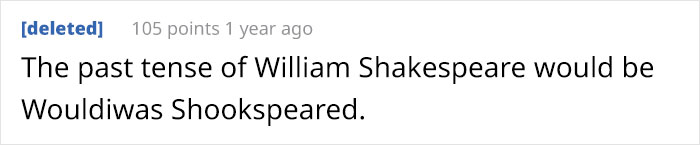
LOL! I once dreamt that my father convinced me that Marty McFly from the past was Marty McFlew.
VEEERY GOOD... LOL! I wonder, or oneder, IF IT HURT TO COME UP WITH THAT ONE.. WON... cuz IT IS A Winner.



You can spear someone with a spear but not sword someone with a sword.

You can spear someone with a sword but cannot sword with a spear
Load More Replies...


W. Shookspeared wrote terrible plays and would have died a penniless drunk if he hadn't landed a gig writing adverts on matchbook covers.

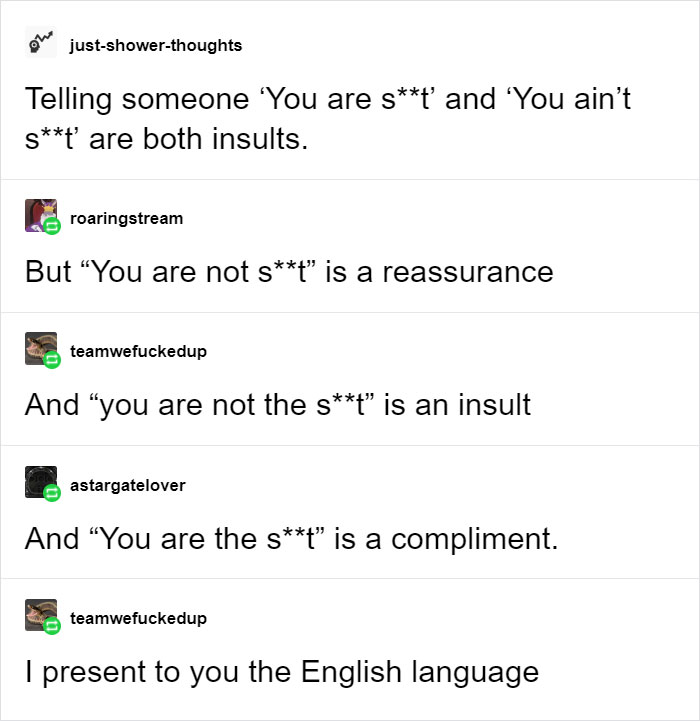
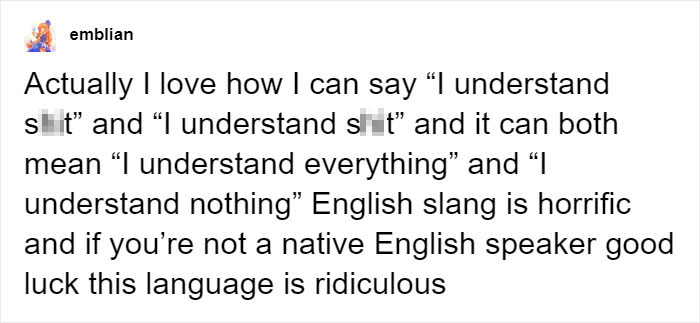
Just stop. I'm not gonna listen to your s**t anymore.
Load More Replies... 



Ismo, the Finnish comedian turning 's**t' inside out and upside down. Thank you, I enjoyed that.
Load More Replies...
Which is b******t. I know you're talking horseshit, you chickenshit. Now stop going batshit before I go apeshit. :)
And it's also weird how a word for excrement can be synonymous with "stuff".

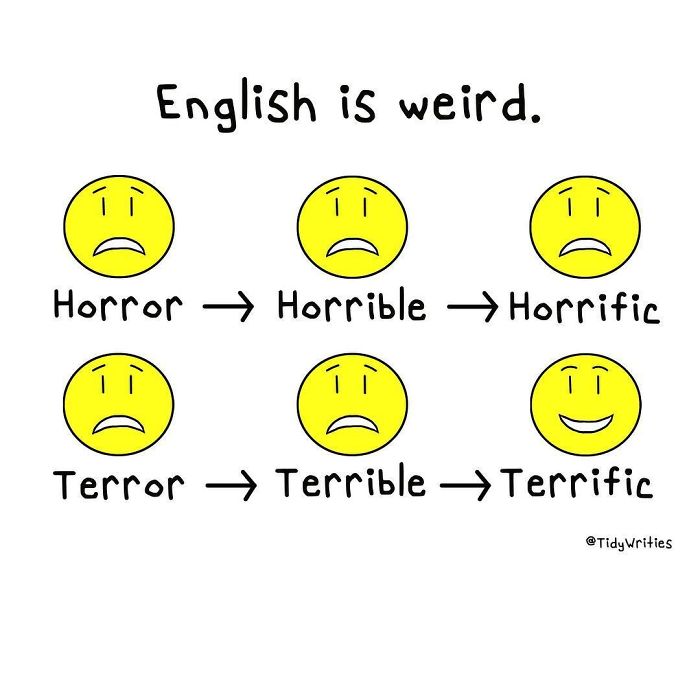
It took me a while to remember which one is positive and which one is negative between horriffic and terrfic...
I can imagine, "I got an A on my test!" "That's horrific!"
Load More Replies...
Drop the egregiously overused awesome from your vocabulary and your problem is solved.
Load More Replies...
Supernatural means out of this world. Super natural is just really natural. Extraordinary is really great but extra ordinary is just really ordinary.

I thought the same for a while, but soon I realised that "super" is something that is over the indicated object (in Italian, "superare" means "to overcome", or "to become greater", "to reach more than intended", "to do well on exams", "to level up" etc.). Also, "extra" means "external", so, something that is outside of the indicated word. Extraterrestrial → out of Earth, extracurricular → out of the curriculum, extraordinary → out of the ordinary.
Load More Replies...

Terrific used to mean "to cause terror". Somewhere over time that meaning got warped

Actually, terrific used to mean even more terrible. Mid-nineteenth century or so. In the last 150 +/- years it evolved to mean something wonderful. Same thing happened, though only in the last 40 +/- years, with awesome. Then again, the word sick has always meant being ill or abnormal. But now, among younger people, sick can mean something unbelievably great. If that slang meaning hangs around long enough, we might see that word flip its meaning too.

This is more about how words change meaning over time. In truth, terrific originally meant something terrible, which is why I try to refrain from using it to this day.
It's not so much about the suffixes used (ends of the words), but rather the origins of the words themselves. From a linguistic point of view, the evolution of horror --> horrific, and terror --> terrific, over time, have been different. It also ignores the different meanings of the two origin words "horror", and "terror". "Horror" = to bristle with fear (the physical response). "Terror" = to fill with fear (the feeling). "Terror", being related to the emotion of fear, which is a strong / big / significant / impactful emotion.... came to represent anything that was also strong / big / significant / impactful, or created any emotion that was strong /big /significant / impactful. Therefore, the party can be 'terrific', because it was big, significant, impactful, and created a strong emotion of happiness / fun etc.

When I was learning English as a kid (me being a French Canadian) my teacher wrote "terrific" on one of my exam once. I was super confused because I thought I did good. I had to ask her what I did wrong before I learned that it was actually a positive expression.
So easy to confuse with terrible, which as a native English speaker, I never really noticed.
Load More Replies... What about the verb "to read" then? You write it the same way in past tense but don't pronounce it the same!

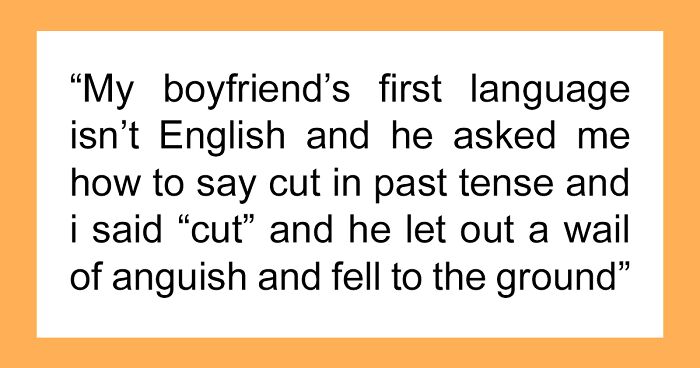
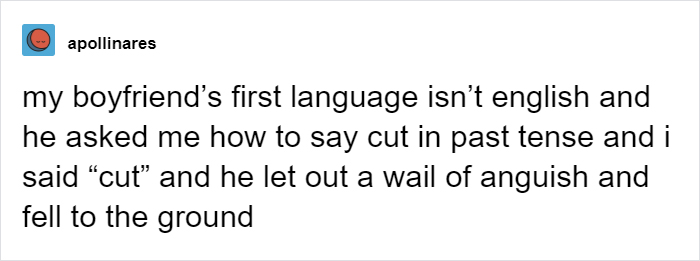
I thought it was Cutted? like "I CUTTED out the papers" yeah i know it's wrong now since while typing there is a red underline on the word.
That seems like a harsh and tedious way to learn English.
Load More Replies...
Simply reason: english doesn't conjugate its verbs. English is a bastardised language, stealing from many many many other language origins. Therefore the original germanic core-language, and it's conjugations, have been lost / ignored / thrown out. (the majority of english speakers, from experience, won't even know what "conjugation" is, because it's simply not enough of a part of the english language to be needed to be taught)

I think what you meant is "the conjugations have been defenestrated"
Load More Replies...





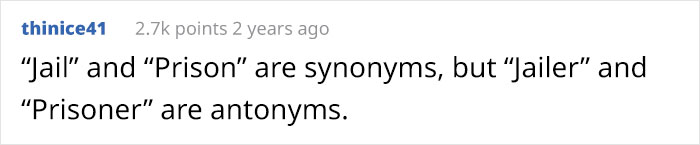
It actually happens also in Spanish. Jail=cárcel Jailor=carcelero / Prison= prisión Prisoner= prisionero
Load More Replies... True—they’re a spectrum: detention/lock-up/jail/prison/solitary
Load More Replies...
Just to be pedantic, "jail" and "prison" aren't synonyms. A "jail" is a place to hold people for a short time, people who have been arrested and are awaiting trial but not yet convicted nor sentenced, or people being held for a short time for a minor crime. A "prison" is a place to hold people convicted to long sentences.


"goal" = original british english. "Jail" = phonetic americanised-english
Load More Replies...
Same in spanish: Carcel an Prisión are synonyms, Carcelero and Prisionero are antonyms.

They're not actually synonyms, as they relate to 2 totally different situations, buildings, circumstances, and word-origins. They've incorrectly been interchanged. Yes, both relate to a person being detained, but aren't the same meaning. (think "hotel" and "house". You can live / sleep / pay for, both. But they aren't the same thing). Jail = short term detention, while awaiting trial. Prison = long term detention upon conviction. ie Jail = being processed. Prison = found guilty. "Prison" comes from the word "imprison" ie to detain someone. Therefore, the "imprisoner" is the one detaining / the "prisoner" is the one detained. With the word "jail", "jailer" = the one detaining / there is no evolution of the word other than "the jailed", to refer to the one detained (typcially, it will revert to the original word "prisoner". Due to the need for detention facilities, "jails" have begun to be used for short-term convictions of about 2 yrs or less, for lesser convictions

because with fruit you're removing the seeds. With a shrimp, you're removing the "vein" of their innards. ie you're removing two totally different things, from 2 totally different object. :)
Load More Replies... 

This is why I am against removing the Oxford comma in written American English. I will remain using the Oxford comma, as I was originally taught.
Load More Replies...
It took me a while to visualise this one one, but once i saw it... WTF?


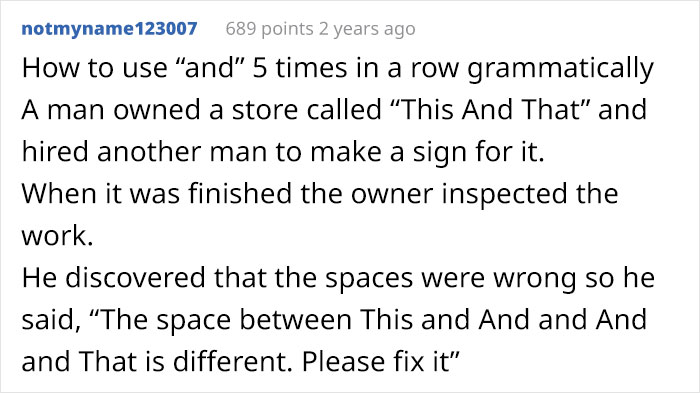
How about a word 11 times in a row. Imagine a class assignment where kids were asked to write about their summer vacations. John wrote that he had a great summer. Charles wrote that the had had a great summer. John, where Charles had had “had had”, had had “had”; “had had” had had the teachers appoval.


I asked the conductor: "what time does that train leave?" Answer: "two to two to two- two". And that train there? "two to two to two-two too."

Reminds me of the fact that people refused to write "that that" even when it would make the meaning more clear and it is how we speak. "He knew that THAT woman was NOT his grandmother."

“He knew she was not his grandmother” would be English.
Load More Replies...

We have the exact same word in french and with the same meaning ... others meaning too ;)
On the other hand, "www" has three time as many syllables as letters.


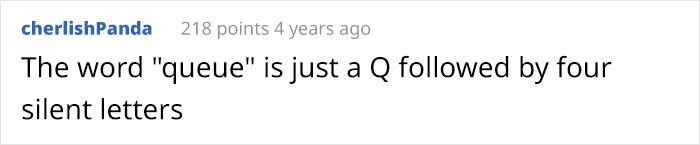
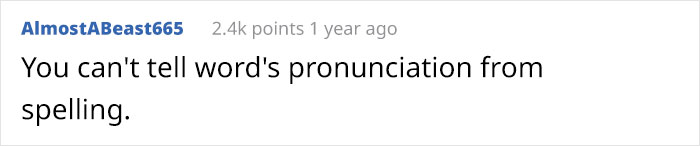
I'm pretty sure it's not, though. "Q" isn't pronounced "Q" when you see it in a word any more than "T" is pronounced "T". The "k" sound at the start comes from "qu" and the rest is the "eue". Just like "cue".
Load More Replies...



That's a French word though. A lot of English has French mixed into it---the languages combined in Medieval times. A lot of weirdness in English is actually due to French!

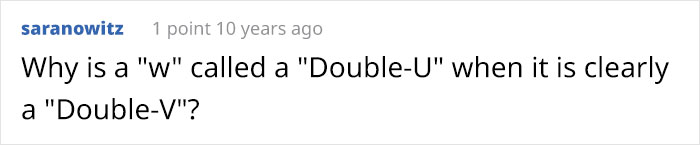
This one is easy. In Greek, "U" is a "V". So, a "double U" actually IS a a double "V". When the two are combined, they create the W
This is not entirely correct. In Romance languages originally "W" was written as "VV". However, in Germanic languages it was written as "UU". Example: "Neerwinden" was originally UUinethe. Hence why in French it's "double V" and in English it's "double u".
Load More Replies...
Because the /w/ sound was originally written as uu. The letter W is comparatively recent.
In Irish (we don't usually call it Gaelic), it doesn't matter because there are no Ws in the Irish language!
There is no V sound in Thai, so words like Vinamek and Sukhumvit are pronounced with a W sound.
Load More Replies...


Then you never tried to learn french. English pronunciation is one of the easiest I have ever seen. Oh, and my native language is german! Had a lot of fun seeing freinds learn my native language.
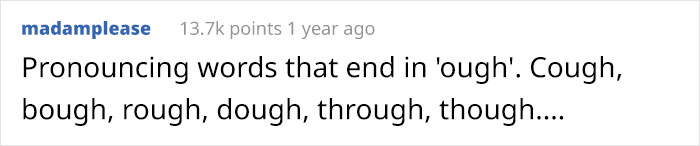
Load More Replies... English is tricky, your problems can be overcome through tough thorough thought though





Though, through, enough, cough, fought, bough. Or as they teach in preschool, Ohh, Ooo, Uff, Offf, Orrr, Owww.



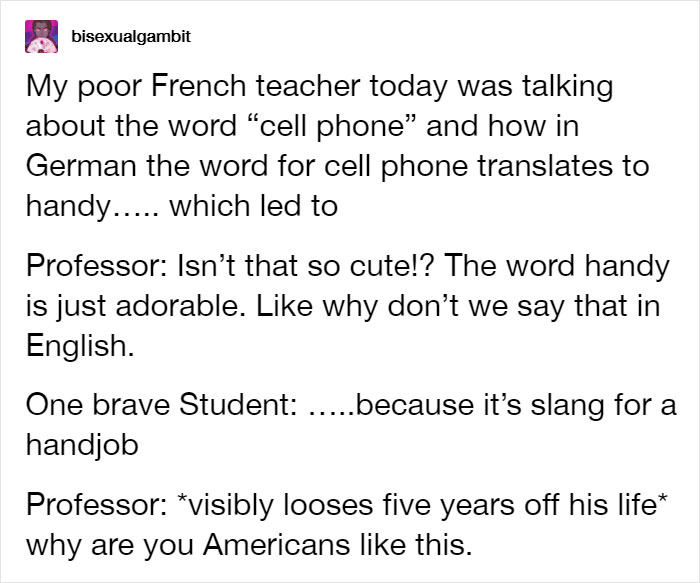
Usually by getting a handy or getting screwed by an attractive person. At least for a little bit, anyway.
Load More Replies...


Loses not looses. Two different meanings, tho loose doesn't have an s on the end.

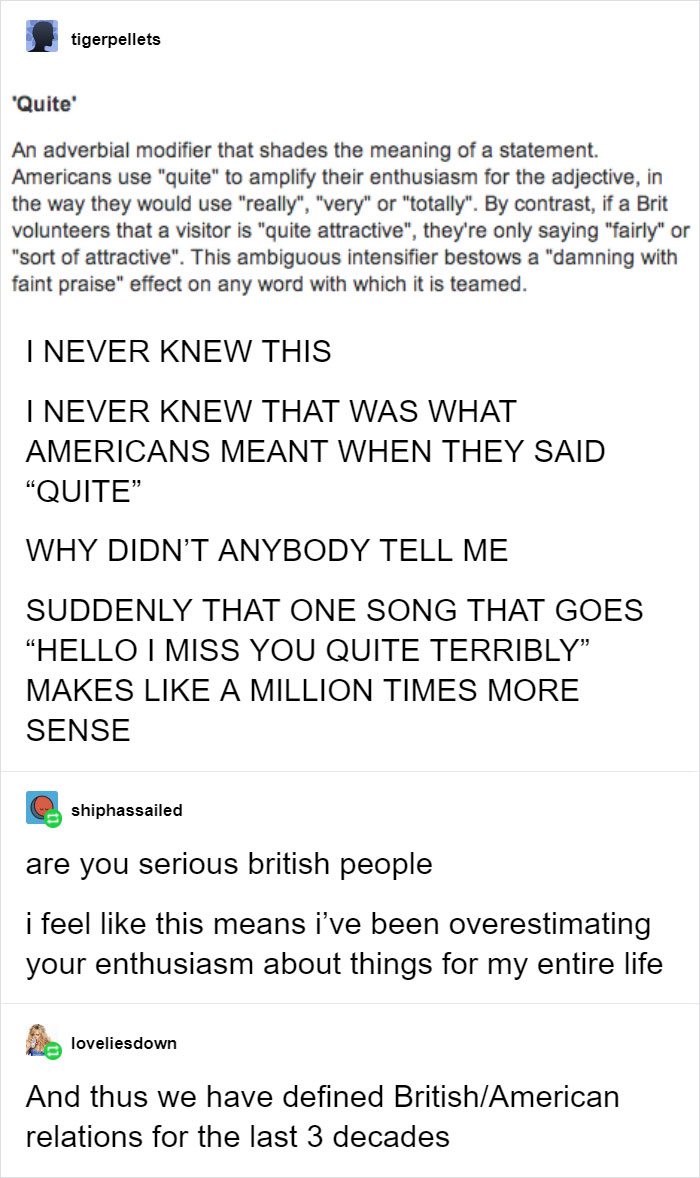
Brits also use 'Quite' in a sarcastic manner if agreeing with someone (who they don't agree with).


Canadians too, I always thought everyone did until this moment lol
Load More Replies...

I need to go back and reread and rewatch every piece of British literature and film now. New meanings.

In British it can mean 'totally' (quite complete) or sightly (i quite like it)


I, an Australian, assumed that quite was, in every instance, said with sarcasm.

But quite in British English can often depend on how the speaker says it. With enthusiasm it can mean 'very' or 'really', with a downward tone of voice it means 'not too bad' which is often followed by '... but ...'

A Roman wanted a tattoo from a famous tattoo artist. When asked by the artists what he wanted, he said, "All your designs are so great, so surprise me!". The artists tattooed a series of numbers on the man's back: 51, 6 & 500 Afterward the artist asked the man, "Do you like it?" "I'm LIVID!", the man screamed
LOL. On a time piece or a building they're fine. On a calculator, not so much.
Load More Replies...

more like a literal comparison or exemplification: I = on e= like (in) Roman
Load More Replies... Wow! I caught that! Although I did have to figure out how to spell caught. :P

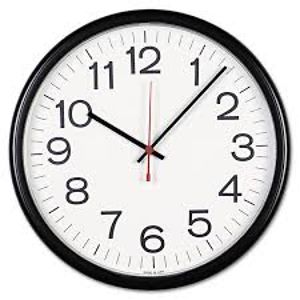
I miss them I feel like some secret code except the ones on the clock they are inaccurate when It comes to number 4

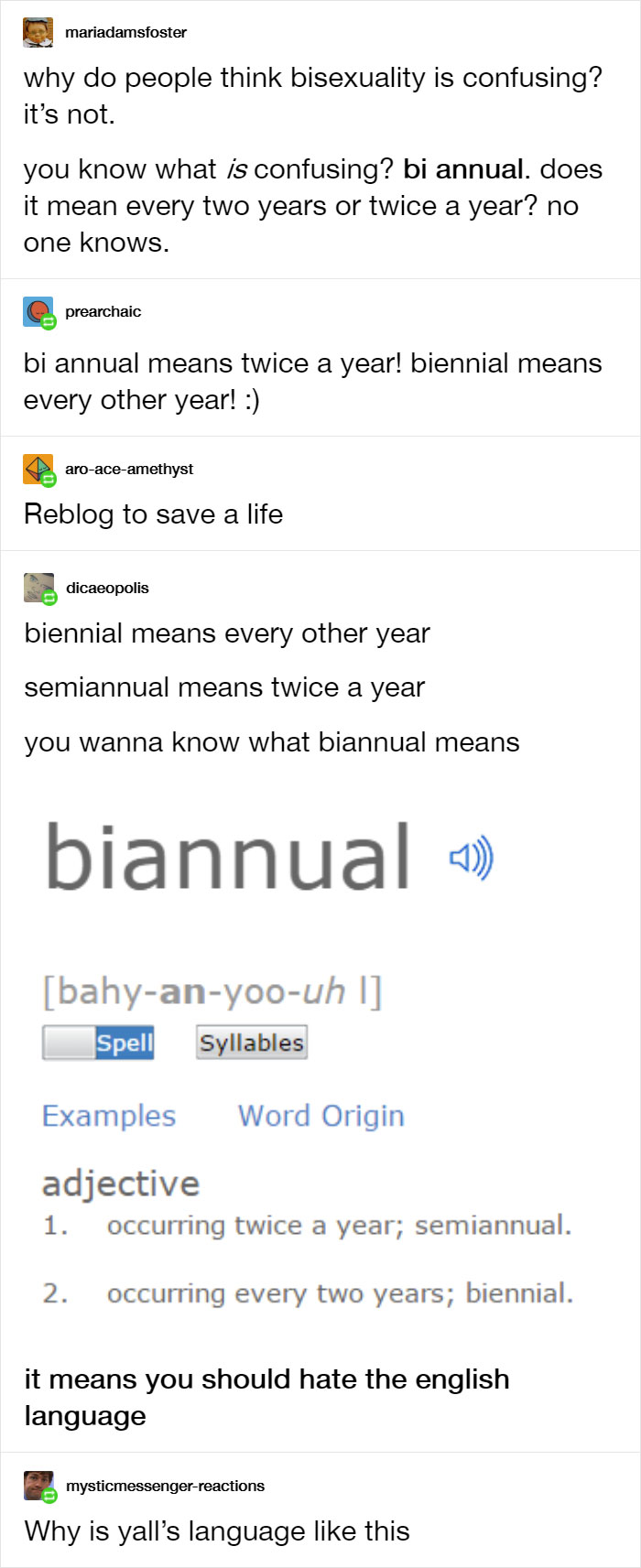
Here's real confusion! Biweekly CAN mean either twice a week or once every two weeks!

In my language we just say (sort of) "twoweekly" and "twice a week" and that's it.
Load More Replies...
It's rather logical. Bi-annual = twice a year. Biennial = 2 years. The problem? People are writing the english language phonetically, based on the mispronunciation (or incorrectly hear the correct pronunciation); rather than knowing the different meanings & spellings.
Good D question. Too many of my father in laws of yore sitting around with nothing else better to do than to confuse the he*+ of today’s peeps
Someone once said that English borrows from all other languages. Someone else said that English doesn't so much as borrow than steal. English gets another language up in a dark ally, hits it with a cosh, and then goes through that language's pockets looking for vocabulary.


As native English speakers it's really easy to tell what you're saying, even verbally
Load More Replies...


If the word is of Germanic origin, than the "c" is silent. If the word comes from the French, then the "t" is silent and no one cares about the "c" because the "c" is a bitch and no one cares, no?


In my language we are saying that the nose is "leaking" when you have a cold. Why in english is running, its a mistery :)
Like a faucet turned on or a refrigerator in working order which leads to great crank calls.
Load More Replies...





Native Arkansan here. There are a lot of explanations (and those different factors aren't wrong - they all contribute some), but I think the best is that the French (and their propensity to silent final -s) played a large role in settling Arkansas, but not Kansas. The name comes from a native (possibly Algonquin or related language) term which would probably be best rendered as "ar Kansah", meaning roughly "land of the people from upsteam" or possibly "the people of the west wind", which would not have been the name the local natives called it (the native Caddo in this area spoke a Sioux dialect, but there are only 110 Caddo left alive and even fewer speak their language) - so a pronounced final -s wouldn't have been appropriate anyway.
A bit off topic, but to me personally, Kansas and Arkansas sound like angel and archangel. So, basically, Arkansas is a high Kansas. *nods smartly* Okay, I'll stop here.
These things are historical. Know Spanish? Why is Amarillo pronounced Amarilllllo rather than Amariyo? History.
The difference in English use of letters & Spanish. Like in Jehovah the J is pronounced as a Y. Yehovah.
Load More Replies...
Arkansas was named for the French plural of a Native American tribe, while Kansas is the English spelling of a similar one. Since the letter "s" at the end of French words is usually silent, we pronounce Bill Clinton's home state "Arkansaw." ... Kansas is named for the Kansas River, which is named for the Kansa tribe.
um ... actually the river was named after the kansa.
Load More Replies...

OMl when I was younger my friend and I had a lengthy discussion on this lol And yes, I am a native English speaker.

Oh yes. I definitely pronounced Arkansas like Kansas with "Ar" in front of it, when I first came to the U.S. over 20 years ago. To this day, my (American) husband has not let me live it down.

WHAT? I got to 65 without realising that’s why I can never find “Arkensaw “ on any map🤣

And Arkansas City is pronounced like Ar-Kansas...even tho its in Arkansas...

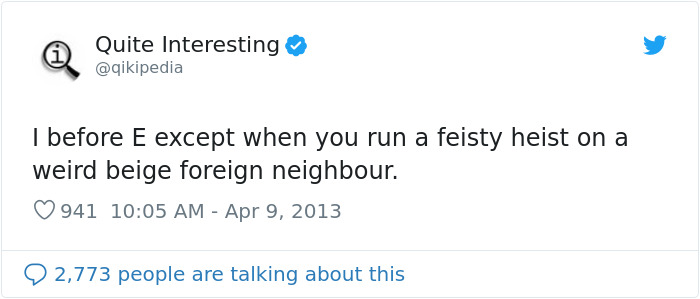
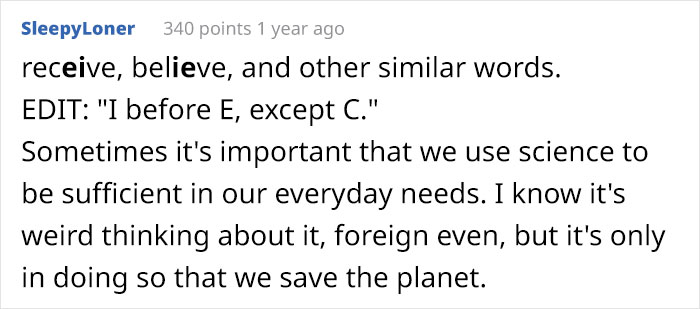
I’ve also heard, “I before E except when your feisty foreign neighbor Keith leisurely receives eight counterfeit beige sleighs from caffeinated atheist weightlifters. Weird.”
@Aileen, Most of your extras are because you're only using half the rule.
Load More Replies... Um actually they officially stopped teaching this rule. Because it is wrong more often than it is correct.
The I before e rule is from a longer quote that isn't as easy to remember. It's not a failure of the rule, it's the failure of the writer of the rule.
I saw a much longer version of it that explains so much: I before E except after C, or when sounded as "A" in "neighbor" and "weigh." But "their," "weird," and "either," "foreign," "seize," "neither," "leisure," "forfeit," and "height" are exceptions spelled right.
Load More Replies... "I before e except after C" is how I learned it in 6th grade. Except in "ancient" (which I later missed on the spelling test!).

Many people don't know the entire rule, which is: I before E except after C or when used as an A as in neighbour and weigh. There are still exceptions, but not as many.

"I before E, except after C; and when sounding like 'A' as in neighbor and weigh; and on weekends and holidays and all throughout May; and you'll always be wrong, no matter what you say!" --Brian Regan: comedian.


English has exceptions to every single rule. to get more words included in that rule, say "I before e, except after c, or when it says ay, as in neighbor or neigh."


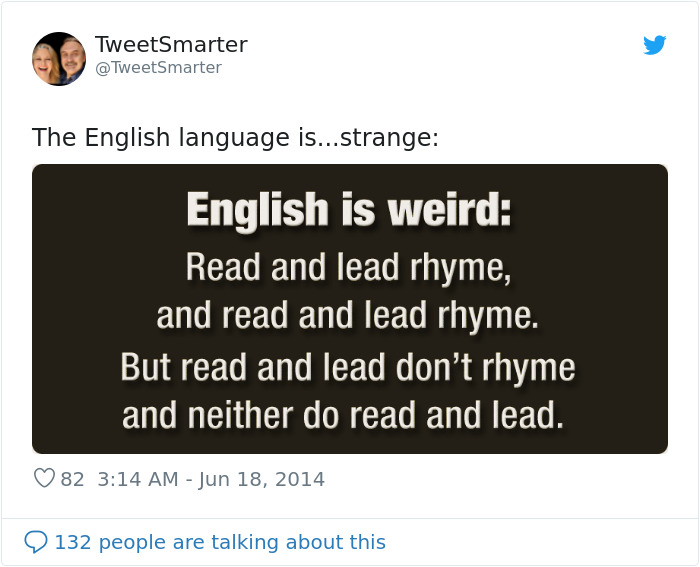
*gasps* the lead is terrible in flavor, but now you double as a paper maker…
Load More Replies...



Yeah they do. I read that it's dangerous to drink lead. I lead in my book club because of how fast I read.
Aaaand ... then you make wise choices while reading it out aloud. It is for fun!
Load More Replies...


Don’t you hate it when you read read as read when you meant to read read as read and not read so you have to reread it so you read it as read and not read?
When William Caxton got ahold of a printing press, he sent people all over England to find out how words were spelled. He ended up with a dozen lists that didn't agree with each other, so he picked and chose based on his personal whim or whatever.
I rather not do either nor would I want to do neither
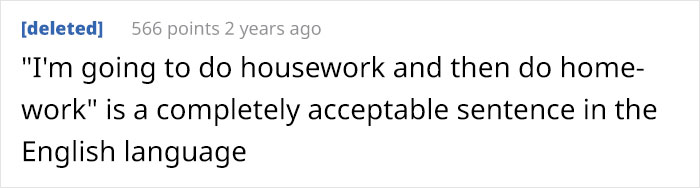
Load More Replies... "A ship shipping ship shipping shipping ships" is also a completely acceptable sentence.
In my country we use house chores for housework and assignment instead of home-work I don't know maybe to be not confused with house and home.
"The woman's occupation was listed as 'homemaker.' I assume she worked in construction."

Note, English as a native language and those who are learning it. A house is a building. A home is where you live. So I can have a house that is empty, it is no body's home. I can live under the overpass with other homeless people (we are starting to use phrases such as the unsheltered because under the over pass is their home) and their home is under that overpass. So housework is work I am doing for my physical building. Home work is work that I take homework to my home (It could be a homeless shelter or the couch I am surfing on) to do outside the class work.


House work. House is something that you can touch and feel and see and that is why its in my believe what it is; cleaning, washing...etc. home is more like .. you know something i give it up. I do not know why it means what it means , i could do my homework at a caffe then shall i call it caffework? Or in the bus then call it buswork or in a public toilet then call it ptw? Only God and the crazy ones that created it know

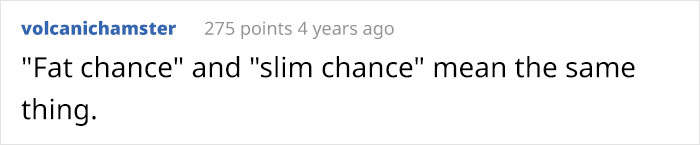
one is used by the people of sarcasm and one is used by regular people

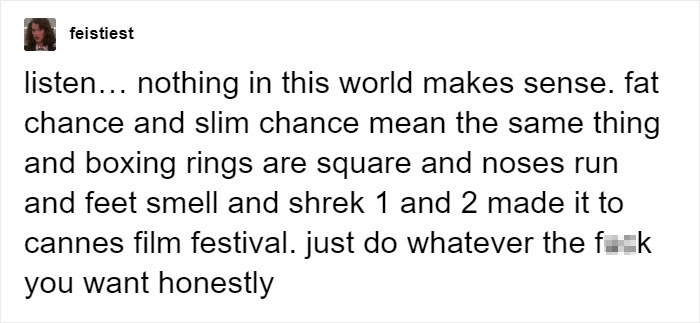
I feel like slim chance still has some small chance while fat chance has no chance at all...


That's true but if someone said fat chance to me I would say it was less likely than if they said slim chance.



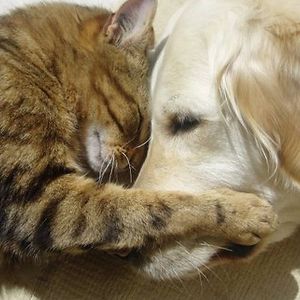
this confused the helll out of me when I first came across it. i had to read it several times :-D Now, I think it's brilliant!!

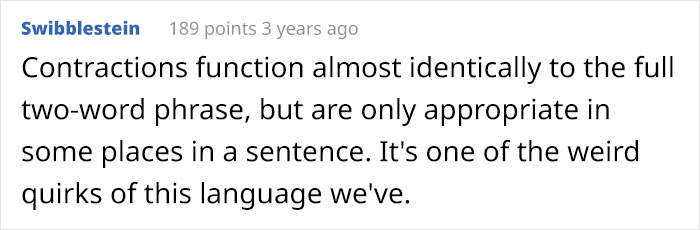
I always wondered why there aren't double contractions; unless I've just never heard of them. "Shouldn't've" should be acceptable any time you want to say "should not have".

"I'd one drink but no more" in Maiden's Dance of Death ahs always sound odd to me.
This is interesting to me as a native English speaker who knows some Farsi (where just about every word is a contraction) and Dari (where no word is ever a contraction) - two languages a lot of scholars will tell you are actually the same language, but they definitely are not.
It's because English is stress-based. The flow (or melody) of the sentences is the important thing in English, it's less about the strict grammatic rules.

Yes. And what is that when two contracted words count as one???!!!

It actually follows grammar rules, it’s just a bit complicated and native speakers know it by ear.


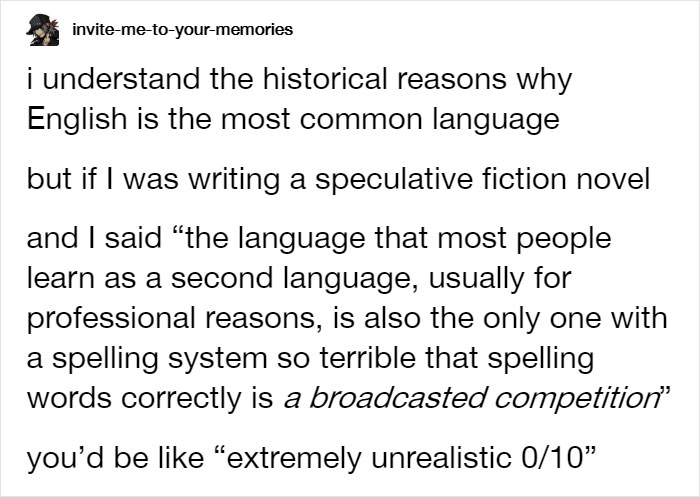
There's a broadcasted spelling competition for the Dutch language as well ^^ Dutch is easier though, makes more sense :)

I wouldn't say that. On some notes it does make more sense, but when you ask non-native speakers who are learning Duth, they just think of it as a language with more exceptions on grammar rules then any other language. Just think about it, many natives don't even know the correct use for the DT-rule
Load More Replies...
When I was little I didn't get why Lisa Simpson was so proud she could spell... I was like, so you just told us the letters, duh :D I watched it with Czech dubbing. And then I started to take English lessons and suddenly I felt for the smart, SMART girl.

I remember my shock when my grandfather told me that there was no spelling test in school when he grew up. He was Hungarian. That language is totally phonetic. Any word you hear, you just spell it how it sounds and it's correct.

Yes. I was born in Hungary and left at age 8. That was a long time ago, but I can still read the language. It has a longer alphabet than English, but once you memorize it, you can spell and read any word.
Load More Replies...
You know what we should have? A broadcasted competition on converting imperial measurements to metric ones.
I like it, but I don't think you'd ever have winners in that competition. It seems almost no one can do those without looking it up. Myself included.
Load More Replies...

Indonesian language is easier too. The spelling and the pronounce is the same
Depends on your field. French for diplomacy, german for science....
Do not ad 'ed' here--'broadcast' is correct in all tenses. Similarly do not add 's'' to form the plural of 'aircraft' or use 'craft' to mean more than one boat. Do add the 's' when discussing arts and crafts or using craft in the third person (pretentious, though).

No, it isn't. Sometimes it happens to be short but it can just as well be as long or longer. Take Cockney rhyming slang for example. here are a few: Adam and Eve – believe. Alan Whickers – knickers. apples and pears – stairs. Artful Dodger – lodger. Ascot Races – braces. Aunt Joanna – piano. Baked Bean – Queen. Baker's Dozen – Cousin.

Isn't the point of rhyming slang to only use one of the rhyming words, as in "Take a butchers at that" meaning "Take a look at that" (from 'butchers hook'), the point being that the phrase only makes sense if you are one of the initiated group who has been taught the rhyme.
Load More Replies...

Untrue. Slang used to mean a narrow strip of land; then came to mean the merchants who sell their wares on such land ("on the slang"). Then meant the patter used by said merchants. And finally informal language


This is not true. It is of uncertain origin around mid 14th century, but most closely associated with the Danish word slænge, which means to throw or sling. Or so says the Online Etymology Dictionary


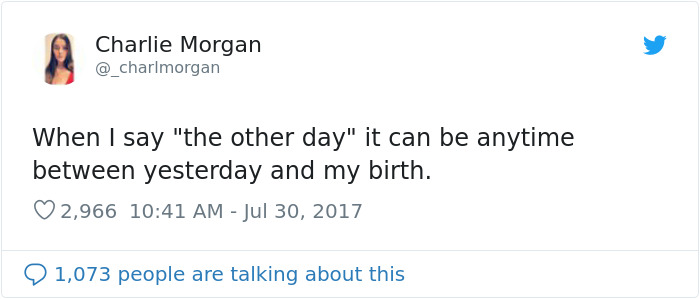
When I hear someone say "the other day", I assume it's something within a month. I never think someone would mean something they did like a year ago

It probably changes based on the speaker's age...
Load More Replies... It implies that it was a short time ago. For me, I would think it was in the last week or two.

How do you know what he means when he says that?
Load More Replies...
I LOVE this loop-hole. "My car broke down the other day and I had to take it to the mechanic", never a lie (for me). That has happened to me on a day that is not today.


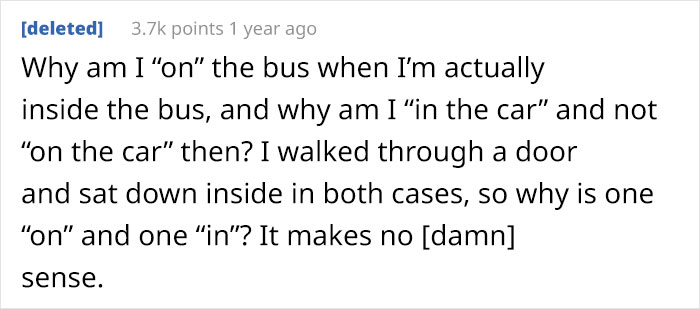
I wonder if uncovered wagons were the first form of mass transportation so you literally were "on" it.

So if someone is drunk while on the transportation, he would be 'on the wagon' and 'off the wagon' at the same time?
Load More Replies...

"F**k you, I'm getting IN the plane! Let Evel Knievel get ON the plane, I'll be down here with you folks in uniform: there seems to be less wind in here!" -George Carlin

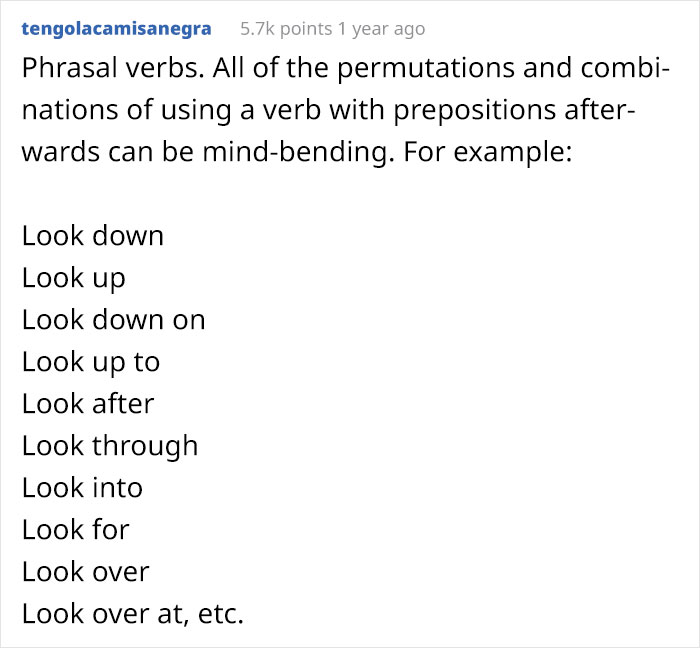
It depends how you enter the vehicle . Trains boats and buses have decks or similar where you walk "On" and take a seat a car has a personal space which requires you to manoeuvre into your seat from the outside so you get "in" your seat without walking "on" in the same way you can get "on" a passenger plane but you get "in" a fighter jet
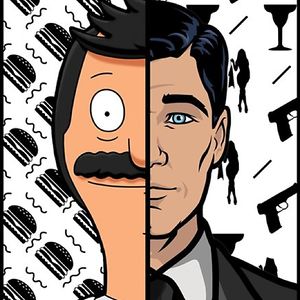
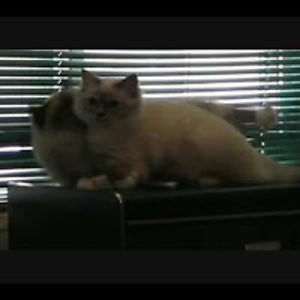
The late George Carlin: please get on the plane. F**k you, I’m getting IN the plane!
George Carlin: No I'm not going to fly on a plane, I'm going to fly in the Plane. Let Evel Knevel fly on the plane.


Incorrectly, though (pronounced like trough? I don't think so). On the other hand "often" can be pronounced with or without the "t", either is correct and varies by region and dialect (according to the OED).
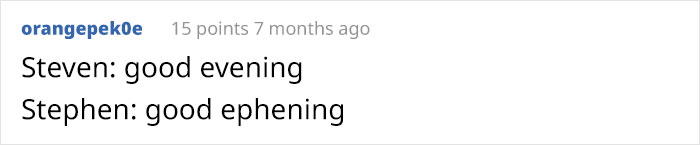
Load More Replies... My daughter always pronounces Stephen with an "f" sound. She knows it is not correct but also knows it puts my teeth on edge. Hate when she tells me about reading a "Steffen King" book.

That's how Stephen is pronounced in my language. Steffen.
Load More Replies...
Stephen goes to Starbucks, gives his name: "Stephen with a ph"...gets the cup Phsteven
And then you have Stephen (steVen), sphere (sFere) and shepherd (shePerd)
I pronounce "Steven" as "Stee-vehn," and "Stephen" as either "Steh-fahn" or "Stee-fehn," depending on circumstances.
George Bernard Shaw (I think) proposed GHOTI as a spelling of FISH: gh = f as in rouGH o = i as in wOmen ti = sh as in naTIon

Fridge is a slang shortening of one of the original refrigerators - Fridgidaire...

Oh THANK YOU... this discussion was going to make me lose sleep... and your answer...case closed!
Load More Replies...
Actually because fridge is not derived from refrigerator. There's a great answer about it on Quora.

Not true. https://www.merriam-webster.com/words-at-play/fridge-vs-frig-spelling-short-for-refrigerator
Load More Replies... 

Because it used to be shortened to "frig" - I've read it in books, most memorably One Pair of Hands by Monica Dickens - and you tell me how that looks like it should be pronounced.


Fridge is a shortening fo the word Frigidare, an early manufacturer of refrigerators.

Same way that the sentence "I never said she stole all my money" takes on a completely different meaning depending upon which particular word you emphasise…
Yeah, I NEVER.....and then it can go one with every single word to change the meaning!
Load More Replies...

I knew someone (can't remember which country he come from). He finally snapped when being wound up and said "You lot think I know f**k nothing, but I'm telling you I know f**k all!"
Deciphering the difference is about inflection. If you are typing it out, then you're lost in translation. This is why people get so mad on the internet.
Correct you can be a confused scatologist and be very involved in other people’s lives.
Load More Replies... This is matter of pragmatics--the implied meaning of something. Context and tone also help convey meaning in such cases
Native speaker to friend: "I have to go take a wicked s**t." Foreigner who overheard this: "I wonder where that man is taking the malicious fecal matter?"

The tonality and emphasis make it clear(er) if English happens to be one of your primary languages.
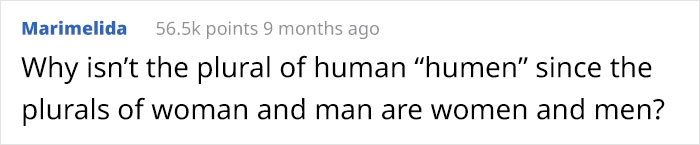
Because it has nothing to do with the words man/woman and comes from Latin humanus
So you’re saying the plural of human should be humani. (Just kidding)
Load More Replies...

And, why do these words have masculine endings? MAN and SON. Actually, "masculine" now looks weird! Mask you line!

It's not an umlaut it's a diaeresis. An umlaut over a vowel tells you to insert the letter e when the word is spoken so Müller is pronounce Mueller. A diaeresis tells you to pronounce the vowels separately so Noël is pronounced No-el and "noll".
Load More Replies... 
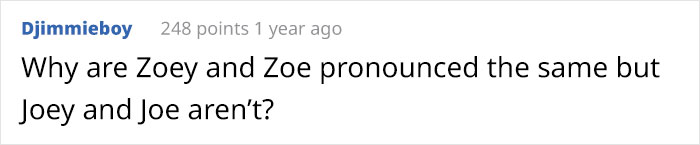
So you know every Zoey/Zoe in the whole of North America? Because I can pretty much guarantee you that there are people with either name but with the same pronunciation
Load More Replies...
I have a great aunt who's name is Zoe and it is pronounced like "Joe" (but with a Z instead of J obviously).
They are both pronounced "Zo-ee" and "Zo-ee" because both names have two syllables. The "e" in "Zoe" is supposed to have a diacritical mark above it to indicate that it is pronounced separately from the "o." Like the final "a" in "Nau-sic-i-ca-a." Or the "i" in "An-a-is."

And that's why we have "spolszczenia" in Polish language. We just adopt any word and make it fit our grammar rules. For instance "komputer" from word computer. Spelling is Polish, and it can be declined in our grammar system.

Older usage would completely use "butch" as a verb. I've read examples where people talk about "butching the cow" or similar. So it's recent that that usage has changed.
Load More Replies...
Hammerers, not hammers, in order to be consistent. And I guess that Hammerers do, in fact, hammer.
This post, is ignoring the *correct* use / origin of each word. A "writer" refers to the job ie write. A "writer" is someone who undertakes the single action of writing. Fingers however, are a body part, not a job (like a writer). Fingers, do many individual, unique tasks (touch, poke, grasp etc) . A "grocer" is someone who undertakes the multi-tasking job of "selling grocery" (ie small portions of food; and small items for the home. As opposed to bulk buying). A "hammer" is a tool that "hammers". "Ham" is food, "hammer" is a tool ie they're totally unrelated.
Don't forget that sellers sell (unless they're cellars) and singers sing.


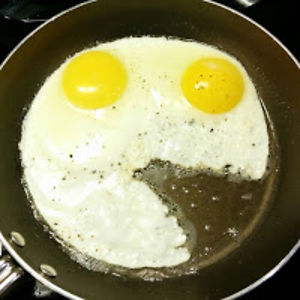

To me the real question is this. When you give someone food you feed them but what is it called when you give someone a drink?
you're trying a) to pick them up; b) to get them drunk
Load More Replies...
In German you food your food. There's even a town called food, therefore you can food your food in food.



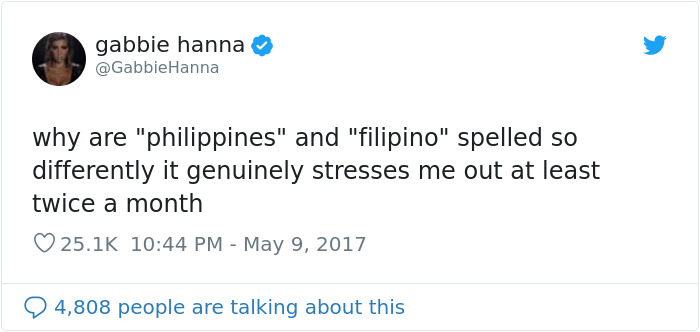
Because "Philippines" is in English while "Filipino/Filipina" is Spanish. No need to stress out. In Spanish the country is Filipinas. All is well, they're just words in two different languages!

Why is september not the 7th month, october the 8th, november the 9th and december the 10th? Stresses me out 4 times out of12.
Those names aren't even indigenous. They are names given in 1543 for King Philip II of Spain and originally only applied to the islands of Leyte and Samar. Long before, the Chinese called the islands of Palawan/Busuanga/Calamyan/Luzon/Mindora/Lingayen "Ma-i" which probably meant "Islands of the Blacks" Magellan called them during his fatal visit in 1521- Las islas de San Lázaro (St. Lazarus' Islands) and Las islas de Poniente (Islands to the West).

And in our native language, we spell it as Pilipinas. Pilipino as the people and Filipino as our language:))

Philippines is the country. "Las Islas Filipinas" is the original name in honor of King Philip II of Spain. Filipino may refer to a citizen or the language.
To Gabbie Hanna, you need to take a chill pill. P.S. Who are you, anyway?


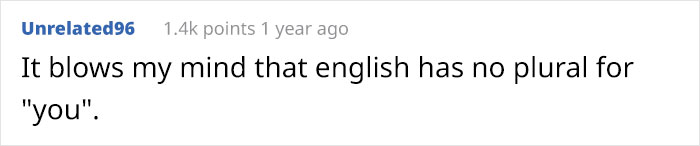
It is actually the other way around. ""Thy" is an English word that means "your" in the second person singular. English used to have a distinction between singular and plural in the second person, such that we had the following: Singular: thou, thee, thy. Plural: ye, you, your." From: https://english.stackexchange.com/questions/1083/what-does-thy-mean

In french or spanish, people still uses the equivalent of "thy"
Load More Replies...
"You" is the plural of either "thou" or "thee", but these are no longer used.

In French, "Vous" can be a formal you (one person) or a plural you (group of people). English used to use "thou" for singular and "you" for a group.

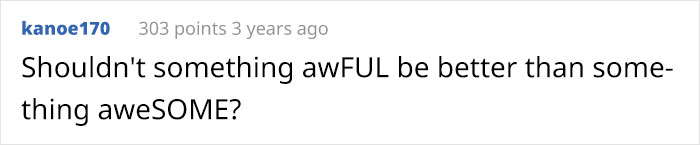
Awful and Nice both used to mean their opposites
Load More Replies... No, because the word you're thinking of is aweful, which DOES mean full of awe. Awful is unrelated.
I’m really ready for people to expand their vocabulary beyond awesome, which I’ve come to refer to as The A-Word. Fabulous, fantastic, wonderful, terrific, etc.
Fabulous is not allowed to be said in the south. Fantastic, Wonderful and Terrific are often used sarcastically.
Load More Replies... They both come from the word "awe". The suffixes "-some" and "-ful" mean "having the quality of X". ie "having the quality of awe", or "to be awe-ispiring". "Awe" can be inspired by something good or bad (think or the jaw-dropping response to watching a horror car accident, vs your favourite band in concert. Both inspire "awe" for different reasons). "Awful" was in existence before "awesome". Because negative emotions are stronger, "awful" was related more strongly to negative connotations. "Awesome" came about later, to more clearly distinguish / replace the positive contexts that "awful" originally related to ie it was created for more linguistic clarity. (oh the irony!)
"The words have been around hundreds and hundreds of years. While they were constructed by combining awe with -ful or -some, once they became lexical items as complete words, their meaning was able to drift like any other lexical item — the fact that each word is composed of a stem and suffix doesn't stop this. (Also, bear in mind that -some, the suffix, doesn't mean "some of X", it means "having the quality of X". Think fearsome, loathsome, cumbersome. And -ful is basically the same as -some in its meaning, with all words.)" Read more here-> https://english.stackexchange.com/questions/6802/awesome-vs-awful
During the crucifixion scene in "King of Kings" John Wayne was hired to play a Centurion and was supposed to look at Jesus on the Cross and say, "Surely he was the Son of God." He was drunk that day, and the director wanted to do another take. "Duke, put some awe into your voice. So Wayne said, "Awe, surely he was the Son of God."

Awful and awesome used to be synonyms--awful originally meant "full of awe."
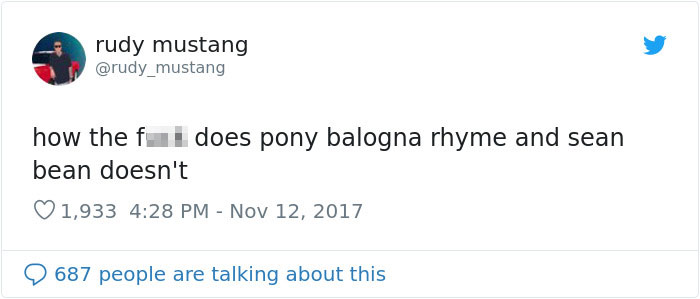
Bolognas pronounced baloney is a meat product often used on sandwhiches.
Load More Replies...
It only rhymes if you say “baloney”. If you say Bologna in Italian, it doesn’t.

pony doesn't rhyme in bologna in British English. When I see Bologna I see the Italian city and pronounce it like that. In the Uk, we call it Mortadella. How do you pronounce Bolognese in the US? 'below knees' ? lol
Sean pronounced Shawn (from the Irish, I believe), but bean pronounced been. Sean (seen as seen) has a bean stuck in his throat, but not a bawn in sight. But don't get me started on Sian! She's not cyan, not ce-an, but she's definitely Shaan.

I honestly did not know that the thing pronounced "baloney" and spelled "bologna" were the same thing until I recently watched Judge Judy with subtitles! It's not a common food in the UK and we don't really say it to mean "rubbish" either. I felt just a wee bit stupid!
First of all, "balogna" isn't even a word. It's "bologna". And it sure as hell doesn't rhyme with "pony" because it's pronounced bo-LONN-ya, not "baloney". Pls stop butchering other languages :/

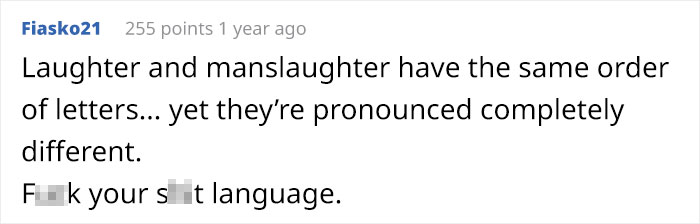
You mean man's laughter isn't the same as manslaughter? Hmmm maybe I should reconsider my hobbies
One might hear a man's laughter after a manslaughter. He might then go on to become a serial killer of people who eat cereal.
manslaughter sounds like it came from "man's laughter"....so it's like a psychopathic killing inspired this word.

Displaying the vast difference between US English and the correct British English
The division is different Man's Laughter is the same spelling but in manslaughter, the words are man and slaughter.
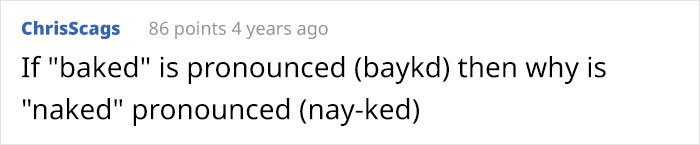
Because baked comes from the stem word "bake" so all you have to do is add the d in pronunciation. Whereas naked IS the stem word, so it has its own pronunciation. Confusing I know

Don't you think it's weird how some native English speakers (such as myself) don't realize this? Like I don't remember ever being taught proper grammar. I just remember being taught to speak a couple words, and then I just picked it up from listening and asking questions. I don't remember my parents sitting me down and saying "This is proper grammar, use it." I just remember being like what's that?
Load More Replies... 
Same "issue" in German. You need to remember that twelve (the number after eleven, which also has it's own name) used to be a common base number... that's how we have twelve hours in the day and still talk about "dozens". Elven and twelve are just yet another relict from ye olden days.
That is the reason why most languages have "special words" (out of normal order) for eleven and twelve.
Load More Replies...

to go along with the ones after them, shouldn't they be oneteen and twoteen?
I'm going to start saying onety one for 11 and twoty for 20, threety for 30.... It's just more fun

Or “firsteen”. Therefore: “seconteen” and thirteen.
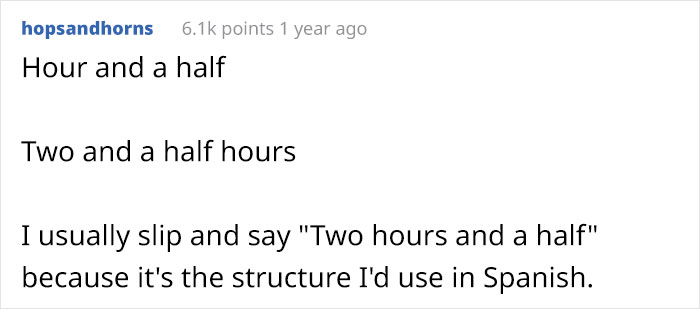
Load More Replies... Try saying you'll meet a Continental European at "Half Eight" and see what time he arrives...
And “quarter seven“ neither means a quarter before nor a quarter after seven. I am always going nuts over this.
Load More Replies...

I imagine it's to shorten and that you could say "one and a half hours" if you'd like. If you omit the "one", you'd have no choice to use the other syntax.


I feel you. In Spanish we have two different verbs for "to be" and it's a nightmare trying to explain it.

Well, try it this way: Yo soy rubia = I am blond (always) Yo estoy rubia = I bleached my hair (temporary blond).
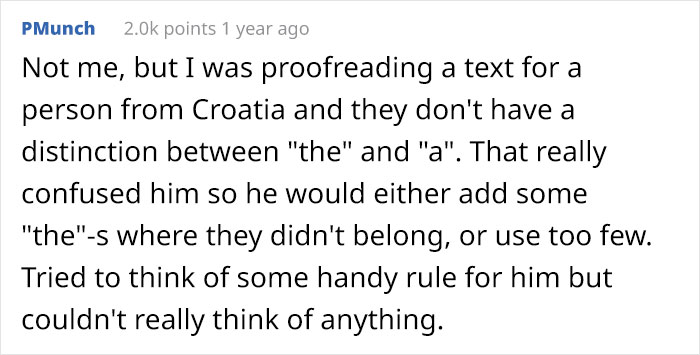
Load More Replies... Eheheh. Fellow Croatian here. *shyly raises hand* It's because we don't have articles in our language. (However, personally, as a native Italian speaker, articles were no foreign concept to me. Anyway, back on topic!) The "rule" is that "the" is used for things that are defined and "a/an" for undefined, unknown or things that are not yet introduced in the conversation. Now, there are many exceptions to this rule, which may be confusing, but once you master that rule, the rest comes naturally (with practice, of course).

they probably do have this distinction, but it might be as a suffix, like in Icelandic... that said, I haven't looked it up
No, we make this distinction by pronouns. Something that in English would be the equivalent of "this / that", but we just don't need articles most of the time.
Load More Replies... You can´t, please : OUR QUEER LANGUAGE I THINK YOU ALREADY KNOW OF TOUGH AND BOUGH AND COUGH AND DOUGH OTHERS MAY STUMBLE BUT NOT YOU WITH THOROUGH AND THROUGH WELL DONE ! AND NOW YOU WISH, PERHAPS TO LEARN OF LESS FAMILIAR TRAPS ? BEWARE OF HEARD, A DREADFUL WORD THAT LOOKS LIKE BEARD AND SOUNDS LIKE BIRD. AND DEAD, ITS SAID LIKE BED, NOT BEAD – FOR GOODNESS SAKE DON’T CALL IT DEED ! WATCH OUT FOR MEAT AND GREAT AND THREAT – THEY RHYME WITH SUITE AND STRAIGHT AND DEBT A MOTH IS NOT A MOTH IN MOTHER NOR BOTH IN BOTHER OR IN BROTHER AND HERE IS NOT A MATCH FOR THERE NOR DEAR AND FEAR FOR BEAR AND PEAR AND THERE’S DOSE AND ROSE AND LOSE – JUST LOOK THEM UP – AND GOOSE AND CHOOSE. AND CORK AND WORK AND CARD AND WARD AND FONT AND FRONT AND WORD AND SWORD AND DO AND GO AND THWART AND CART – COME, COME I’VE HARDLY MADE A START ! A DREADFUL LANGUAGE ? MAN ALIVE I’D MASTERED IT WHEN I WAS FIVE !

Why do you think all this time I've been saying Arkansas not Arkansaw ...

My personal peeve is: Judgment has no "E" (Judge), but acknowledgement does (acknowledge). Drives me crazy because I almost always misspell it on the first try.

Judgement and judgment are two different words. One is cultural, the other is legal
Load More Replies... Most effective and efficient way to teach reading in American English is through phonics. But that has to be followed by memorizing the spelling of words. Knowing Latin roots of words also helps tremendously. In the 19th century, just about any phonetic spelling in the United States was used because so few people went to high school or beyond.

One of the few upsides of having Finnish for your mother tongue. Our grammar is one of the most difficult in the world, but the pronounciation is so straight-forward that once you can read, you can also pronounce everything. So, say, spelling bees would be sort of hilarious here because everyone would get everything right.
This is true for native Finns, but knowing how to read isn't going to help someone whose native language isn't Finnish. Finnish pronunciation for someone whose second language it is can be incredibly difficult if the pronunciation rules are different from their own native language. I've worked with immigrants in Finland and let me tell you, some of them can read Finnish fine but they're still struggling with the pronunciation. So don't say it's straight-forward, it's only that for native speakers
Load More Replies... It's weird the veil of this lie has reigned since ancient times. It's ageing well. Being that it's on my conscience, I'll ignore it's deficiencies and feign adherence to this insufficient and heinous rule.
No! Stop! That makes my brain thinks more about the I and E or E and I. Why do you have to do this!? =-D
Load More Replies... 
People seem to forget the second half of the rule: I before C, except after E, unless sounding an A as in neighbor and weigh.


I had a non English guest who wanted to see a dentist but all the ones he found were at Dental Practices - he didn't want to be practiced on, he wanted one who knew what they were doing


Why are we like this... I'm English and I still don't understand why we are like this ._.
From what I understand, it has to do with all the conquering that happened way back in the day. The people who eventually became English were very good about incorporating the conquerors' language in with their own, which is why there are so many words (double that of German) and so many nuances. **steps down from podium**
Load More Replies...
I've stopped trying to curse in English because once I said "how should we f**k this" instead of "how should we f*****g do this" and I was laughed at, thinking I did it in jest. I didn't. I really thought that was how you curse in English.
No, non-native speakers should cuss frequently:-) It’s funny and it’s interesting because errors lay bare the underlying structure of the language, stuff one doesn’t normally notice if one’s a native speaker
Load More Replies... English is not a language, it’s a perpetrator that takes other languages down dark allies, beats them to a pulp and robs them. 😂

i live in switzerland and it's quite frustrating that for words like "du", "dir", "dich", "Ihr", "Sie", "Ihnen", "euch", which are pronouns, in english you simply translate ALL OF THEM into the word "you"

What gets me is that "I'm gonna see if I can't catch that ball" and "I'm gonna see if I can catch that ball" mean the same thing.

The big problem is that English is a mishmash of other different languages that all have their own rules! You have Greek, Latin, French, Norse & Spanish roots, just to name a few, and they all have their own grammar, etc, as displayed above.

I had a non English guest who wanted to see a dentist but all the ones he found were at Dental Practices - he didn't want to be practiced on, he wanted one who knew what they were doing
Why are we like this... I'm English and I still don't understand why we are like this ._.
From what I understand, it has to do with all the conquering that happened way back in the day. The people who eventually became English were very good about incorporating the conquerors' language in with their own, which is why there are so many words (double that of German) and so many nuances. **steps down from podium**
Load More Replies... I've stopped trying to curse in English because once I said "how should we f**k this" instead of "how should we f*****g do this" and I was laughed at, thinking I did it in jest. I didn't. I really thought that was how you curse in English.
No, non-native speakers should cuss frequently:-) It’s funny and it’s interesting because errors lay bare the underlying structure of the language, stuff one doesn’t normally notice if one’s a native speaker
Load More Replies... English is not a language, it’s a perpetrator that takes other languages down dark allies, beats them to a pulp and robs them. 😂
i live in switzerland and it's quite frustrating that for words like "du", "dir", "dich", "Ihr", "Sie", "Ihnen", "euch", which are pronouns, in english you simply translate ALL OF THEM into the word "you"
What gets me is that "I'm gonna see if I can't catch that ball" and "I'm gonna see if I can catch that ball" mean the same thing.
The big problem is that English is a mishmash of other different languages that all have their own rules! You have Greek, Latin, French, Norse & Spanish roots, just to name a few, and they all have their own grammar, etc, as displayed above.






















 No fees, cancel anytime
 then open in external browser


 and click "Open in External Browser"