Get Premium
Dark mode theme is available exclusively for premium users. Learn more about the benefits of subscribing.
No fees, cancel anytime.

 Dark Mode Ad-Free Browsing Unlimited Content
 Ad-Free Browsing Unlimited Content Dark Mode
Join 1.2 million Panda readers who get the best art, memes, and fun stories every week!




While attempts at going to outer space and exploring the cosmos, or diving deep into our vast oceans and trying to figure out where the heck is Nemo are all fine and dandy, but there’s more to learn about the world we live in than just physical exploration.
Take learning about cultures, religion, and just all things societies, for instance. Humans are complicated beings in general, but the social and societal structures we’ve built is the same vast vat of everything as is the ocean deep and space infinite.
People on AskReddit were curious about these exact things in a now-viral thread, where u/yahyahashash asked the lovely people of Reddit to share things they’ve discovered about a different culture or religion that completely blew their minds.
Over 9,400 comments later, we have a slew of fun facts and bizarre insights into how humans function on a cultural and religious level, blowing even more minds along the way. Scroll down to check the best of the best answers to the question, and be sure to upvote, comment, and share your thoughts and things you have learned in the comment section below!
More Info: Reddit
This post may include affiliate links.
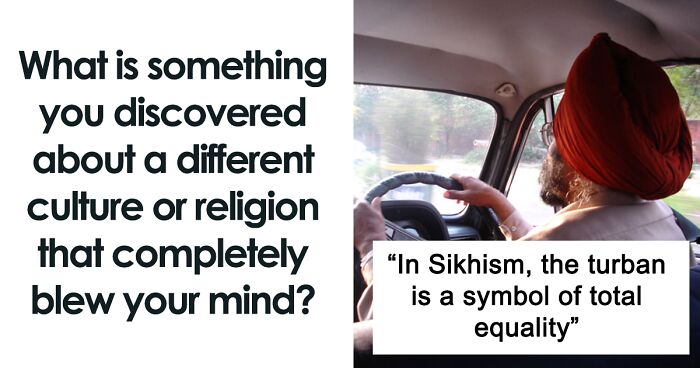
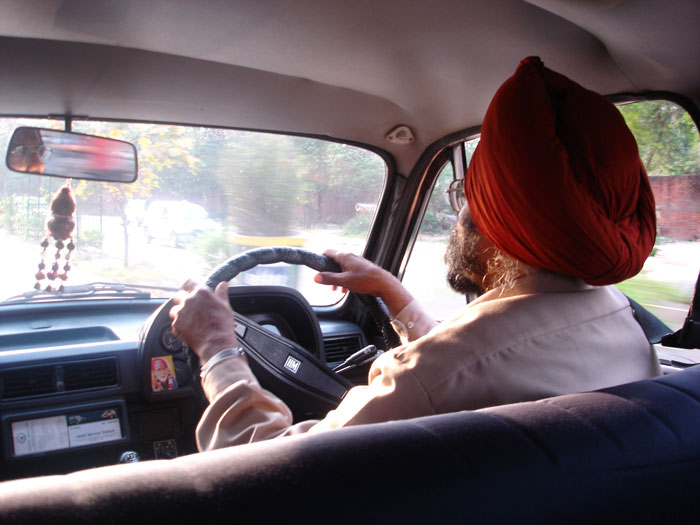 In Sikhism, the turban is a symbol of total equality.
Before Sikhism was the religion it is today, the turban was worn only by the wealthy upper classes. The person who started the Sikh religion donned the turban to show people that everyone is truly wealthy in spirit, and that it is the duty of all people, rich or poor, to help one another.
So the Sikh turban became a symbol of equality in humanity, and as a sign that that person can be turned to for help.
In Sikhism, the turban is a symbol of total equality.
Before Sikhism was the religion it is today, the turban was worn only by the wealthy upper classes. The person who started the Sikh religion donned the turban to show people that everyone is truly wealthy in spirit, and that it is the duty of all people, rich or poor, to help one another.
So the Sikh turban became a symbol of equality in humanity, and as a sign that that person can be turned to for help.


The Sikh community is the first to respond to any and all difficulties. When Lockdown first started, the Sikh community made food for the long haul truck drivers that passed through out city. Local areas were evacuated from fires and floods and the Sikh community was the first to help out.

I’m an agnostic but Sikhism makes much more sense than any other world religion. Whatever someone’s concept of “God”, at least Sikhism realises that it requires worldly effort to make changes in society, support the poor, etc. as opposed to a blind faith that thinks God will provide with no effort apart from supernatural belief. All the Sikhs I know are really sound, non-judgemental decent people I can rely upon in a pinch 🙂

What about Buddhism? No creator gods, just enlightenment.
Load More Replies...
Sikhs are a great people, I went to school with a lot of Sikh kids and they are just lovely people, they run lots of shelters in my city where anyone down on their luck can turn up, no judgement or questions asked, for some food, chat and warmth. They are always helping people who need it, just full of compassion and kindness.

I don't think so - fashion-conscious Sikhs often have a selection, to match their outfits
Load More Replies... Spent about a year in India as a backpacker. I always found Sikh tuk tuk drivers, their stores, eateries etc. I always found them to treat people fairly and not lie. If I ever got lost or needed to ask a question, I would look for one. I know that is stereotyping but it was my experience, every single time. Always nice, fair and as far as I can tell, always told me the truth.

I lived in a neighborhood with many Sikh's and a very close by Sikh church. They were the kindest, best neighbors ever. Wonderful people.


The Sikh community Is full of truly wonderful and kind people. I saw a YouTube video of a white lady yelling at a Sikh man and trying to rip his turban off and calling him a child murderer and yada yada. The guy was calm and stayed away from her trying to hit him. Police were called and she was taken away. It happened in a grocery store. Poor guy was with his wife and child just minding their own business when the lady came after them. It. Was. Horrendous.

Which is why they don't have to follow helmet laws in the UK. Because they're so equal to everyone else.
 How much which country you grew up in f***s with your sense of scale.
I was born and raised in Canada, lived here all my life. We're the second-largest country in the entire world by area, behind only Russia. When I went to visit some friends in Germany, we got talking about Canada and I mentioned how I went to university in a city that was "only" a four hour drive away from my childhood home. I commented that I liked it because it was far enough away to have some independence, but still close enough I could drop by and visit my family on holidays or breaks.
This caused them to laugh uproariously, much to my confusion. One of them eventually explained that a four hour drive would take you more than halfway across the entire country of Germany and it was not what any of them would consider "close". These same people, by the way, had a church just outside of their town that was over 800 years old and no one thought that was particularly remarkable.
That's when I learned the difference between European and North American cultures. A European thinks a 100 km trip is "far"; a North American thinks a 100 year old building is "old".
How much which country you grew up in f***s with your sense of scale.
I was born and raised in Canada, lived here all my life. We're the second-largest country in the entire world by area, behind only Russia. When I went to visit some friends in Germany, we got talking about Canada and I mentioned how I went to university in a city that was "only" a four hour drive away from my childhood home. I commented that I liked it because it was far enough away to have some independence, but still close enough I could drop by and visit my family on holidays or breaks.
This caused them to laugh uproariously, much to my confusion. One of them eventually explained that a four hour drive would take you more than halfway across the entire country of Germany and it was not what any of them would consider "close". These same people, by the way, had a church just outside of their town that was over 800 years old and no one thought that was particularly remarkable.
That's when I learned the difference between European and North American cultures. A European thinks a 100 km trip is "far"; a North American thinks a 100 year old building is "old".

Driving from West to East from Blackpool to Hull, you'll run out of land before you hit the "four hour" mark (between the Pleasure Beach in Blackpool to the delightfully named Sandy Bottom Pumpkins in Hull is at most a 3.5 hour journey). Obviously, there are wider points on the mainland, but you can go coast to coast and *run out of land* before doing this person's University trip.

Can drive for 4 hours in Texas...and still be in Texas. Even better, they put this sign up just past the Louisiana border that lists the miles to El Paso (on the other end of Texas) - 800 or so. Talk about breaking your spirit.
Load More Replies...
I live in California. Four hours of driving doesn't even take you out of the state. In fact, a full day of driving north doesn't even get you to Oregon (I know, I've tried it).

In Australia, you could drive for several days and you wouldn't leave one of the smaller states. (Queensland.) WA is even worse!
Load More Replies...
I’ve always loved the “how far is ‘far’l question. I’m a long-distance trucker in the US; 500 miles is an average day. But I knew a guy who grew up in Hawai’i whose family packed a picnic lunch to drive 20 miles a ross the island.

To visit my grandparents in Florida, while living in Florida, was a 12 drive. That is from the Pensacola area in the panhandle to the Tampa Bay area in the middle of the peninsula. Our grandparents in Mississippi were only 6 hours away in comparison. Neither of those trips you want to do with children reading due to motion sickness.

It is certainly much easier to do a 6-12hr road trip in your early 20s than a 2hr trip with your children!
Load More Replies... Hm, Germany is quite big by european measures. I don't have a car, traveling with train, but I wouldn't consider a 4 hour journey far, It's like the distance between Freiburg - Köln. True,if you go south from Freiburg 4 hours, you'll find yourself in Italy, traveling through Switzerland. ;)

I'm from Switzerland and four hours would be considered a long distance. I’ll only travel for four hours if it for holiday. At trip to Paris for example. But as a historian I prefer to visit all the 1000 year old churches in my vicinity anyway.
Load More Replies...
I live in Canadas capital (Ottawa) which isn't even the eastern most point in the province of Ontario, my best friend lives about a 16 hour drive west of me, and that isn't even the most western point in Ontario (there's likely another 4+ hours to get to that point)

it's 800 miles from Jacksonville, Florida to Key West. At least you get to see the 7 mile bridge.

Why a 4 hour drive? Is there no railroad connecting those places?

My original reaction was pfffft. What a load of crock. As an Australian, Australia is much much larger than Canada. Then I checked. I bow to thee O Canadia The Mighty (intentional spelling of Canadia The Nighty).

Similar in Australia :) though we do have a number of Aboriginal dwellings that are thousands of years old
Load More Replies... 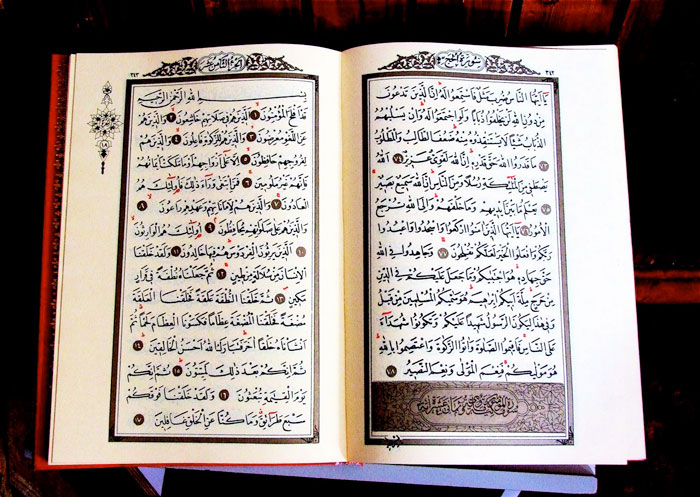 Not only is Jesus in the Quran, he is the most mentioned person in the Quran (if you count direct and indirect mentions). Islam teaches Jesus was a prophet and was a precursor to Muhammad.
In other words, Jesus is a central figure in the Quran, and the Islamic faith not only believes in Jesus but generally reveres him.
Not only is Jesus in the Quran, he is the most mentioned person in the Quran (if you count direct and indirect mentions). Islam teaches Jesus was a prophet and was a precursor to Muhammad.
In other words, Jesus is a central figure in the Quran, and the Islamic faith not only believes in Jesus but generally reveres him.

Also his mother Mary is one of the most important women in the Quran.

But, if I remember correctly, Muslims do not believe Jesus to be the son of god.

Yes, but the difference is Jesus is revered as a prophet, not the son of god. Very very different different.. FYI, I don't believe in any religion. lol

speaking as a christian who was tought the opposite, thanks for enlightening me!
Load More Replies... 

no they don't. They all believe in monotheism, that deviating from monotheism is apostasy (and that the god's name is EL or Allah, same thing), that there are prophets, that there are laws which mostly tell you to obey this god, that women are to obey men and raise children in a household, that you must pray, etc. They're just successors. Muslims refer to the Quran as the Third or Final Testament. I do not see substantial differences between them except the christian weirdness of insisting jesus was in fact god. Oh and if you want to correct me, please tell me if you are familiar with the saying, La illaha illa Allah Muhammad Rasul Allah “لا إله إلا الله محمد رسول الله” or the saying Ἐν ἀρχῇ ἦν ὁ λόγος, καὶ ὁ λόγος ἦν πρὸς τὸν θεόν, καὶ θεὸς ἦν ὁ λόγος. IE this is my area of scholarship.
Load More Replies...
I dare say a lot of Muslims have more respect for the teachings of Jesus than many self proclaimed “Christians”.

 Buddha has snails protecting his head so that he can meditate in the scorching sun. And here I thought it was a hair style.

It is a shame that this is the first post, it is an internet myth. https://sdhammika.blogspot.com/2009/07/buddhas-hail.html?m=1
I read this. Thank you very much for posting the link!
Load More Replies... 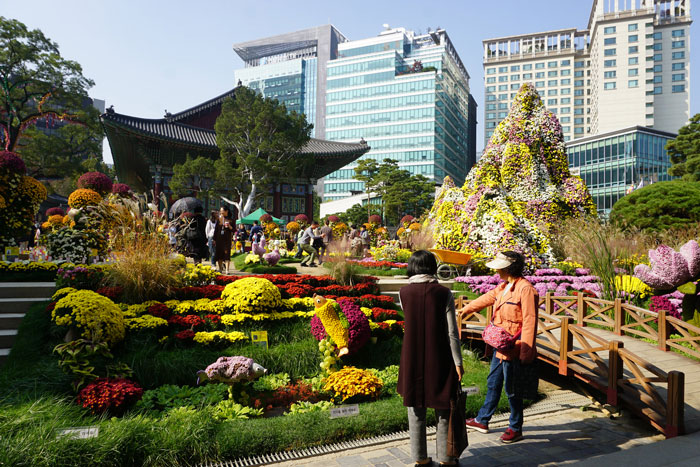 I taught English in a middle school in South Korea. When I was roaming around in the hallways, I found that not only were the girls holding hands, some boys were holding hands as well. They were just "friends". There weren't any homophobic cries or jokes being made. In North America, if that happened, you'd be automatically labeled gay.

I have friends from different countries that come to America and realize it’s not that much accepted. Its sad, honestly
In India its common for guys hug guy friends when we meet..
Load More Replies... You're in for a surprize in muslimic countries: good male friends holding hands and kissing each others cheek is completly normal. Nobody thinks it's gay.




In north Africa and Arab countries its very common to see men and women holding hands and hugging people of the same sex. It's really lovely to see the affection between friends

The Feminine/Masculine genders are out of balance in the US because of primitive religious mythology.


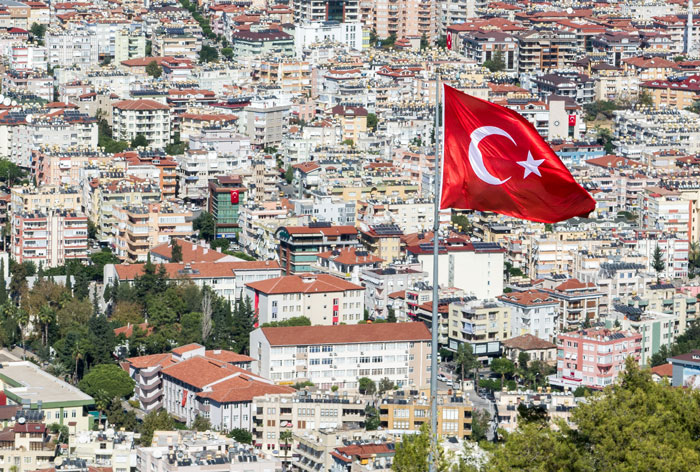 In Turkish, there's a so-called "gossip tense." A specific kind of past tense that indicates that someone else told you this.

We have some broad equivalents. Starting with "APPARENTLY - " is one big indicator. And we have constructions like "Well, he's supposed to have inherited millions, but I don't know about that" - not many people use it though.
Load More Replies... 

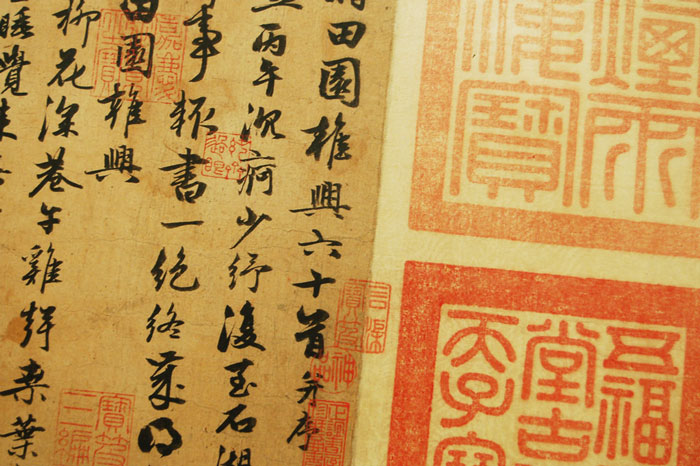 Chinese languages: mandarin and Cantonese and other Chinese dialects are mutually unintelligible but the written language is exactly the same. Two Chinese people speaking different dialects would have no idea what each other is saying but they could communicate by writing
When the British Empire sent a spy into China to steal the method for cultivating tea, the spy didn't even bother learning Chinese. Wherever he went, he just pretended to be from somewhere else in China. Nobody questioned it. On the other hand, *written* Chinese from two thousand years ago is totally intelligible to the modern Chinese reader - and if you don't think that's a big deal, remember Geoffrey Chaucer wrote The Canterbury Tales six hundred years ago and without annotation it's incomprehensible.
Nah chaucer is ok if you let go of spelling and just read it out loud. Try Beowulf. That's nightmare stuff. Beowulf Geata, be þæm gebroðrum twæm. Him wæs ful boren ond freondlaþu. wordum bewægned, ond wunden gold
Load More Replies...
I can understand Mandarin and Nanjing dialect, but some other dialects like the Wuhan dialect (Which many of my family members and their close friends speak) sound like a completely different language. I can never understand someone who is speaking in a Wuhan dialect.
As far as I know that was the whole point of inventing the Chinese written language. It made the country manageable for it's administration.
I was at a party once where there were two international students from China, and someone kind of joked about the fact that they were holding a conversation with one another in English, and they said it was easier to do that than to try to understand each other's dialect of Chinese. I also had a friend who spoke Cantonese who ended up with a customer service job helping people over the phone--only they assigned her to an area that spoke Mandarin! All the customers got so frustrated with their inability to communicate with her that she got completely stressed out and quit her job. Her bosses must've been crazy.

Confirmed this with my Chinese boyfriend (son of immigrants; they speak Mandarin). He says it’s a completely different phoneme set. Once in a while there’s a similar word or sound, according to him, but otherwise Cantonese is unintelligible to him. Remember: China is a HUGE country, so this is not surprising XD it’s amazing that the Qin Dynasty even managed to get one set of standardized characters in such a diverse country with so many dialects and sub-cultures/tribes/peoples!

Not exactly true. Whilst most Chinese from Mainland China writes in Simplified Chinese, people from regions such as Hong Kong and Taiwan are writing in Traditional Chinese which is significantly different.


I learned there are 156 different dialects spoken in China. My ex-wife is Chinese from the city of Guangzhou.
That is not true. Cantonese and Mandarin are not using the same wiriting caractere at all.
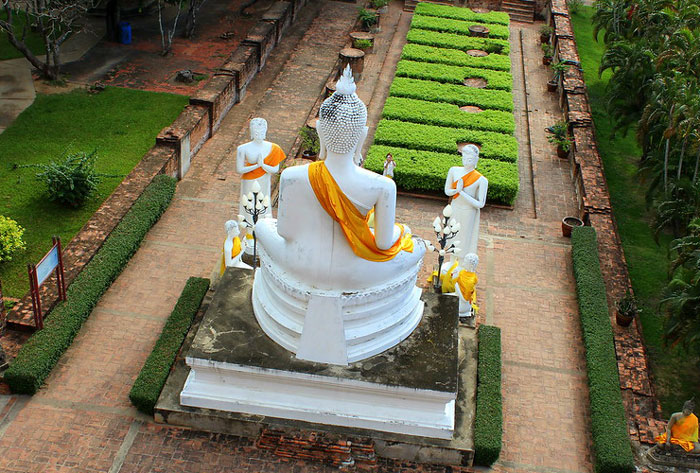 When I first became Buddhist, the fact that the Buddhist response to the question of whether there was a creator of the universe or not is basically "It doesn't matter". It's one of a list of questions that the Buddha was asked and refused to answer one way or another, or even speculate on, because they're irrelevant to Buddhism. Coming from a Western background, it kind of blew away a lot of my ideas about the purpose and function of religion.

Right, I also appreciate this about Buddhism. And a religion can have as simple of a goal as ensuring a good harvest or the return of spring.
Load More Replies...
Buddha was not and is not a god. Modern buddhism is mostly known for everything it was never meant to be sadly... learn the Pali and reveal truth.

I don't know what you mean by "modern Buddhists". There are a lot of persons that say they are Buddhist but they don't have real knowledge or actually practice the Dhamma. They just go through the motions. I became a Buddhist on my own 36 years ago. I lived in an area of the US where there were no Buddhists or temples. I got all the history, precepts, instructions on meditation from books. Later I moved to Seattle and sought Buddhist places. I ended up going to Lao temple and later to Khmer temple. These Theravada temples are the closest to my basic Buddhist practice. I lived in Cambodia 2002-2017. Buddhism is about discovery of reality. The moral values are better than those of the god-based religions. There is little or no scandal in the clergy because the monks are celibate, live in the temple and have no personal wealth. There is no proselytizing; it is "ehipassiko "come and see" no creeds, dogma or sacraments.
Load More Replies...
i like this. I don't know, and I won't until I die, so it doesn't really matter
Most of the faiths of the world have at their origin a genuine desire to understand the world, and to adopt a moral code. Most of them have also been coopted by "big business" or government who then corrupt the original faith, turn it into organized religion, and add in layers of control and/or profit. Not always, and not everyone, and at different levels, but there's usually a pretty big difference between faith/spirituality and organized religion. For the Christian faith, the biggest turning point was when Constantine adopted it as the state religion. The kiss of death for it remaining pure to its origins, which were pretty radical - Jesus was about loving people, non-violence, doing good to others, sharing your belongings. Constantine was *ahem* not about those things.
Load More Replies...
Buddhism is an off-shoot of Hinduism (Sanatana Dharma to be more accurate). Creator, God, whatever you want to call it isn't the ultimate goal & doesn't hold as much importance as in Abrahamic religions. God is seen more as a stepping stone rather the destination.
I might be wrong, but in Buddhism the goal is to become a "Buddha" (achieve enlightenment). However in Hinduism the end goal is indeed God (the 'Brahman'). That is, one strives to break free from the cycle of reincarnation (the karmic cycle) and attain 'moksha', where you unite with the 'Brahman'.
Load More Replies...
 There’s a Micronesian island where all the inhabitants are color blind. They know when fruit is ripe by the smell. It just gave me a new understanding of how people see the world and the different pathways cultures take to solve the same problems.
Honestly, as someone who is colorblind, the most difficult problem is telling if something is good to eat, like chicken, beef or even baked goods. Usually I take a bite and pray I don’t die :)
And yet I, as someone who is not colourblind, judge whether something is still OK almost entirely by smell.
Load More Replies... Orange, the colour, did not used to exist, as there was now word for it, we had yellow and red, and various shades of.
The ancient greeks also didn't have a name for the color blue. And even today, some cultures don't distinguish it as a separate color and it's just another shade of green. Language has such a big impact on our worldview.
Load More Replies...
10% of the island suffer from total color blindness while 30% are carriers; likely due to a catastrophic typhoon in 1775 that left only 20 survivors. Very interesting form a genetics standpoint.

Or, you know, you could tell by the size of it, or by feeling it, or by how easily it can be pulled off the tree/vine, or still by sight. I mean, you don’t need to see colors to tell if a banana is turning brown. This is such an odd thing to write about the color blind inhabitants of an island. You’d think they could write something more interesting about an entire island of color blind people? Like maybe, what’s causing their color blindness?

All I want to know is whether those are dirigible plums in the picture.
Alas, they are just muggle mangoes :( https://www.flickr.com/photos/prof_richard/29230511206/
Load More Replies...
This wouldn't work, as those affected don't have any working cone cells.
Load More Replies...
 maletgs said:
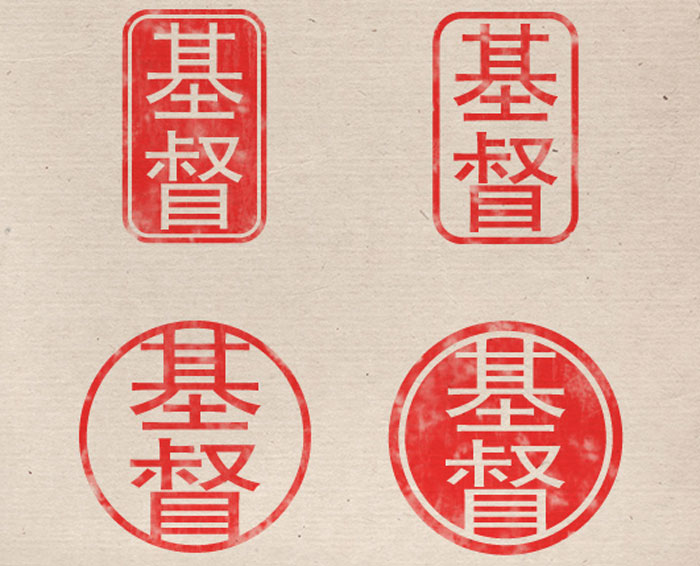
Japanese stamps instead of signatures.
samosamancer replied:
I lived there for 2 years and I’ve still got mine with my name in katakana. It’s a whole process to procure one and then have it registered as your official signature.
maletgs said:
Japanese stamps instead of signatures.
samosamancer replied:
I lived there for 2 years and I’ve still got mine with my name in katakana. It’s a whole process to procure one and then have it registered as your official signature.

This would be so much easier than having to write your signature all the time.

I don't know. I can see myself frantically searching for the stamp in my purse with people waiting behind me *shudder
Load More Replies... It'a called hanko, right? As a historian I think it's kinda cool and formal. But I wonder if there are ever any situations where someone forgot their stamp and couldn't sign an important document. With a signature you're good, as long as somebody has a pen.
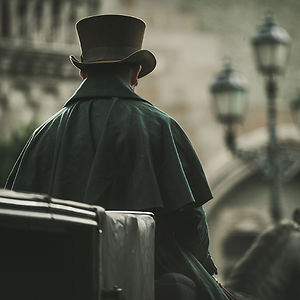

"People commonly have three types of hanko: an officially registered seal or jitsuin, a ginkōin for standard bank transactions, and a mitomein for day-to-day use." (more on that: https://www.nippon.com/en/features/jg00077/)

Exactly. It’s just the same way if you had 3 different signatures/passwords , you wouldn’t use your bank account one to sign a package
Load More Replies...
I have one of my name a family friend brought me from her honeymoon!

i had two when i was stationed there. one for everyday usage, like acknowledgements, sighting etc. the other for officials like banks, documents, approvals and so on.
 So much stuff from Japan.
I think if I had to pick one it was how seriously they take customer service there. Like, it's just night and day from literally anywhere else in the world I've been. At one point I needed to go visit a bank to get some cash and I asked the cashier at the store I was at where the nearest bank was. In most places in the world, if you got anything more than a shrug, it would be some vague directions; a really nice place might give you a map or an address for your phone and point out where you were going.
In Japan, the cashier bowed, stepped out from behind the cash register, grabbed an umbrella (a typhoon was passing through, so it was pissing down rain at the time) and *physically escorted me* the TEN BLOCKS between the store and the bank, holding the umbrella above my head the whole time (and getting absolutely drenched himself). I felt really bad about it and tried several times to tell him that an address was fine, but he insisted he would walk me there. It was just a totally different mindset towards how to treat a customer or a guest. Honestly pretty humbling.
Also the "no tips" thing threw me for a loop. Not that I didn't know about it, but I didn't know how seriously it was enforced. There was a point where I was running late for an important event and had taken a cab to where I was going. I still remember the total cost - 3481 yen; since I was in a hurry, I grabbed 3500 yen, hastily gave it to the driver and dashed out the door. I make it about 10 metres away and I suddenly hear, "Sumimasen! Okyakusan! Sumimasen!!" (Excuse me, sir! Excuse me!!) from behind me. I turn around and the cabbie has gotten out of his cab and dashed after me, just to hand me the 19 yen (about 19 cents) change that I'd left behind.
So much stuff from Japan.
I think if I had to pick one it was how seriously they take customer service there. Like, it's just night and day from literally anywhere else in the world I've been. At one point I needed to go visit a bank to get some cash and I asked the cashier at the store I was at where the nearest bank was. In most places in the world, if you got anything more than a shrug, it would be some vague directions; a really nice place might give you a map or an address for your phone and point out where you were going.
In Japan, the cashier bowed, stepped out from behind the cash register, grabbed an umbrella (a typhoon was passing through, so it was pissing down rain at the time) and *physically escorted me* the TEN BLOCKS between the store and the bank, holding the umbrella above my head the whole time (and getting absolutely drenched himself). I felt really bad about it and tried several times to tell him that an address was fine, but he insisted he would walk me there. It was just a totally different mindset towards how to treat a customer or a guest. Honestly pretty humbling.
Also the "no tips" thing threw me for a loop. Not that I didn't know about it, but I didn't know how seriously it was enforced. There was a point where I was running late for an important event and had taken a cab to where I was going. I still remember the total cost - 3481 yen; since I was in a hurry, I grabbed 3500 yen, hastily gave it to the driver and dashed out the door. I make it about 10 metres away and I suddenly hear, "Sumimasen! Okyakusan! Sumimasen!!" (Excuse me, sir! Excuse me!!) from behind me. I turn around and the cabbie has gotten out of his cab and dashed after me, just to hand me the 19 yen (about 19 cents) change that I'd left behind.
I spent 2 months in Tokyo. I was overtired (2 babies under 2 with me) and I accidentally left my purse in the laundromat and didn't realize it until a few hours later. I panicked, and went to the hotel concierge to see if they could assist me in calling them. The lady walked me to the laundromat, they were closed so she called the owner, who came over to unlock it and take me in. My purse hadn't been touched and was still sitting on the shelf that I left it on. Japan was one of the most amazing places I've visited as far as customer service and cleanliness is concerned. They go way above and beyond. I also noticed that there's no such thing as a "McJob" there. Every person takes pride in their work.

I've never been afraid of leaving property sitting unattended (e.g. ,on a chair while visiting the banyo), any time or anywhere in Japan. The only people I was worried about were other tourists.
Load More Replies... I went with a school trip when I was 14. Our flight was delayed, so instead of arriving in the evening, it was like, 11 at night. Had to walk a couple blocks to the hotel, and we were all staring like tourists -- not at the buildings, but we'd just come from LAX. We were staring at the absence of trash and graffiti and crackheads in downtown Tokyo.

In the US, customer service is calculated to enhance profits and shareholder value, and not one iota more.

I arrived into Houston airport from my flight from Tokyo. Tokyo: No tips and excellent service. Houston airport I had a terible service at a burguer shop, and I was made to almost compulsory pay a $3 tip
Did he close the shop while he took you to the bank or were there more cashiers?


A short stay in Japan might be worth it for me, to unlearn a few things.
This. I live in China, and customer service is also very good in general. And though tips for service are accepted on some online platforms, they are never required. In fact, if you try to tip a taxi driver here, he'd chase you down to give it back.
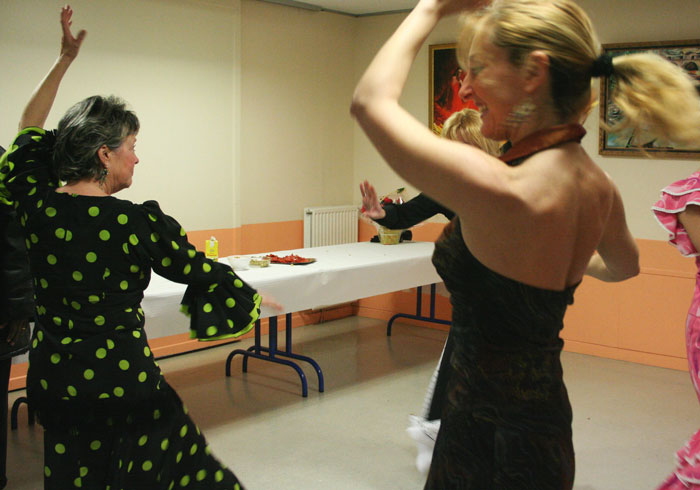 The Spanish eat dinner at like 10pm and party until like 4am and still have energy to go to work the next day. Idk where they get the reserve of energy to do that but it’s wild
They have an afternoon siesta/snooze though to help recharge the batteries? I think I heard once, that it was better for us to have two sleeping periods like this than the more common just sleep at night. No idea if it is true or not?
Yes and no. We do traditionally sleep siesta after lunch. But nowadays most people do not do it during the week because they dont go home for lunch or their break is too short. In big cities barely anybody does it if they work. In small villages sometimes people still close for a long time at midday for siesta but its very rare now.
Load More Replies... The first fact is correct. Many spaniards have dinner quite late, my parents tend to do it between 9.30 to 10.30 depending on the day. Not all do it (I dont) but its quite normal. Partying until 4am if a working day? That is not normal at all unless you are very young. Most people drinking in the streets during the week are teenagers and university students (normally not the good students).

In south america (of course, spanish influence), a nigth out could easily star at 2 am and last until 6 or 7 am. I'm from Argentina and you can find a bar with this wild hours from Wednesday to Sunday. At least on pre-covid era, now it's more restricted but you will be able to find places that are in that hour range again. Also, i have to agree that it's usually for younger folks but not exclusively. What it's stick with us is the late dinner, because with have a breakfast tipe of snack at 5 or 6.



Tell me where please... 7,30am traffic jams in Madrid suggest something different... There's no office job that starts at 10am
Load More Replies... I ofter have dinner at 10:00p or later. Maybe I don't "party 'til 4:00a, but it's so much easier to do household chores when everyone else is in bed. But I don't get a siesta.
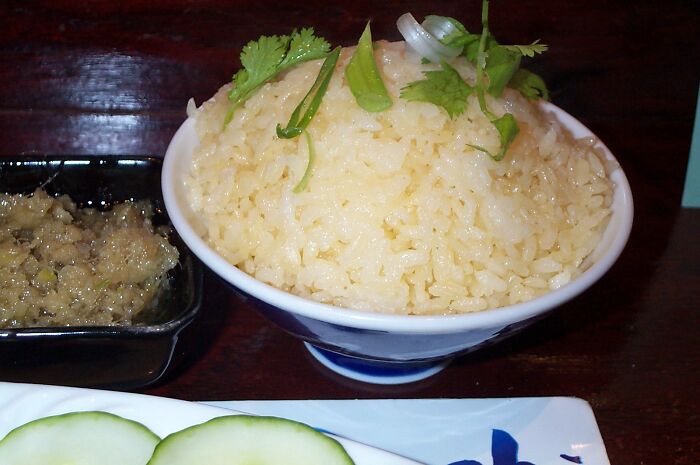 I remember when I was a kid I was shocked when I realized a good chunk of the world did not eat rice regularly in meals lol.

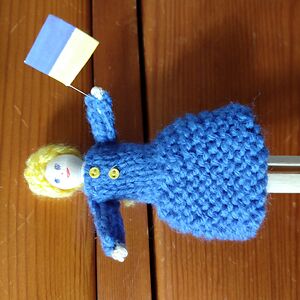
On the other hand, I was shocked when I discovered that rice wasn't only for pudding 🤣. In fairness I was just a little kid at the time
Load More Replies... I was shocked that many countries not only not eat bread daily but have something they just call bread but it's just an abomination. On the other hand I'm from Germany and bread is live here.

Dutchie here. It was a long time ago, but yes, shocked is the right word for it. Like what DO they eat for breakfast and lunch then? Also, out sandiches are so different. We have good quality bread, usually some butter is added and then only 1 layer of something. Not the 4 slices of cheese and 7 sleices of coldcuts on 1 piece of bread like the Americans do. We do have bigger sandwiches (with fried egg, both ham and cheese, some lettuce etc), but that's not for everyday lunches
Load More Replies... 
What's that? I could look it up but I am interested in hearing directly from you. :)
Load More Replies... As a kid you learn about major differences like animals, landscape, culture or languages. But I took me a long time to appreciate the more subtle but huge differences e.g. in plant species or climate. What kind of plants, weather, temperature, sun hours and month do you associate with the word spring? The answer will vary enormously, depending on the region you come from.
In The Netherlands potatoes are the standard meal for basically every day. Boiled potatoes with a bit of gravy, vegetables, and some protein (often meat, sometimes fish). Most Dutch people only eat rice when they get take out, usually reserved for special occasions and certainly not a weekly thing, let alone daily, or when they have a spouse with foreign roots and learn to eat more rice dishes


I'm Irish, so grew up with lots of potatoes and soda bread. I prefer rice now.
I’m Irish by genetics, but was adopted into a Mexican family at birth. I grew up eating a lot of rice (and I love it), but I have a deep and almost spiritual love of potatoes in ANY form that I’m just gonna call it genetic XD
Load More Replies...
We grow a ton of rice here in Texas, but my favorite carb is still the potato or pasta.

As an American, but growing up in a certain area. Charleston SC, rice is omnipresent as well and it surprised me when I moved away from the culture of breakfast rice, jambalaya, and such.
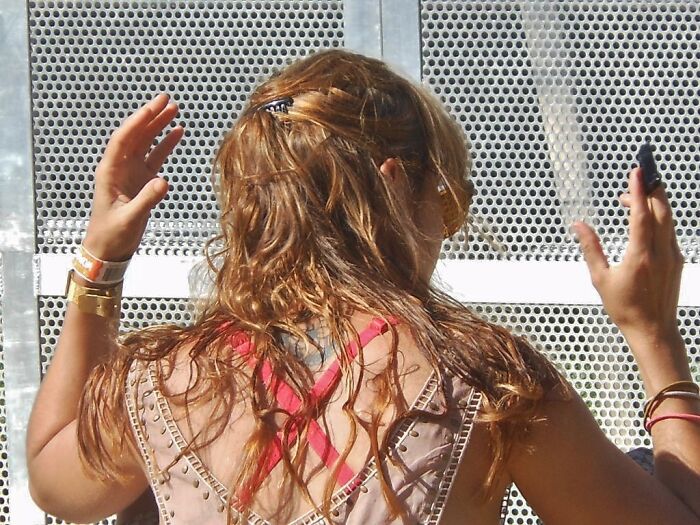 Our internal visualization of time more or less follows the direction of writing.
I'm from Brazil, and i can only speak for Brazil, but this feels online with the rest of euro-centric culture.
I mean that when we talk about the Past or the Future, the trend to gesture from left to right, which just so happens to be the way we write. I spent some time in Taiwan, where they used to write from top to bottom and sure enough, "yesterday" is literally translated as "the day above" and tomorrow is translated as "the day below". And it's more than just that, think of timelines, horizontal versus vertical. The whole internal visualization seems to be related to that
I would love some input from someone who speaks a language written from right to left because right now this theory feels like grasping at straws but somehow kinda right. Please someone prove me wrong
Our internal visualization of time more or less follows the direction of writing.
I'm from Brazil, and i can only speak for Brazil, but this feels online with the rest of euro-centric culture.
I mean that when we talk about the Past or the Future, the trend to gesture from left to right, which just so happens to be the way we write. I spent some time in Taiwan, where they used to write from top to bottom and sure enough, "yesterday" is literally translated as "the day above" and tomorrow is translated as "the day below". And it's more than just that, think of timelines, horizontal versus vertical. The whole internal visualization seems to be related to that
I would love some input from someone who speaks a language written from right to left because right now this theory feels like grasping at straws but somehow kinda right. Please someone prove me wrong
Some languages consider the past to be uphill and the future to be downhill. Eurocentric worldview often puts the past behind us and the future before us, but some languages do it the opposite (you can "see" the past, so it's in front of you, but you can't "see" the future, so it's behind you)!

This is an interesting observation. In ASL (American Sign Language), future is in front of you moving forward, past is behind you moving backwards, and now is immediately in front of you, usually static.
Very similar in Auslan (Australian sign language)
Load More Replies... very interesting. As a psychologist I interpret the 'graphic field', say the sheet of paper one draws on in the 'Western way'. For example, an animal 'facing to the right looks at the future'. Maybe I should review my ideas with Eastern Art...etc?

We also draw timelines (or mathematical axes for that matter) in the direction that we write. There’s no reason for this other than custom.


I want to have most things from right to left. Many of us lefthanded people are a bit strange that way. It would also be easier to read from right to left for me. I even catch myself - now and then - to read a line of text from the right only to pick the words together to a sentence afterwards.
I can see a link insofar as the writing on the left of the page, at least in the West, is a bit older than the writing on the right even if it's only by seconds.

Hebrew is written from right to left, but the numbers run from left to right. However, before Hebrew adopted Arabic Numerals, numbers were coded by letters, which were written right to left. In any case, Israelis actually visualize time back to front. That is also weird, since the word for "before" is the same word as "in front of". I guess that explains a lot about Israelis.
That's the same in Latn; pro means before or in front of. Different language branches.
Load More Replies...

I have time-spatial synaesthesia, where days, months, years etc are internally visualised in the space around me, like a big oval hula hoop and the "narrow" part is the end of one unit (week, month, year etc) and start of the next. But where the narrow part is depends on where we currently are.... this is hard to explain lol. So its Tuesday today, so we're currently in front of me, more to the left and the weekend is on my far right. But when we get to Friday, it shifts round and Friday is now on the far left and Monday is on the right with the rest of "next week" down my right and almost behind me. When we get to Monday, we shift again and back over on the far right. It's like a big rotating calendar in my head!
 That a lot of americans literally cannot get anywhere without a car and that getting your drivers license is as a result extremely vital for gaining any independence (which is why the car is so synonymous with the american meaning of 'freedom'). I've talked to americans for years and only recently thanks to Not Just Bikes did I find out just how car centric american culture is.
"A developed country is not one where the poor have cars. It's one where the rich use public transportation." quote-eco-...d17145.jpg 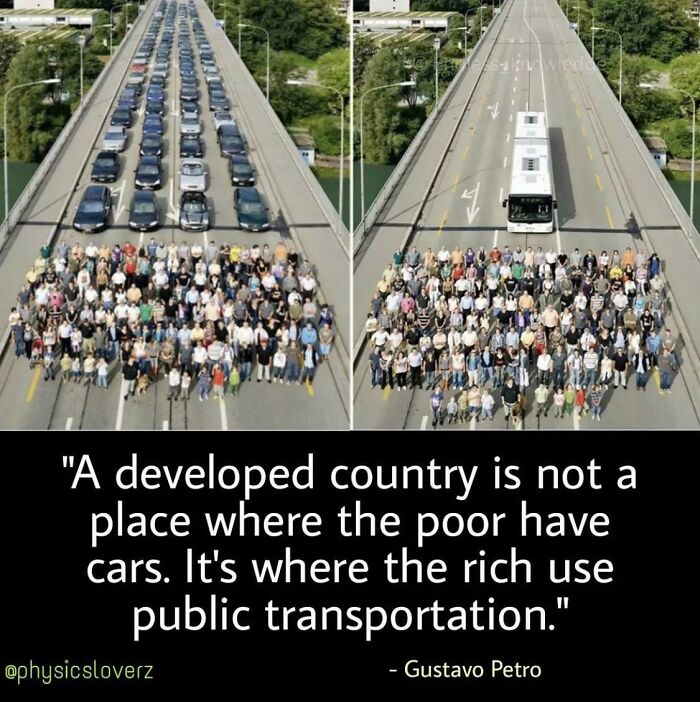

I'm certain parts of the US taking public transport is risky...especially if you are wealthy...I live near Cleveland (Ohio) and I would not take the rapid if you paid and dared me...around here that's gang territory
Load More Replies...
I’ve lived in a city with great public transit most of my life and never had a car or license. people from all over my state who don’t live in the city are pretty shocked. It’s crazy how hard it is to get around this country without a car outside major cities. It’s pretty disturbing. I’m in the process of moving to a small town a few hours away and it bums me out I will need to get a license to grocery shop.

The US is huge, though. Except for in large cities, everything is fairly spread out. Where I live, the closest grocery store is 6km away, for example. Even if I weren't disabled, walking there and back would be difficult, especially carrying bags, as there aren't sidewalks except in the center of the city.
That’s the point, I think. A lot of your suburbs etc aren’t built with easily accessible public transport in mind, I believe? Hence the idea that car = freedom.
Load More Replies...
Where I live, I wanted to take mass transit to work every day, I commuted only about 25 miles each way, but it took between 45 minutes to an hour. The only alternative was to take the bus, which would take me at least 2.5 hours, probably closer to three, and require a walk of over a mile on each end... in Florida, where there is a thunderstorm every afternoon, and temperatures are in the 90s most of the time. Any mass transit available in Florida is usually geared towards tourists, and not resident commuters.
The growth of the suburbs in the 50s established the reliance of cars. Those new 'lifestyle' estates built at that time.

If you live in a big city with good public transportation, you don't need one, but most cities don't have good public transportation, and if you don't live in a city, you're even more dependent on a car. Especially since a lot of places in America are SO far away from everything. There are places where it's not uncommon for it to be an hour drive or more just to go to the grocery store.
I didn't have a car for three of the six years I lived In Boston. I took the subway every day instead. Aside from the minor inconvenience of making the subway schedules, it was fine. Since moving away, though, I've become more aware of how critical a car is to getting around in the US. Everything is just so spread out, and most US cities have pathetic public transit systems. And as has already been mentioned, there is a stigma in much of the US about using public transit, that you must be poor or disadvantaged, and that you have no other choice.

From above I live in Wyoming, where the distance on average is 50 miles between communities, very little public transportation. We either own a car or we don’t go anywhere. PS, my closet daughter lives just shy of four hours from me and she’s the closest one. One other lives in Idaho and is roughly four and a half hours away.

I don't have a cell phone. Both my medical aid and my bank require a smartphone to log in. I receive no reply when I ask where, when joining the organisations, did it state that owning a smartphone was a requirement.

We cover a lot of area and in many places, especially outside of major cities, there is no (or minimal) reliable public transportation. I lived just outside of a mid-sized city, and to drive in for work was about 15 min. By public transit, it would have taken over 2 hours. And that's assuming everything ran on time. Now that I'm further out, it's not even an option - and 45 min by car. (Worth it though!)
 Adam Jones said:
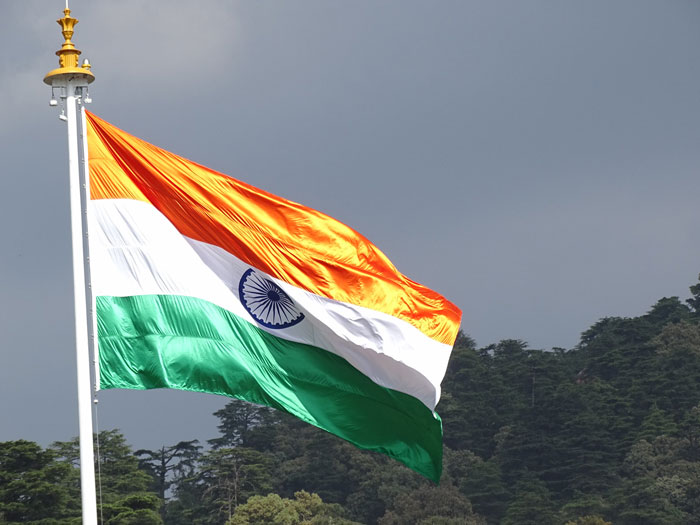
India has more than 200 languages and dialects.
candygram4mongo replied:
India and China are both better understood not as analogous to European countries, but as what Europe as a whole would look like if they had a single government.
Adam Jones said:
India has more than 200 languages and dialects.
candygram4mongo replied:
India and China are both better understood not as analogous to European countries, but as what Europe as a whole would look like if they had a single government.
22 official languages besides Hindi and English. Each state has its own language and culture. At minimum you know 2 or 3 languages.

Children learn a minimum of 3 languages in school until 8th Grade. English Hindi and a regional language
Load More Replies...
Whenever I work with Indians they mostly talk in English because they largely didn't speak the same Indian language. Have heard them yelling that they couldn't understand each others' accents sometimes.
The only language that unites most of us besides english is Hindi but even that gets confusing depending on how prominent an accent is
Load More Replies... I recently watched an Indian tv series set in an ad agency (I can't remember the name of) and it was interesting, they had English, Hindi and smaller regional languages for ads, depending where they would be shown. The ones who could write English well were better paid than those who wrote well in regional languages, though some could do both.

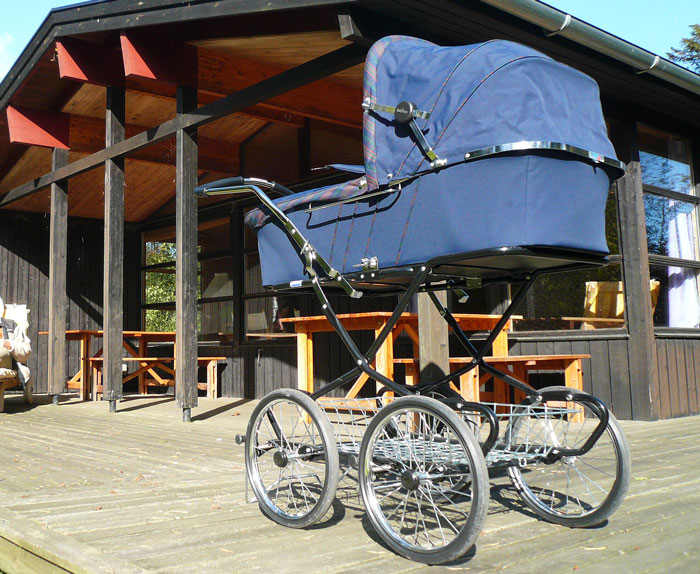 Danish people leave their children outside of stores when they go shopping.
Being from the USA, you would be arrested for that 100%. Immigrants have been in the past, probably more than I would ever have thought.
Danish people leave their children outside of stores when they go shopping.
Being from the USA, you would be arrested for that 100%. Immigrants have been in the past, probably more than I would ever have thought.
In the UK you would be considered a bad parent too because the baby might get kidnapped or attacked in some places. When I was a child it was common for babies to be left outside in their prams while mothers did the housework. Then again, neighbours would keep an eye on other people's children. Because everyone knew everyone else, neighbourhoods were much safer than today. Strangers stood out from the locals and there weren't the cars for a quick getaway if someone committed a crime. Nor did you have to lock your doors and windows even if you were only in your garden.

Rural US used to be like that too. My farming community is still kind of like that but the urban sprawl is starting to creep in here too. When my kids were little all the kids in the neighboring farms used to meet up on the farm trails and be out there eating crops and playing from sun up to sundown, now there's "sovereign citizens" trying to stake claim to our land and settling up camps cooking meth and stealing stuff. I'd be afraid of my kids going out back there without a vehicle nowadays. It's sad.
Load More Replies...
Its quite normal in Scandinavia including here in Iceland. The babys sleep best in strong weather, we offcourse dress them accordingly
It is becoming more common for childcare centres in Australia to have the babies sleep outside (within the fenced areas) now, largely because we view the Scandinavian ideas of education and care so highly.
Load More Replies... In the US, this would be child neglect. But worse, it would create untold opportunities for kidnapping.

Is kidnapping such a big problem in the states? I'm from Denmark myself.
Load More Replies...
I wouldnt take my eyes off of a child for 30 seconds even to grab my purse here in the US.
Stopping at an ATM when my daughter was a baby, I would take the time to take her out of the carseat and with me, even when the ATM was only 3-4 meters away from my car.
Load More Replies... I would also worry about like... what if the baby needs something? You just leave them there to cry?

You don't just ignore the baby for a couple of hours! They are checked on regularly.
Load More Replies... This was common practice in a lot of places up until child care laws came into place. Watch Call the Midwife


I wouldn't leave my dog tied up outside a store in the UK, it is likely to be dognapped.
 Kodiak-Marmoset said:
Croatian, Bosnian, Serbian: essentially the same language.
scelt replied:
Same people too, but don't even try to tell them that. If you would suddenly remove religion, I have no idea what would they find to argue about, but they would find something.
Source: I'm one of them. Won't tell you which, but as you see, it doesn't matter.
Kodiak-Marmoset said:
Croatian, Bosnian, Serbian: essentially the same language.
scelt replied:
Same people too, but don't even try to tell them that. If you would suddenly remove religion, I have no idea what would they find to argue about, but they would find something.
Source: I'm one of them. Won't tell you which, but as you see, it doesn't matter.
the language in Yugoslavia was called Serbo-Croat. After the breakup each new country began emphasizing its own pronunciation, word choice, and spelling variants. They deliberately and with malice aforethought set out to make separate languages out of what was one language.

Wow, not really the truth! People talked in dialects before (although Serbian during history had had 2-3 standardised languages based on old church Slavic, Russian, maybe even Bulgarian). In Yugoslavia, the government tried to unite stokavian dialects, but it eventually failed just like the country itself. After that modern national languages just returned toward the point before forced unitisation.
Load More Replies... 
Ajvar. Pretty sure they'd argue over who makes the best ajvar. Answer: Croatians. #fightingwords ;D
Croatians really don't care much for it. It is much more a Serbian thing. We use it and prepare it, but so do we use and prepare pickles.
Load More Replies...
You are right but as you said keep it for yourself. I don’t want you to end up as a ćevapi 🤫🤤


https://www.quora.com/What-are-the-differences-between-the-Serbian-Croatian-and-Bosnian-languages
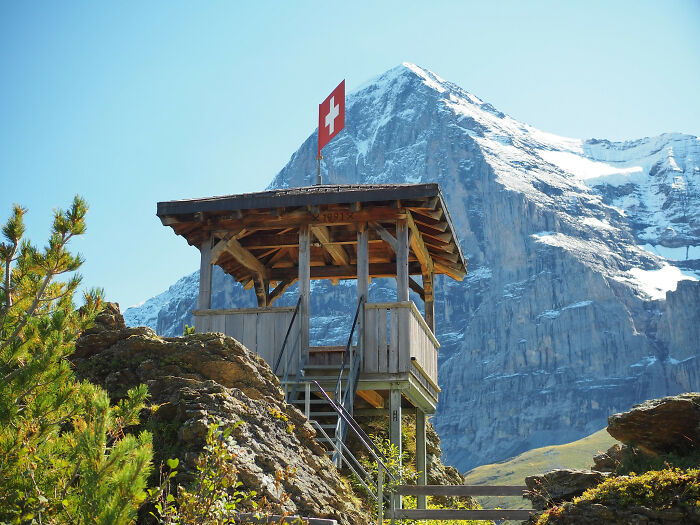 In Switzerland, perhaps A and D too, when you pick up the phone there is a routine that must play out before the conversation continues:
*ring ring*
Receiver: “Hello this is *business*, my name is *surname*, good day.”
Caller: “Hello Herr/Frau *surname*, my name is *surname*.”
R: “Good day, Herr/Frau *surname*”
C: “Good day, Herr/Frau *surname*. I am calling because ….”
Also you can’t just say goodbye and hang up, you will spend a good 2min saying goodbye and wishing the other a good day/evening/weekend and thanking them and saying you’re welcome until you both say “Also Tschüs” and **then** hang up.
In Switzerland, perhaps A and D too, when you pick up the phone there is a routine that must play out before the conversation continues:
*ring ring*
Receiver: “Hello this is *business*, my name is *surname*, good day.”
Caller: “Hello Herr/Frau *surname*, my name is *surname*.”
R: “Good day, Herr/Frau *surname*”
C: “Good day, Herr/Frau *surname*. I am calling because ….”
Also you can’t just say goodbye and hang up, you will spend a good 2min saying goodbye and wishing the other a good day/evening/weekend and thanking them and saying you’re welcome until you both say “Also Tschüs” and **then** hang up.

Actually no, we have monthly rates usually that aren't affected by the amount of calls you make. Saying goodbye in person can take up to 15 minutes by the way.
Load More Replies...
Ty! You made me laugh! Cause I dislike phone calls and was thinking the same thing
Load More Replies...
I live in Ireland and the long goodbyes (which mostly include saying 'bye' many times) threw me for a loop when I moved there. I'm used to it now but I used to sound so rude hanging up after the first goodbye.

My wife is Irish, and I still laugh when I hear her spend ten minutes saying goodbye to her family on the phone.
Load More Replies...
What's A and D? I'm in America so if I try to google that I will be bombarded with ads for baby butt cream.....
As a Swiss person, I would like to know how the rest of the world does this. When you want to communicate with a business, both parties need to exchange names to address the other party properly. It is seen as kind of rude, not to use the surname when connecting the customer to another person or when saying goodbye. As for the long goodbye, that’s only with persons that you know already, not with strangers. We are not big on smaltalk, but once we are engaged in a conversation, it is rude to just cut it abruptly.
In the US, for a one-off customer service interaction, it would be normal to use sir or ma’am, or to avoid titles/names all together. It would not be considered rude to have a phone conversation that goes like… Person A:“Hello, this is XYZ Business.” Person B: “Hi, I’m calling to ask about…”. Some places like banks or service provider call centers might have rules where they have to use customers’ names and it always makes me feel a little bad because some people find my name hard to pronounce.
Load More Replies... Germans tend to be more direct and efficient. The first time I had a German on the phone I was a bit shocked by how quickly he hung up but now I actually like this efficiency

We do something similar in the UK but usually with an additional line about the weather.
I don't know why you are downvoted. Ents are the best. Who wouldn't want to be called an ent? Calm, patient, unhurried, polite, live outdoors. It sounds heavenly.
Load More Replies...
I think that's 'Hallo' and not 'Hello'. We (in Hungary) use it, too, but not the same way as 'Hello'. We only use it when answering a phone call. Hello (actually pronounced as Helō) is widely used as an informal greeting.
 I'm from South America, when I went to Germany I went to a meeting in a bar and ordered water out of politeness so I wouldn't be there without paying for anything, bc I don't drink alcohol. To my surprise water is free and from the tap. Started ordering sparkling water instead from there on lol.


AFAIK it's free basically everywhere as long as it's not bottled or sparkling. Some places won't bring water unless you ask for it (like California, because drought) but it's still free. I've been to half the states and never had to pay for a glass of water at a restaurant.
Load More Replies... You've been lucky, it's common in Germany to serve sparkling water you have to pay for. You have to ask especially if you want still water from the tab.
And some places will still not do it. At least we have the Apfelsaftparagraph, which states the at least one non alcoholic beverage on the menu must be cheaper than the cheapest with alcohol.
Load More Replies... Apparently it was common in England for men to hold hands and be arm in arm. Up until the trial of Oscar Wilde, when gestures associated with him became effeminate.
This is interesting and all, but what does it have to do with tap water?
Load More Replies... This is an interesting perspective. Usually, people for the US complain, that you have to pay for every drink in Europe/Germany and there are no free refills. But this means, that in South American, not even the tap water is free? (I'm from Switzerland and you usually get free tap water with a coffee or you can ask for a bottle, but I have seen menues, where they charche even for tap water.)

that‘s not common in germany though. you can ask for tap water and they might give it to you for free. but usually they‘ll just serve you still water from the bottle and charge you.
It's free in most of the world in restaurants. The quality varies a lot though.
Tap water is free in Australia- you don't usually have to ask, your table gets a bottle and you get a cup each.. If you want mineral water you have to order, unless it is a high end place (which I don't frequent) and they offer you a choice of sparkling or tap water.


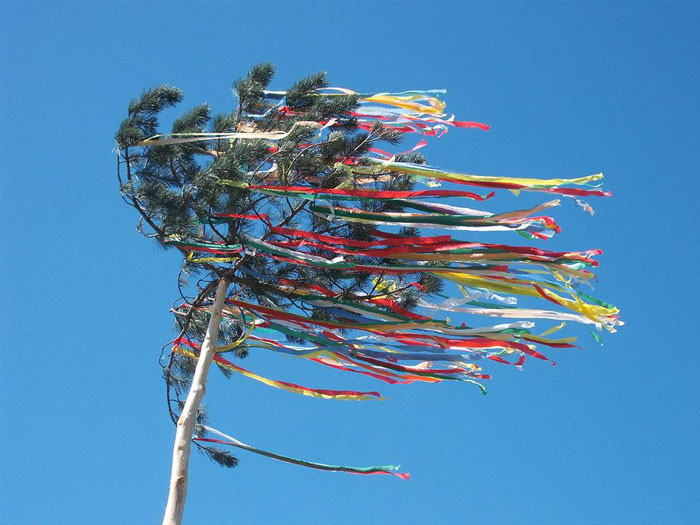 In Germany there is a holiday in which, during the dead of night, a guy will get his friends together, take a thin, tall tree, strip it of its branches, decorate it, write the name of a romantic interest on it, then anonymously strap that tree to the house of said romantic interest.
When I was first told about this, I thought my German instructors were exaggerating, but nope. The next day the city was FILLED with decorated trees. And I didn't hear anything that night. I still don't know how they did it so quietly.
In Germany there is a holiday in which, during the dead of night, a guy will get his friends together, take a thin, tall tree, strip it of its branches, decorate it, write the name of a romantic interest on it, then anonymously strap that tree to the house of said romantic interest.
When I was first told about this, I thought my German instructors were exaggerating, but nope. The next day the city was FILLED with decorated trees. And I didn't hear anything that night. I still don't know how they did it so quietly.
German here. Never heard of a "love tree" before, never seen one. We do have a "Maibaum", a "May tree" that is set up in every town. In Bavaria its the same tree for a couple of years. We love trees :)
Load More Replies...

Klingt nach einem Maibaum - der aber zumindest bei uns (Niedersachsen) nichts mit Liebeserklärungen zu tun hat. Bei uns wird vorher im Freundeskreis besprochen, wer den Maibaum bekommt.
Load More Replies... Now that is romantic! In the UK people just send Valentine cards to their loved ones on Feb 14th. Really lucky people might get chocolates, flowers or a dinner date as well.
Mainly we just tweet about how much we hate Valentine's Day
Load More Replies...
In the village I grew up in, about 29km west of Cologne, this was a thing every year for the 1st of may.

Yes, sounds like our German "Maibaum" (May tree, I think in England there's May poles, too). Only to my knowledge they don't have much to to with love interests. It's an occasion to party.
Load More Replies...


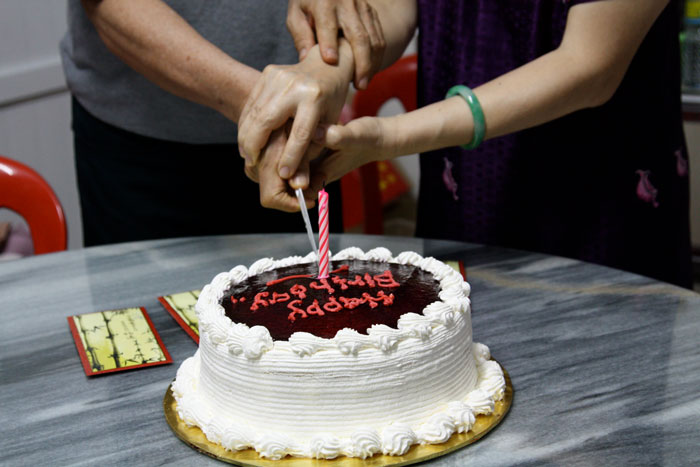 Some cultures your friends treat you on your birthday and other cultures you treat your friends on your birthday. An example would be paying for a birthday dinner with friends.
Which scenario is best if you have no friends? Asking for a fri.... Damn, caught myself out.
I can be your friend. Now treat me to the world’s most expensive mac n’ cheese along with your cake
Load More Replies... Haha funny of you to think I’d have the money to pay for anything. Now, where’s my cake

In Italy we have both traditions: if you are from the north, you usually just pay for the cake that you offer your friends or for one round of drinks to say "thank you" to whoever came to celebrate you. And your friends offer drinks to you. In the south you pay for everything your guests need/want. You can spot a southern birthday a mile away (and the other way around)
one of my best birthdays was taking friends out for dinner at my favourite place.

We do that in Lithuania, you call your friens, and pay for all event. You don't have to do that, only if you can afford it.
In Australia it often depends on your age- if you are 18 and under your parents will pay for your party. Big birthdays like 21st, 30th, 40th etc you pay for yourself usually. All other birthdays it depends on your finances and your friends/family. You might all go to dinner but pay for your own, or your friends might pay for your meal, or they might throw a house party.
Load More Replies... Theoretically it makes sense that you provide the dinner/party and your friends get you presents. But in my country it's really expensive to eat out, even at a "cheaper" restaurant, so all I can afford is to pay for everyones drinks. If I paid for the meals, it would probably cost like 500$. So my friendgroup usually makes a party at home, pot-luck style and the birthday person organizes the main meal and the booze.

When I was a kid my parents gave me birthday party. As a young adult in my 20's we partied. At middle age I invite a select few friends,and family out to dinner an drinks my treat.

Remember when we used to bring treats to class on our birthday in elementary?
Usually honey joys in my family :) Now schools have to be more aware of allergies though, so often suggest a non-edible treat or one you take home so you can check with your mum before you eat it lol.
Load More Replies... I've never enjoyed the whole birthday thing. It just has no gravity for me, neither mine, nor anyone else's. *shrug* C'est la vie.
I really enjoyed the fuss, until I was over 21, after that, meh. My favorite two birthdays post 21, one I was home alone all day and bought myself lasagna and wine for dinner alone, the other I had the day off work for school report writing, which I smashed out in an hour or so and spent the rest of the day home alone watching tv!
Load More Replies...  I had no idea that Catholics had more books to the Bible than Protestants had until I was a young adult.
As a long-time translator, I can tell you that perfect translations cannot be achieved - something is always lost, even if it is a very tiny thing. Now remember how mamny times the Bible has been translated and re-translated... ouch!
Or "copied" by those Middle Ages monks that might have felt obliged to... clarify... some point or other, or perhaps add in something to "enhance" the telling.
Load More Replies... That's the thing with religion. There isn't a single truth - just many variant and conflicting versions of it. It's not unique to Christianity either.
There is a single truth: every one started with a lie.
Load More Replies... This is why I can’t understand people who take the Bible literally. I have a lot of respect for sects like Quakers who have a much more flexible belief system.

I am a biblical literalist because God is a biblical literalist. There are prophecies happening right now that were predicted for thousands of years and are proving themselves out as true. So many have been literally fulfilled since 1917 and 1948. The two biggest ones are the return of the Jewish people to their God-given homeland in Palestine; and also the greening of Israel, Israel has become the breadbasket and fruit vendor of Europe as repeatedly predicted. Unbelievers hoot, revile, and huff whenever this has been pointed out to them. Research it yourself online, I do not cast my pearls out casually at people like you. If the book of Revelation is interpreted using the Futurist method, it clearly predicts the horrific things that will soon happen before the literal Second Coming of Christ. Get ready, the Lord is coming soon!
Load More Replies... 
Throughout history, Christianity hasn't really come to a consensus on what is considered "Sacred Scripture". Even though Luther didn't consider the "extra" books in the Bible as on par with the rest of the books in the Bible, he still included them in his German Bible. Also the Church of England still uses these other books in their liturgy, and it wasn't until the mid-1800s that Protestant English Bibles didn't include these other books. This is from a very Western perspective, however, as the Eastern Orthodox, and Ethiopian Orthodox Churches have even more books in the Bible than Catholics.
Wrong, the Patriarchate of Constantinople finalized the N.T. canon long ago. They accepted the Septuagint translation of the O.T. See: https://www.gotquestions.org/canon-Bible.html
Load More Replies...
Don’t forget about the Gnostic books, like 1 Enoch and The Gospel of Mary. Those were either removed or not included over time.

The catholics from long time ago just ripped the parts that those males did not like out of the bible so now is only left, what they deemed ok. No Evangelium of Maria Magdalena and no strong woman anymore. People in older times worshipped her a lot, and those men did not like it so they told the people she and the whore were one and the same. It is not true but it stuck to the heads of the people. Male white people made this religion about them and not about the things that were passed on. This way they betrayed their own jesus.. but it did not matter.
The original apostolic N.T. writings, "autographs", were destroyed during the imperial persecution or fell apart if they were made of papyrus paper... One whole book, the letter to the Laodiceans, did not survive (Colossians 4:16)... has anyone seen a copy recently? Why so many translation versions, especially in English? Because the Geneva bible or 1611 KJV are a difficult to read in 2022 unless the reader is an Elizabethan English scholar. About 300 words in the KJV are not in common use or their meaning has changed in modern English. I prefer the NKJV. Martin Luther separated the Apocryphal books into a separate section when he translated the bible into German. Later published Protestant bibles continued this practice. The first protestant bible without an Apocrypha section was printed in 1888. The Orthodox add six whole books and parts of other books. The Romans have a different canon also. See link: https://en.wikipedia.org/wiki/Biblical_canon
Several versions? There are hundreds of versions of the Bible, each translated differently - words, meanings, etc...And some are drastically different! They took out lots of stuff too - you know, to keep control
As a dragged-up Papist, I was ignorant of the Old Testament until I started attending an Anglican Church. At Catholic masses, at which I was an altar server as a lad, an Epistle extract was read from the right of the altar, followed by a gospel extract from the left, both in Latin. Depending on the time and formality of the mass, these were then repeated, in English, from the pulpit.
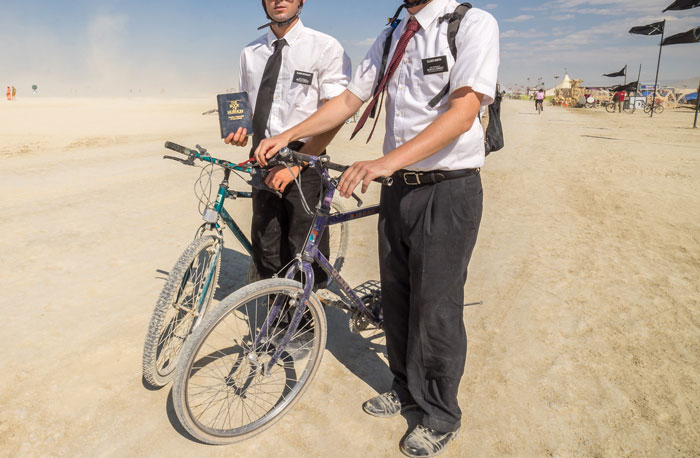 Literally every damn thing about Mormonism. I could give you an entire book about the things. What should I call it though…
Edit: Some people are asking for the goods so let me blow your minds.
1. Mormons has bizzare ceremonies in the temples which are definitely “sacred” not “secret.” Haha. I researched these 15 years ago, but there was no proof of what actually happens. Then youtube happened. Watch Mormons do baptisms, with a proxy, for dead people. Watch them act out crossing into various levels of heaven using code words. Check out the secret underwear.
2. For many years Mormons boasted that they found a golden book that was transcribed with the help of an Angel. It is now accepted, even by the general authorities that the “book” which mysteriously disappeared was transcribed by Smith using seer stones that were placed in a hat. Yea folks, he was a con man. There is a whole history of seer stones. What’s more is that the church admits this now.
3. Smith was married to and had sex with girls as young as 14. He sent their husbands away and then had to “bite the bullet” and marry them for the good of their community and the authority if god.
4. The Salamander letter
If you are truly interested, google Jeremy Runnels and the CES letter. In short, Runnels was a passionate Mormon. He had some questions and was encouraged to write out his issues and send them to an LDS authority to get some explanation. He wrote a 70 page document called the CES letter that led to his excommunication. The CES letter has been them cause for many Mormons to leave the church.
Have fun! Im sure I got some details wrong here and there, but nothing of any importance.
Literally every damn thing about Mormonism. I could give you an entire book about the things. What should I call it though…
Edit: Some people are asking for the goods so let me blow your minds.
1. Mormons has bizzare ceremonies in the temples which are definitely “sacred” not “secret.” Haha. I researched these 15 years ago, but there was no proof of what actually happens. Then youtube happened. Watch Mormons do baptisms, with a proxy, for dead people. Watch them act out crossing into various levels of heaven using code words. Check out the secret underwear.
2. For many years Mormons boasted that they found a golden book that was transcribed with the help of an Angel. It is now accepted, even by the general authorities that the “book” which mysteriously disappeared was transcribed by Smith using seer stones that were placed in a hat. Yea folks, he was a con man. There is a whole history of seer stones. What’s more is that the church admits this now.
3. Smith was married to and had sex with girls as young as 14. He sent their husbands away and then had to “bite the bullet” and marry them for the good of their community and the authority if god.
4. The Salamander letter
If you are truly interested, google Jeremy Runnels and the CES letter. In short, Runnels was a passionate Mormon. He had some questions and was encouraged to write out his issues and send them to an LDS authority to get some explanation. He wrote a 70 page document called the CES letter that led to his excommunication. The CES letter has been them cause for many Mormons to leave the church.
Have fun! Im sure I got some details wrong here and there, but nothing of any importance.
There's a saying, "If you want to get rich, start a religion". A lot of cult weirdos do it for sex as well as money.
I watched a documentary on the salamander letter. Wasn’t it disproven? The guy who wrote it was a very prolific counterfeiter. It shook the church but in the end it was proven false. Still, Mormonism is strange in that it’s a modern religion. All religions have weird and unrealistic stories but the fact that the Mormon story survives in semi-recent history is shocking and also somewhat alarming. People are gullible.

You’re confusing the last part with Mark Hofmann, the murderer who wrote the Salamander Letter in an attempt to con the Church.
Off to go read about "the Salamander Letter..." EDIT: It's not really free, it's a book now, I would have to pay for shipping, they suggest a "fair price" of a minimum $14.95 donation. I wonder why they don't just publish it free on their online site if they really want people to question LDS. I read wikipedia, etc. and this letter really was a very skeptical , analytical takedown of the LDS. https://cesletter.org/
https://library.ucsd.edu/dc/object/bb1400621n/_1.pdf
Load More Replies...
Like another comment here I would like to say that it is a little inconsiderate of you to kind of make fun of a religion. But, I would like to say it a bit nicer and not call people names. The baptism of the dead is for people in the after life so they have a choice. They don't have to accept it. And if anyone wants to know anything about the church, you can just ask a member. Most will be glad to answer your questions.The golden book is called the Book of Mormon, because Mormon wrote a lot of it and put the rest into one volume. That's also where we got the name "mormon" from, but we do go by LDS members now. And obviously we believe that the marriage to young women is horrible now, and don't do it.
A group based on a scam and that encourages pedophilia is not to be respected
Load More Replies... Truth about Mormon theology, Part 3: 11) Much of Mormonism's appeal is that the people are so friendly and accepting when new visitors come to call in a local ward church. The sense of community is enormous and very appealing to emotionally hungry people who are not getting their emotional needs met at home or their traditional church. All of this "love" goes away in 3-6 months if the visitor doesn't buy in and become a willing convert. After six months with no conversion or baptism, the "love" turns into indifference or even contempt. After a year with no progress, the visitor will be discretely asked to leave. If they don’t leave, they will be treated with all the contempt due a parasite. 12) This all started with the gold tablets Smith supposedly translated using magic glasses, the Book of Mormon. It was commonly reported in the community Smith lived in that he had borrowed the story from an unpublished novel about Christ in the Ancient Americas, which was in circulation in that community. Mormons stoutly reject this assertion. People who can believe in gold tablets that disappear, magic glasses, spirit inspired automatic translations, and angelic visions tend to refuse to believe this all started with an unpublished novel. 13) Modern genetic and DNA analysis shows that Central American peoples such as the Maya do not have genomic coding for middle eastern peoples from 700 b.c. to 700 a.d. Any genomic evidence like that is of recent addition to their gene pools. Central American peoples genomic origin is ultimately in the Gobi Altai mountains of western Mongolia, not the middle east. This is one of the strongest refutations of Mormonism, since Mormon history as told by Mormons indicates the original Mormons settled in Central America and mixed with the peoples there.

Temple robes of The Church of Jesus Christ of Latter-day Saints, known as the robes of the holy priesthood, are worn only inside Latter-day Saint temples and reserved for the highest sacraments of the faith. White symbolizes purity. There is no insignia or rank. The most senior apostle and the newest member are indistinguishable when dressed in the same way. Men and women wear similar clothing. The simple vestments combine religious symbolism with echoes of antiquity reflected in ancient writings from the book of Exodus. -church of Jesus Christ.org
interesting trivia: the super-rich Howard Hughes retired to Las Vegas. He was surrounded by gangsters, professional gamblers, & con-men for most of his life, some of them working for the US military since he had extensive business dealings with them until they decided he was too unstable. He picked Mormons for his personal assistants and employees during retirement since he felt they would not cheat him as much as the non-Mormons he had been dealing with.
 Studying the Russian language, I came across this really interesting word, тоска (toska) and its verb form, тосковать (toskovat’). Its meaning is very difficult to translate into English because it has such a deep cultural context, but it essentially can mean, depending on context, a sort of heart-wrenching, painful longing, or a sense of nostalgic wistfulness, sometimes for something you don’t even know. From the Russian-language wikipedia article for this word:
>No English noun conveys all the shades of the word. On the deepest and most painful level, it is a feeling of intense mental anguish, often with no explainable cause. In less severe cases, it can be aching heartache, a desire for incomprehensible what, painful languor, vague anxiety, torment of the mind, an unclear craving. In specific cases, it means striving for someone or something, nostalgia, love and suffering. At the lowest level - despondency, boredom.
What’s interesting about this word is just how much this feeling absolutely permeates Russian literature and music. For instance, there’s this one piece I absolutely love where one part of it always gave me the sense of reaching towards something desperately, but never quite grasping it. I never knew how to describe it, but this word encompasses it perfectly. Edit: Because a few people asked, the piece I had in mind was the Passacaglia from Shostakovich's Violin Concerto no. 1
Studying the Russian language, I came across this really interesting word, тоска (toska) and its verb form, тосковать (toskovat’). Its meaning is very difficult to translate into English because it has such a deep cultural context, but it essentially can mean, depending on context, a sort of heart-wrenching, painful longing, or a sense of nostalgic wistfulness, sometimes for something you don’t even know. From the Russian-language wikipedia article for this word:
>No English noun conveys all the shades of the word. On the deepest and most painful level, it is a feeling of intense mental anguish, often with no explainable cause. In less severe cases, it can be aching heartache, a desire for incomprehensible what, painful languor, vague anxiety, torment of the mind, an unclear craving. In specific cases, it means striving for someone or something, nostalgia, love and suffering. At the lowest level - despondency, boredom.
What’s interesting about this word is just how much this feeling absolutely permeates Russian literature and music. For instance, there’s this one piece I absolutely love where one part of it always gave me the sense of reaching towards something desperately, but never quite grasping it. I never knew how to describe it, but this word encompasses it perfectly. Edit: Because a few people asked, the piece I had in mind was the Passacaglia from Shostakovich's Violin Concerto no. 1
The Welsh language has a similar meaning word, hiraeth, to express a deep yearning.

Hiraeth is mostly used for a yearning to go back to your own land, but it’s stronger than homesickness.
Load More Replies... As a German speaker, that came to my mind as well
Load More Replies... 
Ummm… no. Ennui, as far as I know, means severe boredom and dissatisfaction at not having anything good to do. Still a good word, but very different from the Russian ‘тоска’.
Load More Replies...
I am not one to message. But found your views really in rightful


 Some Hindu rituals involve slamming coconuts into the ground. I remember passing through a street in Chennai in a cab and all of a sudden like 50 people slamming coconuts into the ground at the same time
I can't wait to go back
Some Hindu rituals involve slamming coconuts into the ground. I remember passing through a street in Chennai in a cab and all of a sudden like 50 people slamming coconuts into the ground at the same time
I can't wait to go back
In temples mostly but just about anywhere something religious happens. We do it to make a promise to god that we will leave behind our negative stuff and seek to become a better version of ourselves

That's interesting. Why a coconut tho? Does it have a specific meaning?
Load More Replies... My Grandma made a vow that if I graduated my 10th grade with an average above 90%, I'd break a 1000 coconuts. A thousand. I could not at the age of 14. My dad and the guy who was charged with collecting the broken coconuts had to help me (which was supposed to be taboo. I was supposed to do the whole thing on my own). Mum asked grandma not to ever do that again. So, for scoring well in my 12th grade exams, she vowed that I would only climb 3000 odd steps up to Tirupati Temple in Tamil Nadu, which I did - in summer, with a basket on my shoulder. And bloody monkeys stole the milk packet and bananas that were on it. Sigh.

I am so sorry for laughing at this. I feel your pain. The Tirupati one, not the coconuts.
Load More Replies... 
This is usually done while praying, to bless the place. So it could be a new home, office or any other place. Also brand new vehicles. I used to work in Bollywood and in some production house, they would always start the day by breaking the coconut. They would also pass the broken up pieces as "Prasad" for us to eat.
During festivals you see it in many places
Load More Replies... 

And... That's it? Was the editor just choosing random dredge to take up space on the screen?
 Public sex education in Marrakech, Morocco. A circle of people pops up on Djemaa El Fna. A guy in his 50/60’s gathers people of all ages. He used sign language and talks and jokes around. Like a stand up street performing sex educator. In a Muslim country. They were basically standing next to their mosque. Post bias adjusted.
We probably should be doing something similar in the US, now that the conservatives have us marching rapidly towards book burnings and no reproductive rights.
Islam teaches that sex is nothing to be ashamed of and there is no shame in asking questions. It encourages men to make sure their wives climax, foreplay, being intimate with each other, bathing together etc.
 Temple culture in Taiwan:
The people who run the temples, and put on holiday performances for their respective gods, are a community of lost boys and society's rejects. They have an unsavory reputation, associated with petty crime and drug use. Each temple is basically a carnie street gang with a folk religion theme. They take your real money in exchange for fake money, which you are supposed to burn so your ancestors have money in the after life (insert mandatory inflation joke). Sometimes the temples have rivalries, and brawls break out between devotees during religious festivals and competitions.
Folk religion is alive and well in Taiwan, but at the same time, people who take it seriously have a "trailer trash" image, so it's considered cringy to be too interested in it. Good upstanding citizens just burn incense, say a prayer to their ancestors, take pictures if it's a touristy temple, and leave.
Temple culture in Taiwan:
The people who run the temples, and put on holiday performances for their respective gods, are a community of lost boys and society's rejects. They have an unsavory reputation, associated with petty crime and drug use. Each temple is basically a carnie street gang with a folk religion theme. They take your real money in exchange for fake money, which you are supposed to burn so your ancestors have money in the after life (insert mandatory inflation joke). Sometimes the temples have rivalries, and brawls break out between devotees during religious festivals and competitions.
Folk religion is alive and well in Taiwan, but at the same time, people who take it seriously have a "trailer trash" image, so it's considered cringy to be too interested in it. Good upstanding citizens just burn incense, say a prayer to their ancestors, take pictures if it's a touristy temple, and leave.
I have visited Taiwan before and it is literally the coolest place ever! (also the night markets are incredibly cool)

 wetlettuce42 said:
That Americans have garbage disposals in their sinks.
president_of_burundi replied:
I'm American and they might as well be a myth to me. I've only ever seen them in horror films, so as far as I know they're just a thing that you accidentally drop something down, then reach into to provide Dramatic Tension and/or get all your fingers cut off.
wetlettuce42 said:
That Americans have garbage disposals in their sinks.
president_of_burundi replied:
I'm American and they might as well be a myth to me. I've only ever seen them in horror films, so as far as I know they're just a thing that you accidentally drop something down, then reach into to provide Dramatic Tension and/or get all your fingers cut off.

it is only for food waste, and you need to run water while using it. It is better to compost your food waste - saves water and helps grow new food. Before moving to a condo building, we composted - had volunteer fruits and veggies in our flower garden - it was funny seeing cantaloupe growing between the flowers.

I am American and have never lived in any home or apartment that did NOT have a garbage disposal in the sink. It's basically for LITTLE bits of food that are left on plates. When you rinse them off before putting them in the dishwasher or before doing dishes by hand, the disposal grinds them up so your pipes don't get clogged. Anything bigger than small bits of food gets scrapped into the garbage. And in California, where I live, we now have FOOD WASTE bins, along with the garbage and recycling bins. Apparently they can compost the food waste and make fuel or fertilizer or something.
Same. Didn't matter how old the home/apt was. I've always had one.
Load More Replies... 
Yes we do, but mainly it is for food disposal. Every house I've lived in had one. Just make sure that it is nothing made out of wood or metal or else it gets stuck. Yes, every time it gets stuck, tense movie scene time comes to mind so I make sure there is no one nowhere near the kitchen.
Some people see it as an alternative to trash bins, which is a major problem. You are NOT supposed to put your trash down the sink, just as you are NOT supposed to put your trash in the toilet. The garbage disposal is to grind up SMALL AMOUNTS of food waste that go down the drain from rinsing plates. Large amounts should ideally be composted (more possible than many people think, even in small spaces!) and if that's genuinely not possible, they should be thrown in the trash. You can freeze food scraps until trash day if they're going to be stinky. But putting any type of trash into the sewer or drainage system is a major problem and if you're doing that, PLEASE STOP.

I have never heard of anybody anywhere using a garbage disposal as a full on trash receptacle. Who are these people?!
Load More Replies...
In older parts of America these are not very common at all. I only know 2 people in my part of the US (northern new england) that have them and their houses are newer constructs. I know quite a few people on the west coast and in the south with them.
Load More Replies... they are also the plumber's best friend... a piece of bone or shell will stop it cold... Plumbers charge $80 to come out and pick out the offending chunk... or push gently with a plunger to get the motor unfrozen... Easy money!

My friend years ago had Irish relatives come visit in So. California for a few weeks. A month or two after the went back to Dublin, the relatives in a phone call asked, "Do you still have that machine that eats your food in the sink?"
 Coming to Vancouver, Canada and learning not only that I _had_ to tip, but that the nicer the place (meaning the pricier the food), the higher the expected tip up to the “standard” 20%.
I remember being new around 8 years ago. I went to a kinda nice restaurant downtown and treated a few folks, left a 5% tip for service I thought was bare minimum. The server came up to me as we were leaving - she must have been having a bad day or something, because she was literally on the verge of tears asking what she did wrong. I caved of course, and gave her the missing 15% in cash. Still, that was bizarre.
Coming to Vancouver, Canada and learning not only that I _had_ to tip, but that the nicer the place (meaning the pricier the food), the higher the expected tip up to the “standard” 20%.
I remember being new around 8 years ago. I went to a kinda nice restaurant downtown and treated a few folks, left a 5% tip for service I thought was bare minimum. The server came up to me as we were leaving - she must have been having a bad day or something, because she was literally on the verge of tears asking what she did wrong. I caved of course, and gave her the missing 15% in cash. Still, that was bizarre.
If restaurants etc paid decent wages tips wouldn't be necessary. An expensive restaurant can afford to pay its staff a decent wage. If the service or food is bad why should they expect a special reward for it? If the tips didn't come in maybe the service would improve.

In many parts of Canada, it's legal to pay waitstaff less than minimum wage, but not in Alberta. The NDP made that illegal a few years ago, and yet we're still expected to tip 20%...it's a bit bonkers
Load More Replies... I hate the tipping culture too, but please don't punish the servers by not tipping. If you stiff on the tip, that poor server isn't going to be able to make rent this month. The "service would improve if tips disappeared" mentality is the same as not giving to charity because it makes people lazy. Nonsense! Until the restaurants change the policy, you MUST tip if you would like to eat in a restaurant. If you don't want to tip, go to a buffet, fast food, or eat at home.

...5% is your STANDARD?! I'M American, and no wonder she broke down in tears!!

My standard is 20% and for great service, I give 30%. I’m the the US and restaurant work is hard.
Load More Replies... in Spain (and Europe in general) tipping isn't common but it's not seen as rude or anything. Employees will see it as a very kind gesture.. however, most places have a tip jar or something similar and they always split the tips between all of the employees, so if one particular waiter treats you exceptionally good and you want to give him €10, if 10 people work there you are actually giving €1 each. Tips always come from tourists, and most of them don't know this

I hate the tipping culture in the States and Canada. Here in the Netherlands I don't tip unless the servide is excellent. I am already paying enough for the food and then I also have to tip for people just doing their job. I know they don't get paid a decent wage nut it shouldn't be up to the guests to make up for it.
I do tip, because I want to. Give a delivery person 1 or 2 euro and their whole face lights up, because they don't expect it "oh wow, really? thank you so much". Coincidentally I pretty much never have anything wrong with orders, and I quite often get drinks on the house in my regular bar (in bars I usually tip more than 5 euro, restaurants 8 to 10 euro). Oh and there was a free chocolate bar in my groceries last week after I tipped the riders a big bag of candy on top of the monetary one
Load More Replies... I hate this. Those businesses should pay their employees a real wage, so it would not be necessary that patrons pay them too.
In some states in the U.S., restaurant staff is paid significantly less than min. wage and it is legal to do so due to the expected tipping. Some restaurants factor in 'gratuity' into the bill so it is mandatory without exception.
Swedish, Norweigan and Danish. Three totally different languages with very similar structures and grammar. Not wholly unlike Spanish, French and Italian, only closer. We can understand each other pretty well but not actually speak in any other language than our own (and English ofc). So it's not unusual to find danes, swedes and norwegians hanging out, speaking, and communicating through their respective languages, with each other.
It happens similarly in Spain with Spanish and Catalan/Valencian/Balear. They are two different languages but very close to each other. So often you see people having a full conversation in both languages
That's because catalan/valencian/balear are basically the same catalan language and all of them speak spanish as it is the official language of Spain.
Load More Replies... Not completely true. Danish speakers can understand Swedish and Norwegian easily, but the reverse is not true because Danish has more sounds and its words are more linguistically corrupted.
Danish isn't a language, it's a speech impediment 😉
Load More Replies... As a Swede, I understand Norwegian fairly well, but (spoken) Danish is completely unintelligible. Reading it is a little easier. When speaking to a Dane, I switch to English instead.
Also include Iceland ,we call this "language " Scandinavian mix of all of them.
Dutch and Danish is also very similar. If you've grown up with only a tiny bit of any Dutch dialect around you you will be able to understand what a Danish person means (if they don't speak too fast or use long and complicated sentences)
Load More Replies... I must say though that the English language is strange in that you could say the same for Yanks, Brits, and Aussies. Those have evolved to 3 different languages, but still understandable to each 😜
 When my dad and grandparents moved to Canada, they were extremely confused and grossed out by people eating rare and medium rare steaks.
Don't ever let them order a "blue" steak! They will expect it to moo.

A good vet will get a blue steak back on its feet 😂
Load More Replies...
There's no point in eating overcooked steak. Might as well chew on shoe leather.
Come to Germany and try Mett - raw minced pork. So tender! ♡ best on a bread bun with raw onions. (No worry, it's completly save, all checked by the vets!)
I'm not saying I wouldn't try it, but I can't have bread or onion and I don't really like meat! I would only trust it in Germany where I know it would be done right though. Do you add spice/flavour to the meat apart from the onion?
Load More Replies...
Growing up in Alberta, Canada - "Eat beef you bastard! This is CATTLE country!" and "Wipe its nose and a*s and send it to my table"
💖 I can hear those sentences 😆 part of my ag internship was in Alberta
Load More Replies... I worked at a hotel and shared a house with a couple of staff from the hotel, one of our number was a French chef, prior to living with him I was a medium / well done chap, once Stephan had re-educated me I became a rare steak fan. I’d never eaten rare steak or steak tartare, he opened my eyes and taste buds to a whole new world. Blue is ok but that’s a little too far for me 😀
I had only had well done steak (the standard in country Australia) growing up until my parents separated and my step-dad introduced me to rare steak. I'm still not a big meat fan, but now would choose rare if I had to eat steak.
Load More Replies...
As a Canadian, I feel similarly weird about anything less than fully cooked ground beef.
The fact that Americans can order their burgers rare is absolutely disgusting to me.
Load More Replies...

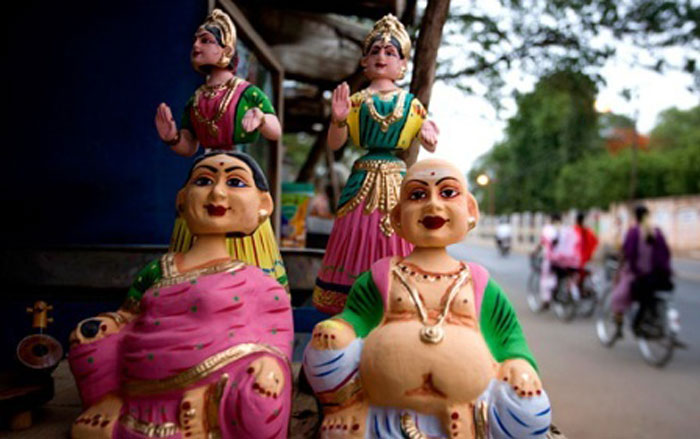 In India, they don't just have head nods for "yes" and head shakes for "no"... there's another one where the head does this side-to-side wobble. I can't remember what it means, since from what I could understand, it has a few different meanings depending on the situation.
Mostly for “okay”. Whenever I see someone doing that I always picture them saying “okay didi”(which means okay sister) in the voice of a small child
It means different things based on the speed and facial expressions while doing it. Commonly means ok, yes, no, maybe, no idea, wow so tasty!, sarcastic 'sure', up yours, responding because I heard question noises but wasn't paying attention, etc. Its like using the word f**k to mean different things based on different intonations and length of the sound.
Yes, it means so many things and is very confusing without context
Load More Replies... These dolls are called 'Thalai-aati' dolls- the above shows two merchants of the old, and behind them are Bharatanatyam dancers (same kind of dolls). They're usually placed in the houses back in India during the Navratri festival. I'm talking about South India- Tamil Nadu. I don't know what people call them elsewhere.
Same for greece: a nod means no, headshake is yes! Be careful while communicating in traffic situations!
About one in five people on Earth are of South Asian descent. They have emigrated practically everywhere. Is there really someone here who can say they have never met a person of Indian, Pakistani or Bangladeshi origin? Anybody who has will be familiar with that famous head shake.
But when people emigrate they may discontinue some characteristics.
Load More Replies...As an American living in Hungary (and as I’ve said elsewhere on Reddit) it STILL gets me sometimes how much Hungarians shake hands. Meet someone on the street? Shake. Finish talking to them and walking away? Shake. Walked into the office in the morning? Shake everyone’s hand near you, and the people you meet at the coffee machine, and possibly the security guards if you’re friendly with them. About to leave said office for the day? You bet your a*s you’re shaking hands. I’ve been here 17 years now and this one still manages to surprise me sometimes.

I'm learning to speak Magyar and was hoping to go there some day, but you might have changed my mind just now. I absolutely hate shaking hands. And I will feel gross and will keep "wiping" it on my shirt afterwards until I get a chance to wash my hands. Please tell me covid changed this and I can still go

I have been living here for almost 5 years and I have never noticed this
Load More Replies... 
yes, and fist bumps also became more frequent lately, but sadly most of the populace is acting like the virus never existed at all :/
Load More Replies... In the office, every morning? No. Except if someone works another company and there is a meeting.

In the middle east sitting on a way where your leg rests on your knee and your foot points at someone is extremely insulting You just don't sit like that
Unless you want to get a serious a$$ whipping. Showing someone the bottom of your foot says "you are lower than the dirt I walk on."

You're essentially showing them the bottom of your foot, indicating you think they are lesser than you.
There are similar foot-related crimes in Thailand. Don't point your feet or their soles at people, don't point them at the Buddha images, (there are whole sitting positions specially for avoiding that one) don't raise your foot above or over someone's head (even if their head is on the floor). The police will literally get involved if you stand on the money, because the King is on the money, thus making standing on it very disrespectful. I'm pretty sure it's finable at the very least.
Some parts of Asia, too. Also, in some Asian countries, you're expected to keep your head lower than that of the most respected person (elder, priest, etc) in the room as a sign of respect.
 In middle eastern culture, complementing someone’s stuff may results in them giving it to you… for example, if you were to tell someone: ‘Nice watch!’, they might give it to you. I am someone who tends to compliment a lot, with 0 intention of it being given to me. Nor do I expect to give my stuff to someone if they compliment it. I have so much trouble wrapping my head around this one…
Ha! I'm with you on this one. There was once a Queen of England who used to expect things she expressed a liking for to be given to her. Apparently when she visited anyone they would hide away the stuff they wanted to keep.

So.. if you complimented the ruler of a country.. would they hand it over to you in the Middle East?
The Brits/European conquerors would’ve controlled the middle east this way
Load More Replies... Wonder if that works in Dubai. I'm going to drop a lot of compliments the next time I'm there to see what I can return with.
I visited a friend in Donegal, Northern Ireland about 6 years ago. They showed me lots of different sites in my few days I visited. One evening we went to a local chip shop, we were sat in her car eating our food and a trailer being pulled by a car came up next to us. This trailer had a man and woman tied up on the back of it, covered in what looked like food and dirt. They were laughing and seemed to be having quite a good time. Right behind the trailer was a convoy of about 8 cars all beeping their horns and cheering, they went around the town and then all drove off. I was super confused as tk what had just happend, my friend told me the man and woman in the trailer were probably soon to be newly weds. That it's tradition for friends to go into their home unplanned and take then out, ties them up and throw things at them and parade them around the town. She actually seemed confused that I didn't have a similar tradition back home or that I had never seem anything so strange.

DONEGAL is in Ireland..not NI............. its 2 different countries.... and ive never heard of this tradition here in Belfast

I asked my Irish auntie about it, she said it was "traveler thing."
Load More Replies... Fascinating. But Donegal is not one of the six counties in "Northern Ireland." It is the northernmost county in the Irish Republic, though.
If you allow this person a bit of slack, they could have mixed up historical Ulster and Northern Ireland. The state of Northern Ireland created in 1921, consisted of the six Ulster counties of Antrim, Down, Armagh, Londonderry, Tyrone, and Fermanagh (replaced in the early 1970s by 26 local districts). The three Ulster counties of Monaghan, Cavan, and Donegal were included in independent Ireland, the Republic of Ireland in 1949. Sorry to be a pedant ;-)
Load More Replies... Hmmm, I think some parts of Britain had a similar tradition. I don't know if they still do it.
In Australia, when my grandad was growing up, on a couple's wedding night it was common for them to be woken at 2am or so by a crowd of youths clanging pots and pans etc!
I was proud to be given the task of "decorating" a newlywed couples car before they left on their honeymoon. Darn proud of the job I did :-)
When I lived in China, I had two different Chinese people on two different occasions come up to me and correctly identify my religion and culture. I am Mennonite and I dress as such. And this is interesting because many Americans don’t know what I am.
When I see a nerdy looking guy in a certain type of white shirt and tie in the street, it's usually a mormon.
Only some Mennonites dress in specific clothing. The most common signifier is the cover for women, but a lot don't wear that. And for those wondering - the Amish are a small sub-set of Mennonites, but for SURE not all Mennonite are Amish.
Beat me to it lol. Where I live there are communities of Amish and Mennonites. I usually can't tell them apart by looks but we do have a basic respect for them as a people. The slight behavioral differences are what I've noticed, looks are harder.
Load More Replies... I think this is confirmation bias. A lot of Americans know what mennonites are, but those are the ones who probably don't say anything about it when speaking to this person. A lot of Chinese probably DON'T know what mennonites are, but the few who DO would be the ones to mention it when speaking to her. (I assume 'her', since the boys don't really stand out against other Americans)
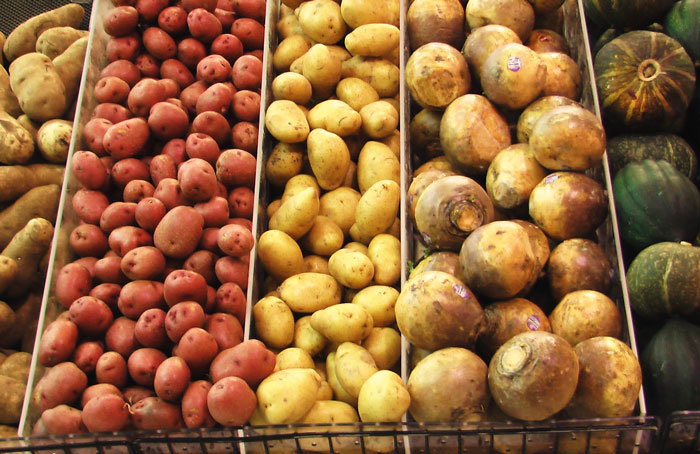 In Jainism, Jain monks, nuns, and some followers avoid root vegetables such as potatoes, onions, and garlic because tiny organisms are injured when the plant is pulled up, and because a bulb or tuber's ability to sprout is seen as characteristic of a higher living being.
My Jain friend told me that most Jains are vegan because they don’t want to harm the cows and the animals. She says that one of the main principles is to not hurt any living being from the tiny ant to the giant whale. Not sure about the other stuff she told me since she tends to lie a lot
It is sad that they take the "do no harm" thing to the extreme. Saw a documentary years ago about Jainism, and there was a truly heart wrenching insert of a severely injured puppy that had been mauled by some animal. The poor thing was howling in agony all mangled and bleeding, but was being kept alive in a box because no one was prepared to put it out of its misery. This was at some sanctuary run by Jains. It horrified me that the teachings forbade them to humanely put the poor creature out of its misery

 I've been into Korean culture the past year because of KDrama; here are some of the stuff I've read up on that kinda blew my mind:
- The concept of Korean age which is 1 or 2 years older than what they call "international age". Koreans consider the time you spent in the womb as your first year of life and each Korean gains an additional year on the new year.
- Speech levels are everything in Korean and you are supposed to speak more formally to someone who's older than you. That's why when strangers meet one of the first things they ask each other is their age so they know if they should speak formally to each other.
- There are only a limited number of surnames in Korea because of the concept of clanship. Each name corresponds to a regional clan. And some names are rarer than others.
- Patrilineality (who your birth father is) is a big deal in Korea. Because of this until 1997 it was illegal to marry someone with the same last name as you if you had an uncommon last name because that most probably meant you were from the same clan and therefore your marriage was incestuous. Exceptions were usually for people with very common surnames like Kim and Park. For this same reason Koreans also used to look down on double in-laws (ex. Your sister marries a guy and and then you marry that guy's brother) because it is also seen as incestuous.
- Patrilineality also extends to adoption and having children out of wedlock. To this day many Koreans refuse to adopt because there is a stigma around taking care of another person's child. And if they do adopt, they would prefer to adopt a girl rather than a boy because the boy would not be able to carry on the foster family's bloodline. This is why many more foreigners tend to adopt Korean orphans. Likewise, having a child out of wedlock and being a single mother are also frowned upon in Korea due to this culture.
I've been into Korean culture the past year because of KDrama; here are some of the stuff I've read up on that kinda blew my mind:
- The concept of Korean age which is 1 or 2 years older than what they call "international age". Koreans consider the time you spent in the womb as your first year of life and each Korean gains an additional year on the new year.
- Speech levels are everything in Korean and you are supposed to speak more formally to someone who's older than you. That's why when strangers meet one of the first things they ask each other is their age so they know if they should speak formally to each other.
- There are only a limited number of surnames in Korea because of the concept of clanship. Each name corresponds to a regional clan. And some names are rarer than others.
- Patrilineality (who your birth father is) is a big deal in Korea. Because of this until 1997 it was illegal to marry someone with the same last name as you if you had an uncommon last name because that most probably meant you were from the same clan and therefore your marriage was incestuous. Exceptions were usually for people with very common surnames like Kim and Park. For this same reason Koreans also used to look down on double in-laws (ex. Your sister marries a guy and and then you marry that guy's brother) because it is also seen as incestuous.
- Patrilineality also extends to adoption and having children out of wedlock. To this day many Koreans refuse to adopt because there is a stigma around taking care of another person's child. And if they do adopt, they would prefer to adopt a girl rather than a boy because the boy would not be able to carry on the foster family's bloodline. This is why many more foreigners tend to adopt Korean orphans. Likewise, having a child out of wedlock and being a single mother are also frowned upon in Korea due to this culture.
In France it is customary to use the more formal "Vous" (you) to address someone until they invite you to use the informal "Tu". Children and animals can be addressed as Tu though.
In the Netherlands we have "u" (formal version of you) and "je/jij" (informal version of you). Some people -most religeous people who believe in any kind of god- also use the capitalized "U" for God/Jesus. We used to have the same unspoken rules you have for adressing people, but over the last so many years the informal version has become more common. People generally do still adress their boss, the prime minister etc and people about grandparent age with the formal version
Load More Replies... Double in-laws is also a thing here in Pakistan. Toned down but not unheard of. We call it watta satta here and yes, it's discouraged here too. Leads to all sorts of problems, according to some people.
They were very common in Australia in the past, especially in country towns where the number of people of marriable age were more limited :) There were numerous members of my family who were double in-laws.
Load More Replies...
The way they tie towels around the waist in India. I've always done that thing where you wrap the towel around your waist, then tuck it in so that it's held closed by the towel pressing against your abdomen. However moving around with it like this can cause it to come lose. In India, they instead [fold it a completely different way, they fold it outwardly], apparently it's their "standard" way of doing it, which makes a hell of a lot more sense.

I need a visual. Like fold the whole top edge down? Confused. Google no help

That might work, that's how I learned to fix my stepdaughter's towel on her head: fold the whole edge to the outside and tuck the other end into the fold. Lasts much longer than the other way.
Load More Replies... ... can cause it to come loOse. One "o" is either the opposite of win, or go missing. (Sorry, but this is one of the things that make my brain hurt)
I thought they were talking about lungi for a minute before I realized
This is also how they fold rwappers (sarongs) in Benin. Funny thing is in the Gambia they tie with string or fold the other way with tuck in.
In some countries, when someone asks you, “how are you?” they actually want an answer beyond just, “fine, thanks.” I was accidentally very rude for following my social custom. If you actually answer that question where I’m from, people will look at you with shock.

Yeah. In America you say good/ok/fine and one day I was having a really bad day and I said not too good and the guy stopped for a sec and was like well I hope you get better

It’s always awkward when someone replies with anything other than fine/ok/good lol
Load More Replies...
Yeah don't ask this in Finland if you don't want to know. We will answer honestly and then want to know how you are, because we are polite.

Bet you're from Australia - Australians just can't deal with an honest answer to that question. I hate myself for saying 'Good thanks' in a sprightly voice, when I'm actually dying inside.

I worked with a UK colleague who instead of the standard "hey, how are ya?" Would say "Hello Turt_Le, are you all right?" Made me instantly self conscious and wonder if I looked unwell and I'd reply "I thought I was?" and we'd both look at each other awkwardly. It wasn't until another colleague said they'd had a similar interaction that we realised it was their standard greeting that didn't really need any deeper consideration than "good thanks" 😳
Load More Replies... I think "fine, thanks" is a habit when answering "how are you?" People in the US don't expect the question to be truly answered.
In some places in Yorkshire the conversation between two people is ..."Reyt?" "Reyt". nothing more is needed, pleasantries over with.
I would love it. Ideally, just a passing nod and nothing more but acknowledgement of existence. 😝
Load More Replies...  How cheap life is in some parts of the world.
My Dad was asked to do a speech for the UN in India at one point and brought myself and my mother along for the trip. The UN put us up in a six star hotel (first and only time I've ever been in one - didn't even know they *gave* a sixth star prior to that trip).
Anyways, we had a meeting with a UN rep who went over the pre-travel preparations - what vaccines we would need to get, what documents we would need to have, who to call if something went wrong, so on and so forth. My Dad asked if we should invest in a travel safe for our belongings, worried that things might get pilfered out of our room. At this, the UN rep just laughed and said, "If you even make the *accusation* that something has gone missing from your room, the first thing that management will do is fire everyone who worked on that floor of the hotel, whether they were anywhere near your room or not. There are literally thousands of people who want those jobs and the hotel could replace their entire staff in an afternoon if they so desired. Your stuff will be fine."
And he was right - it was. You got a real sense being there that people (in particular workers) just... weren't valued as much as they are in North America. Everyone was replaceable. It was a weird experience.
How cheap life is in some parts of the world.
My Dad was asked to do a speech for the UN in India at one point and brought myself and my mother along for the trip. The UN put us up in a six star hotel (first and only time I've ever been in one - didn't even know they *gave* a sixth star prior to that trip).
Anyways, we had a meeting with a UN rep who went over the pre-travel preparations - what vaccines we would need to get, what documents we would need to have, who to call if something went wrong, so on and so forth. My Dad asked if we should invest in a travel safe for our belongings, worried that things might get pilfered out of our room. At this, the UN rep just laughed and said, "If you even make the *accusation* that something has gone missing from your room, the first thing that management will do is fire everyone who worked on that floor of the hotel, whether they were anywhere near your room or not. There are literally thousands of people who want those jobs and the hotel could replace their entire staff in an afternoon if they so desired. Your stuff will be fine."
And he was right - it was. You got a real sense being there that people (in particular workers) just... weren't valued as much as they are in North America. Everyone was replaceable. It was a weird experience.
That is not a country "being cheap". Its a country with a lot of poor people. I hatw when turists of welathier countries go to poorer ones and call them cheap. No, Spain is not "cheaper" than the Netherlands. We are just poorer.

I do not believe the OP meant cheap in a derogatory way - it's slang for inexpensive. Yes, it can almo mean poor quality or poorly constructed, but I believe the OP meant inexpensive.
Load More Replies... Not trying to cause offence but from many, many things I've read on Bored Panda, North American workers don't seem to be 'valued'. Tolerated, exploited, denigrated, yes - valued no.
What saddens me is the luxurious homes of the wealthy just a stone's throw from the very basic shelters the poorest have to live in. Nobody seems at all embarrassed by the wealth gap. The caste system was to blame, in that everyone was born to be of a particular caste and either rich or poor, but I thought that was changing now we are in the 21st century. In the UK our present Chancellor of the Exchequer's wife is richer than the Queen and his family, who are Indian, can afford to pay for goods what would be a year's wages for other people. They have absolutely no idea how poor people struggle to manage.
True. Money and your profession decides your status in India. If you are someome doing manual work, labour work in factories, waiters, chef etc you are not valued much.
And if you become doctor or engineer then you will be praised for all eternity
Load More Replies... When I went to India over 20 years ago for a friends wedding, I was shocked at the poverty and by the low prices of some things. I was considered a big tipper at the hotels I stayed at, but I was barely tipping anything, but the amount that was recommended to me by her family there. Even the shop keepers at the hotels, when they sent an employee to pick up some snacks from outside the hotel (for my own safety) were shocked when I wanted to tip as much as I did.

I always thought that was why companies moved overseas, for more so expendable less expensive people to exploit.
Load More Replies... When you're up to your armpits in armpits, human life and human rights decrease in value proportionately.
German trains are remarkably on time. Drivers follow the passing lane rule religiously. Also the New Testament is very different than how it’s practiced and lived for the most part. The disdain of materialism, humility, privacy of prayer and of charity, is missing in a lot of what I’ve seen.
The way Christianity is practiced in a lot of countries these days bears no resemblance to the teaching of Jesus Christ. If what Jesus said is true they're going to be mighty disappointed one day when they think they've got a ticket to heaven.

It is so far different from even 30 years ago. I had no idea that I grew up in a progressive Southern Baptist Church until DT got elected. They were educational about EVERYTHING, including other religions. They also were VERY big on loving and caring for their neighbors. Can't tell you how many times I heard my Grandmother on the phone planning food delivery and sitting schedules for the ill I am flabbergasted by supposed church people today.
Load More Replies... It depends what one means by "remarkably". Because like 4 times of 10 there is a min. 5 minutes delay by Deutsche Bahn.
Compared to Japanese trains the Deutsche Bahn is always late, but complared to many other countries, it's almost perfect.
Load More Replies...

German trains are incredibly late. If you have to change trains, you need at least 30 mins in between, otherwise you'll risk missing that train. It's really exhausting, as you usually need to change trains 2 or 3 times, depending on your destination. Back in the day, 10 minutes were enough, but nowadays...
Thealmightyfug said: That Big Bird is different colours in different countries. GrindinMolcajete replied: They’re not actually Big Bird. They’re all Big Bird’s cousins from across the world. His cousin Abelardo from Mexico has visited Big Bird in the US a few times.

Clarification there are multiple birds who are all related and some have visited each other.
Abelardo is green. Ours (Netherlands) is blue and his name is Pino 9d6069cbdd...c3-png.jpg 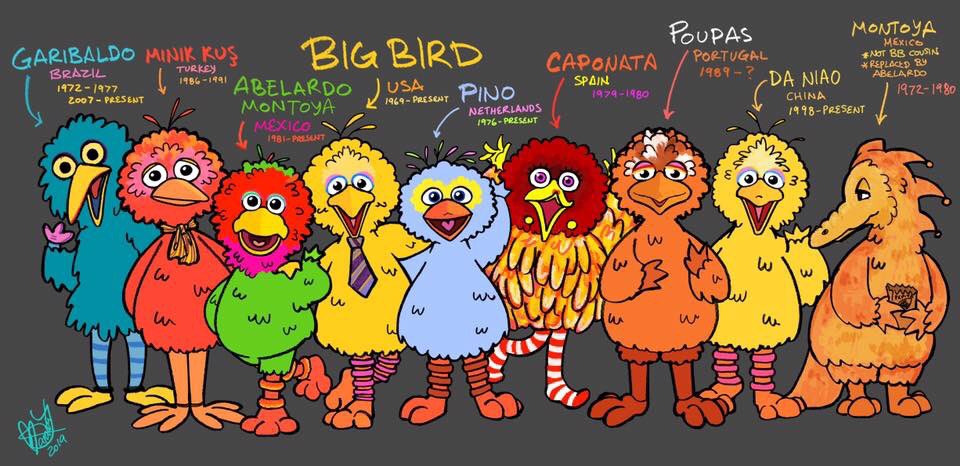


hauj0bb said: Tea with butter is a thing in Asia. WormLivesMatter replied: This is common in the us too but for coffee, at least the state I’m in. Weed butter is used too sometimes.

...but not as often as you'd think. Honestly, I was surprised when I learned that even in Japan they call tea with jam "Russian tea", since very few people I know drink tea like this. Also, even when we do, it has to be a specific type of jam (called varenye), preferably homemade (source: am Russian).
Load More Replies... Aah yes, that vast country called Asia. As far as I know this tea with butter thing is only in the Himalayas, or only in Tibet even.
Butter in coffee was a fad. It's not a common thing unless you follow a keto/Banting type diet which is when it became popular.
In the US, putting butter in one's coffee was a fad for awhile. It's disgusting!

Never heard of butter in coffee before - I'm in Arkansas, so it may not have gotten here.
Load More Replies...Culture and the types of food. Take something as simple as Icecream for example the flavors can be significantly different from what the majority in my country would even be comfortable trying. I recently discovered Cheese flavored ice cream at a local shop and am trying to work up my courage to try it. I've seen ice cream flavors based on vegetables, and bacon, and I'm super curious.
Pistachio? That's a common flavour in The Netherlands too and so is mango, every ice cream shop has it
Load More Replies... This reminds me of Kit Kats. In America you have Chocolate that’s it. My friend went to Japan and brought back grape cherry and vanilla ones.
Try them. Worst that happens is you spit it out and never buy it again. Best: new favorite! Besides... ICE CREAM...
Cheese flavoured ice cream? What sorcery is this? This is either very good, or very bad.
i once had goat cheese, honey, and lavender icrecream and it was really nice. It was a little tangy and a little goaty, but not so much that it became something else
Load More Replies...
Garlic ice-cream made using roasted garlic, will always be a favorite of mine. And bacon ice-cream is DELICIOUS, in case you're wondering.

Try Oyster flavored.... "https://en.wikipedia.org/wiki/Oyster_ice_cream"

The local ice cream shop close to my house served « alcohol free beer » ice cream some months ago. It was interesting to try. Once. They didn’t make a second batch (for obvious reasons).
I tried an alcohol flavoured one when I was in my teens and for the life of me I can't remember what the flavour was meant to be! I didn't know it was alcohol at the time, but I really liked it. It was like Bailies, but not as sweet I think.
Load More Replies... The TV Food network had a show copying Japan's Iron Chef. One of the original Iron Chefs came from the original version. Chef Morimoto (apologies if spelled wrong) who was famous for making an ice cream out of fish that was apparently very good. 👀
Americans have to tip everywhere.
We tip in restaurants, and cafes, hotel housekeepers and bellmen, cabbies and some delivery drivers and a few others who provide a service or from whom we want something special... tipping a doorman at a club to get a better table, or something like that. I wouldn't call that exactly everywhere. In some places it is forbidden to tip; the people who carry your groceries to your car, for example, retail establishments in general, and it's not required in restaurants or cafes where you get your own food and take it to your table yourself (but there is an optional tip jar on the counter in most places).
It sucks that the owners won't pay their employees a livable wage. Just 1 more thing to hate about my country.
Most americans walk around in shoes in their homes and schools.

I understand the shock at walking around in shoes at home, but people take off their shoes at school? Because where I'm from we only take off our shoes at home.
In Swiss schools every student has to have a pair of slippers that are worn inside the building. As you can imagine, this leads to some epic slipper fights.
Load More Replies... As an American, I’m not sure if this is a misconception or just a case by case thing. We do not wear shoes in my family’s homes or my wife’s family. Generally, when guests come in they ask if they should take their shoes off.
I think it’s really a mixed bag here. In my family we don’t wear shoes in the house, but allow guests to and mop when they leave for large get togethers. Even in my extended family some allow shoes and some don’t. It seems to have no specific culture or region if people do or don’t- mostly it seems a matter of preference. Unless you are Asian- do not wear shoes in Asian homes.
Load More Replies... First thing I do when I come home is kick off my shoes! In some countries you will be given slippers to wear when you visit someone's home. After all, who wants the dirt from the street brought in?
I have two dogs who shed year round and bring dirt into the house on their feet. Walking around in socks, which would eventually collect pads of dog hair, would present a slip and fall hazard. I have to vacuum/sweep daily anyway, so there's not much point in taking off my shoes.
American here, shoes on every where expect in a home, slippers maybe but not shoes. That must be something people have seen on American tv, but not in real life.

But you're fine with dirty shoes being worn inside your house, tracking dirt and dog c**p and whatever else you walked in all over your floors?
Load More Replies... Something that I’m fascinated by is that there are different types of squats. I grew up in Europe and learned the “Western” squat as a child. A few years ago I learned about the “Asian” squat, where the whole underside of the foot touches the ground. It’s much more stable and squat toilets are so much easier to use with this.


Standing or walking with your hands in your pockets is seen as very bad manners/rebellious in Japan. It’s something only thugs or bad guys do. As an American, it took a while to break that habit.

It's cold outside u forgot your gloves, course your gunna put your hands into your pockets to keep them warm
Load More Replies... Travelled in Africa. Was warned that you do not stop to help someone injured along the road. First explanation was that it was a well known trick, especially at night. You stop and the injured one jumps up and along with his friedns in the ditch mug you. Second reason was that in smaller villages if you stopped at an actual accident you would be picked out as different/unknown so you must be the one at fault and could be attacked by the mob. Being a first responder it was a weird thing to consider.
Venezuelan native here: it is very common to greet one another with insults. Example: "Marico I miss you" I miss you f****t... "mamahuevo que paso" Ball licker what's up. It is really like the most caring thing you can do to a close friend.

America is a very car-centric country, outside of the cities it's hard to get around without one. I've never seen a house in America that didn't have a garbage disposal. And they don't have knives in them. You'll still lose part of your hand if you put it into a running disposal. Water is free here. Europeans think it's funny that America is so big, that huge distances and time-consuming commutes are not uncommon, but let an American snicker at how tiny their country is, and their claws come out.
Something that I’m fascinated by is that there are different types of squats. I grew up in Europe and learned the “Western” squat as a child. A few years ago I learned about the “Asian” squat, where the whole underside of the foot touches the ground. It’s much more stable and squat toilets are so much easier to use with this.
Standing or walking with your hands in your pockets is seen as very bad manners/rebellious in Japan. It’s something only thugs or bad guys do. As an American, it took a while to break that habit.
It's cold outside u forgot your gloves, course your gunna put your hands into your pockets to keep them warm
Load More Replies... Travelled in Africa. Was warned that you do not stop to help someone injured along the road. First explanation was that it was a well known trick, especially at night. You stop and the injured one jumps up and along with his friedns in the ditch mug you. Second reason was that in smaller villages if you stopped at an actual accident you would be picked out as different/unknown so you must be the one at fault and could be attacked by the mob. Being a first responder it was a weird thing to consider.
Venezuelan native here: it is very common to greet one another with insults. Example: "Marico I miss you" I miss you f****t... "mamahuevo que paso" Ball licker what's up. It is really like the most caring thing you can do to a close friend.
America is a very car-centric country, outside of the cities it's hard to get around without one. I've never seen a house in America that didn't have a garbage disposal. And they don't have knives in them. You'll still lose part of your hand if you put it into a running disposal. Water is free here. Europeans think it's funny that America is so big, that huge distances and time-consuming commutes are not uncommon, but let an American snicker at how tiny their country is, and their claws come out.























 No fees, cancel anytime
 then open in external browser


 and click "Open in External Browser"